
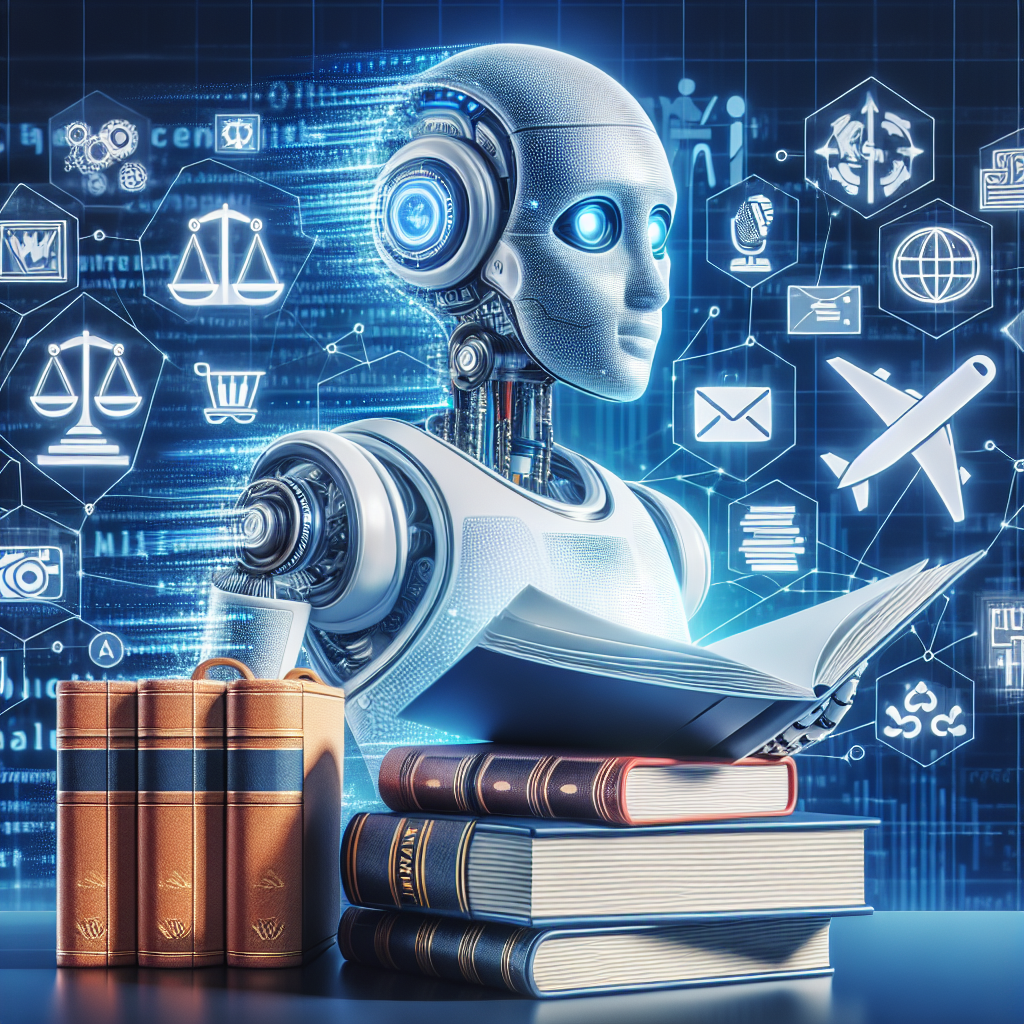
Artificial intelligence (AI) is revolutionizing many industries, and immigration law is no exception. With the increasing complexity of immigration laws and the growing number of applications being processed, AI technology is being used to enhance efficiency and accuracy in the immigration process. From case management to document analysis, AI is transforming the way immigration lawyers and government agencies handle immigration cases.
One of the key benefits of using AI in immigration law is the ability to automate repetitive tasks. For example, AI-powered chatbots can assist immigrants with basic inquiries and help them navigate through the immigration process. This not only saves time for immigration lawyers but also provides a more streamlined experience for immigrants who may not have access to legal assistance.
AI technology can also be used to analyze vast amounts of data quickly and accurately. This is particularly useful in immigration cases where large volumes of documents need to be reviewed for eligibility and compliance. AI algorithms can be trained to identify patterns and flag potential issues, helping immigration lawyers and government officials make more informed decisions.
In addition, AI can assist in predicting outcomes of immigration cases based on historical data and trends. By analyzing past decisions and outcomes, AI can provide insights into the likelihood of success for a particular case, allowing immigration lawyers to better advise their clients on the best course of action.
Furthermore, AI can improve the accuracy of document analysis in immigration cases. By using natural language processing (NLP) technology, AI can extract relevant information from documents such as passports, visas, and other identification papers. This not only speeds up the document review process but also reduces the risk of human error.
Overall, the use of AI in immigration law is enhancing efficiency and accuracy in the immigration process. By automating repetitive tasks, analyzing data, predicting outcomes, and improving document analysis, AI technology is transforming the way immigration cases are handled.
FAQs:
Q: How is AI being used in immigration law?
A: AI is being used in immigration law to automate repetitive tasks, analyze data, predict outcomes, and improve document analysis. This technology is helping immigration lawyers and government agencies handle immigration cases more efficiently and accurately.
Q: Can AI replace immigration lawyers?
A: While AI technology can assist immigration lawyers by automating certain tasks and providing insights, it cannot replace the expertise and advocacy provided by human lawyers. Immigration law is complex and requires a deep understanding of legal principles and procedures, which AI technology cannot fully replicate.
Q: Is AI biased in immigration cases?
A: AI technology is only as biased as the data it is trained on. To mitigate bias, it is important to ensure that the AI algorithms are trained on diverse and representative datasets. Additionally, human oversight is necessary to monitor and correct any potential bias in AI decision-making.
Q: How can immigrants benefit from AI in immigration law?
A: Immigrants can benefit from AI in immigration law by receiving more efficient and accurate assistance with their immigration cases. AI-powered chatbots can help immigrants navigate the immigration process, while AI document analysis can speed up the review process and reduce the risk of errors.
In conclusion, AI technology is transforming the way immigration cases are handled by enhancing efficiency and accuracy in the immigration process. By automating tasks, analyzing data, predicting outcomes, and improving document analysis, AI is revolutionizing the field of immigration law. While AI cannot replace the expertise of immigration lawyers, it can assist them in providing better service to immigrants and ensuring a more streamlined and fair immigration process.