
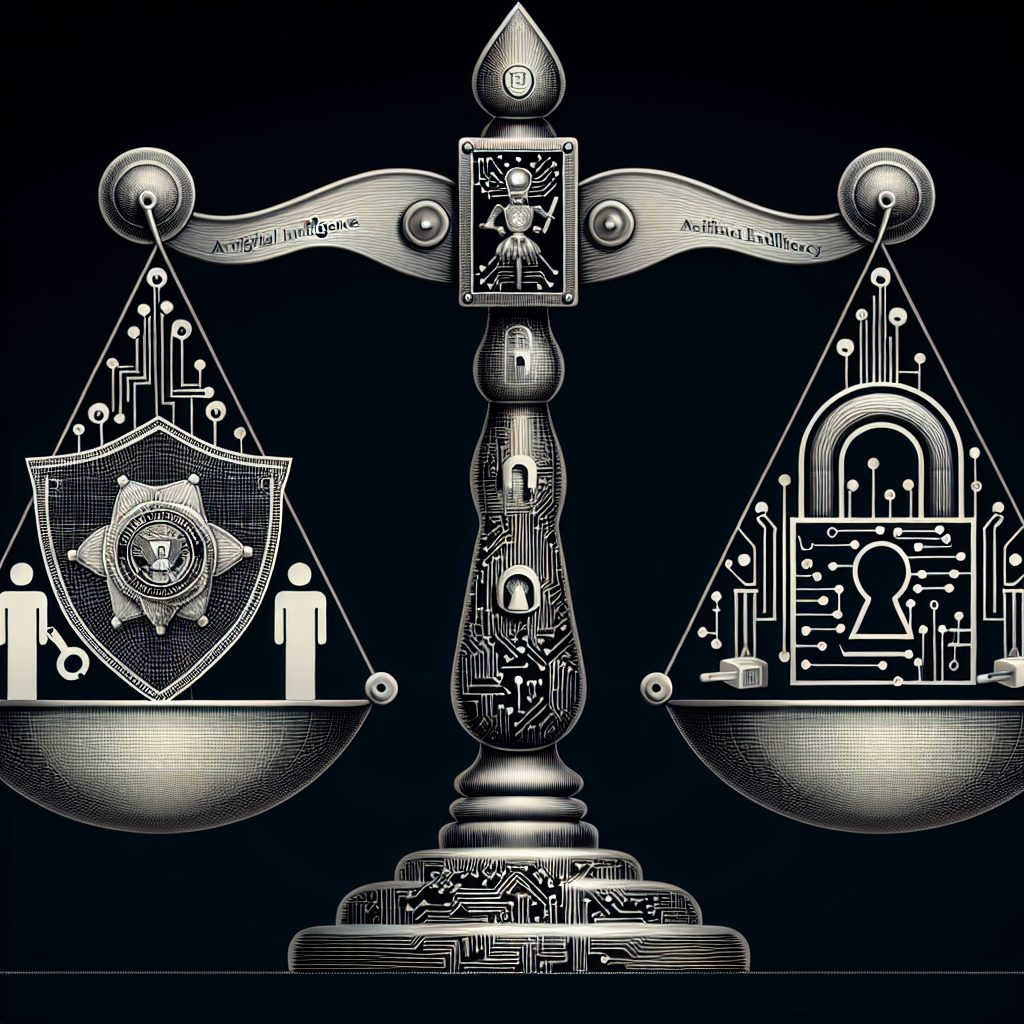
AI in Law Enforcement: Balancing Security and Privacy
Artificial Intelligence (AI) has been making significant strides in various industries, and law enforcement is no exception. AI technologies have the potential to revolutionize the way law enforcement agencies operate, from predictive policing to facial recognition and automated decision-making. However, as AI becomes more prevalent in law enforcement, questions around security and privacy have become more pressing.
Balancing security and privacy in the use of AI in law enforcement is crucial to ensure that the rights of individuals are respected while also effectively fighting crime and ensuring public safety. In this article, we will explore the benefits and challenges of using AI in law enforcement, as well as the ethical considerations that come with it.
Benefits of AI in Law Enforcement
There are several benefits to using AI in law enforcement, including:
1. Predictive Policing: AI algorithms can analyze large amounts of data to predict where crimes are likely to occur, allowing law enforcement agencies to deploy resources more efficiently and effectively.
2. Facial Recognition: AI-powered facial recognition technology can help law enforcement agencies identify suspects and missing persons more quickly and accurately.
3. Automated Decision-Making: AI systems can assist law enforcement officers in making decisions, such as determining the likelihood of reoffending or the severity of a crime.
4. Streamlined Investigations: AI can help law enforcement agencies process and analyze evidence more quickly, leading to faster and more efficient investigations.
Challenges of AI in Law Enforcement
Despite the benefits, there are also challenges associated with the use of AI in law enforcement, including:
1. Bias: AI algorithms can be biased if they are trained on data that is not representative of the population. This can lead to discriminatory outcomes, especially in cases involving marginalized communities.
2. Lack of Transparency: AI systems can be complex and difficult to understand, making it challenging for individuals to know how decisions are being made and to challenge them if necessary.
3. Privacy Concerns: The use of AI in law enforcement raises concerns about the collection and use of personal data, as well as the potential for mass surveillance.
4. Accountability: When AI systems make decisions, it can be challenging to hold someone accountable if those decisions turn out to be wrong or harmful.
Ethical Considerations
As AI becomes more prevalent in law enforcement, it is essential to consider the ethical implications of its use. Some key ethical considerations include:
1. Privacy: Individuals have a right to privacy, and the use of AI in law enforcement must respect this right by ensuring that personal data is collected and used responsibly.
2. Fairness: AI systems must be designed and implemented in a way that promotes fairness and equality, rather than perpetuating existing biases and discrimination.
3. Transparency: Law enforcement agencies must be transparent about how AI systems are being used and ensure that individuals understand how decisions are being made.
4. Accountability: There must be mechanisms in place to hold law enforcement agencies accountable for the use of AI systems and to address any potential harms that may result from their use.
Frequently Asked Questions (FAQs)
Q: Can AI be biased in law enforcement?
A: Yes, AI algorithms can be biased if they are trained on data that is not representative of the population. It is essential for law enforcement agencies to be aware of this potential bias and take steps to mitigate it.
Q: How can law enforcement agencies ensure the privacy of individuals when using AI?
A: Law enforcement agencies can ensure the privacy of individuals by implementing robust data protection measures, such as data encryption, access controls, and data minimization. They should also be transparent about how personal data is being collected and used.
Q: What are some examples of AI technologies being used in law enforcement?
A: Some examples of AI technologies being used in law enforcement include predictive policing algorithms, facial recognition systems, and automated decision-making tools.
Q: How can individuals challenge decisions made by AI systems in law enforcement?
A: Individuals can challenge decisions made by AI systems in law enforcement by requesting information about how the decision was made and appealing the decision through the appropriate channels.
Conclusion
The use of AI in law enforcement has the potential to improve public safety and help law enforcement agencies operate more efficiently. However, it is essential to balance the benefits of AI with the need to protect the rights and privacy of individuals. By addressing the challenges and ethical considerations associated with the use of AI in law enforcement, we can ensure that these technologies are used responsibly and ethically to benefit society as a whole.