
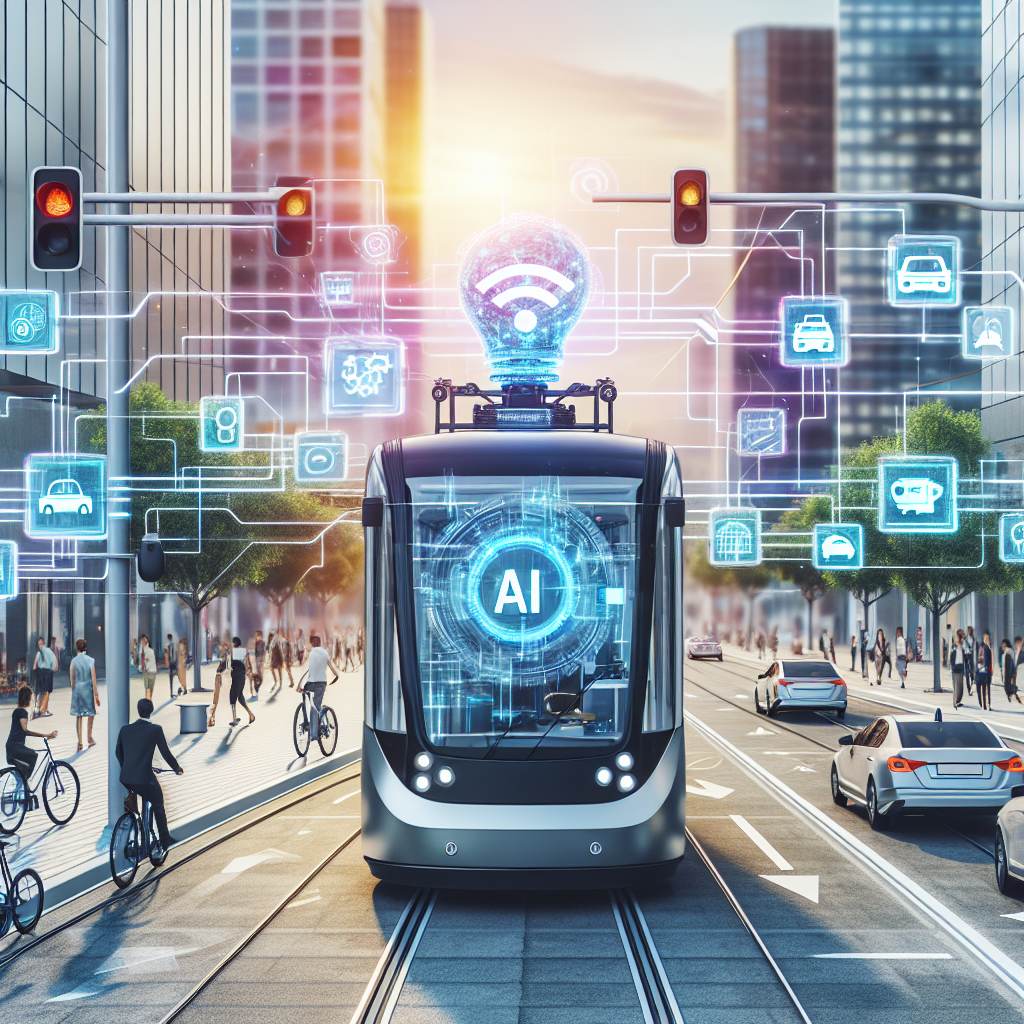
In recent years, the use of artificial intelligence (AI) in public transportation has been gaining popularity as cities around the world look for ways to improve mobility for their residents. AI has the potential to revolutionize the way people move around cities by making transportation services more efficient, reliable, and convenient. From optimizing routes and schedules to predicting traffic patterns and improving safety, AI is transforming the public transportation industry in numerous ways.
One of the key benefits of using AI in public transportation is its ability to optimize routes and schedules. By analyzing vast amounts of data, AI algorithms can identify the most efficient routes for buses, trains, and other modes of transportation, taking into account factors such as traffic patterns, weather conditions, and passenger demand. This not only helps reduce travel times for passengers but also improves the overall efficiency of the transportation system.
AI can also help predict traffic patterns and congestion, allowing transportation authorities to better manage traffic flow and reduce bottlenecks. By analyzing real-time data from sensors, cameras, and other sources, AI algorithms can accurately predict when and where traffic jams are likely to occur, enabling authorities to take proactive measures to alleviate congestion and keep traffic moving smoothly.
In addition to optimizing routes and predicting traffic patterns, AI can also improve safety in public transportation systems. For example, AI-powered surveillance systems can help identify potential safety hazards, such as unattended bags or suspicious behavior, by analyzing video feeds from cameras installed in buses, trains, and stations. In the event of an emergency, AI can also help facilitate quick and effective responses by alerting authorities and providing real-time updates on the situation.
Another key benefit of using AI in public transportation is its ability to enhance the overall passenger experience. By analyzing data on passenger preferences and behavior, AI can help transportation authorities tailor services to meet the needs of different groups of passengers. For example, AI algorithms can predict peak travel times and adjust schedules accordingly, or recommend alternative routes to passengers in real-time based on their destination and preferences.
Furthermore, AI-powered mobile apps and digital platforms can provide passengers with real-time information on routes, schedules, and service disruptions, making it easier for them to plan their journeys and navigate the transportation system. By providing a more seamless and convenient experience for passengers, AI can help increase ridership and make public transportation a more attractive option for residents.
Despite the numerous benefits of using AI in public transportation, there are also challenges and concerns that need to be addressed. For example, there are concerns about data privacy and security, as AI algorithms rely on vast amounts of data to function effectively. Transportation authorities need to ensure that passenger data is protected and used responsibly, in accordance with regulations and best practices.
There are also concerns about the potential impact of AI on jobs in the transportation industry, as automation and AI technologies have the potential to replace some traditional roles. However, many experts believe that AI will create new opportunities for skilled workers in areas such as data analysis, software development, and system management, while also improving job quality and safety for transportation workers.
Overall, the use of AI in public transportation has the potential to revolutionize the way people move around cities, making transportation services more efficient, reliable, and convenient. By optimizing routes and schedules, predicting traffic patterns, improving safety, and enhancing the passenger experience, AI can help cities reduce congestion, improve air quality, and provide residents with more sustainable and accessible transportation options.
FAQs:
Q: How does AI optimize routes and schedules in public transportation?
A: AI algorithms analyze vast amounts of data on traffic patterns, weather conditions, and passenger demand to identify the most efficient routes and schedules for buses, trains, and other modes of transportation. By optimizing routes and schedules, AI can reduce travel times for passengers and improve the overall efficiency of the transportation system.
Q: What are some examples of AI applications in public transportation?
A: AI is used in public transportation for a variety of purposes, including optimizing routes and schedules, predicting traffic patterns, improving safety, and enhancing the passenger experience. AI-powered surveillance systems, mobile apps, and digital platforms are just a few examples of how AI is transforming the public transportation industry.
Q: What are some of the challenges and concerns associated with using AI in public transportation?
A: Some of the challenges and concerns associated with using AI in public transportation include data privacy and security, the potential impact on jobs in the transportation industry, and the need to ensure that AI technologies are used responsibly and ethically. Transportation authorities need to address these concerns and ensure that AI is implemented in a way that benefits passengers and communities.
Q: How can AI help improve safety in public transportation?
A: AI-powered surveillance systems can help identify potential safety hazards, such as unattended bags or suspicious behavior, by analyzing video feeds from cameras installed in buses, trains, and stations. In the event of an emergency, AI can also help facilitate quick and effective responses by alerting authorities and providing real-time updates on the situation.