
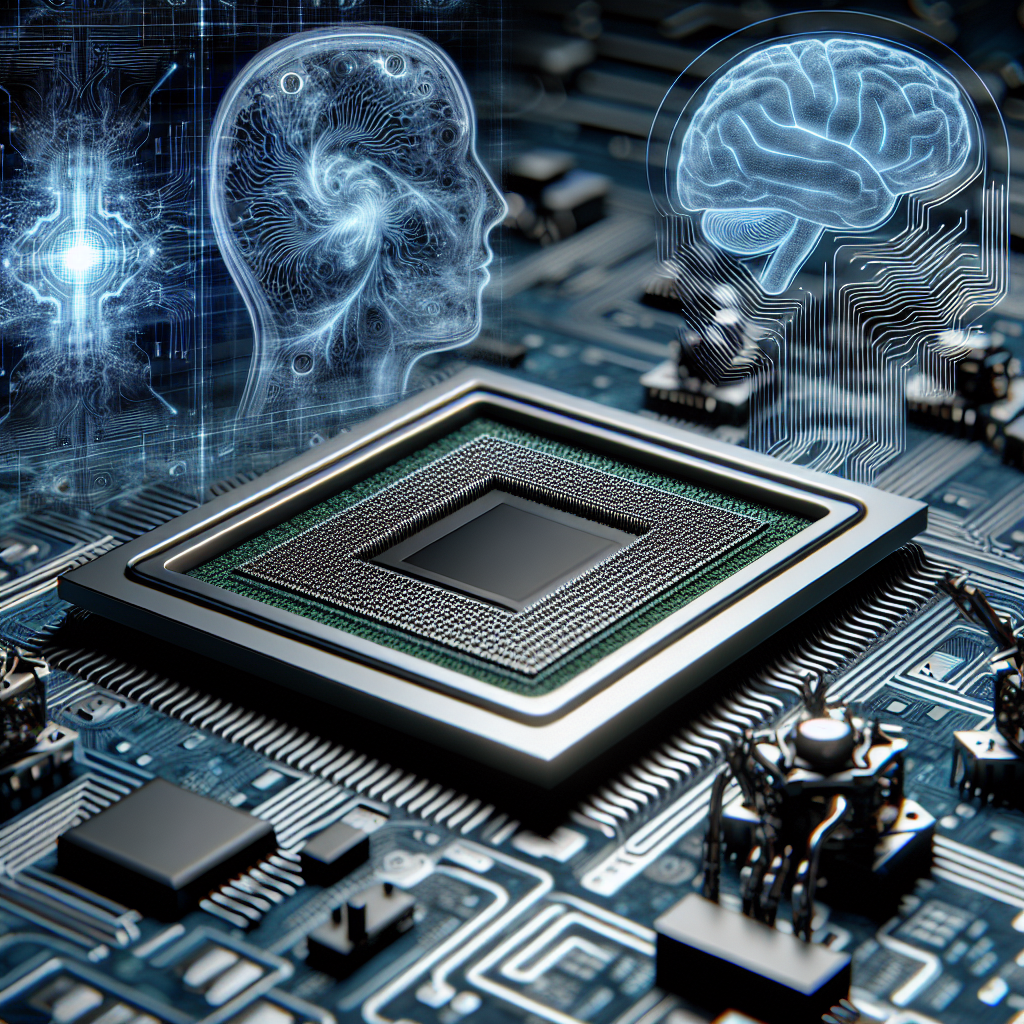
The semiconductor industry plays a critical role in powering the modern world, with semiconductors serving as the backbone of electronic devices such as smartphones, laptops, and even industrial machinery. As the demand for faster, smaller, and more efficient semiconductors continues to grow, manufacturers are turning to artificial intelligence (AI) to revolutionize the semiconductor manufacturing process.
Advancements in AI technology have enabled semiconductor manufacturers to improve production efficiency, reduce costs, and enhance product quality. AI algorithms can analyze vast amounts of data in real-time, identify patterns, and make informed decisions to optimize manufacturing processes. From wafer inspection to defect detection, AI is transforming every aspect of semiconductor manufacturing.
One of the key areas where AI is making a significant impact is in defect detection and classification. Traditional methods of defect detection rely on manual inspection, which is time-consuming, labor-intensive, and prone to human error. AI-powered systems, on the other hand, can quickly analyze images of semiconductor wafers, identify defects with high accuracy, and classify them based on their severity. This not only speeds up the inspection process but also improves the overall quality of the final product.
Another application of AI in semiconductor manufacturing is predictive maintenance. By analyzing sensor data from equipment on the manufacturing floor, AI algorithms can predict when a machine is likely to fail and schedule maintenance proactively. This helps minimize downtime, reduce maintenance costs, and improve overall equipment efficiency.
AI is also being used to optimize production scheduling and resource allocation in semiconductor manufacturing. By analyzing historical production data, AI algorithms can predict demand, optimize production schedules, and allocate resources efficiently. This enables manufacturers to maximize throughput, reduce lead times, and improve overall operational efficiency.
In addition to these applications, AI is also being used to improve yield optimization, reduce energy consumption, and enhance supply chain management in semiconductor manufacturing. With the rapid advancements in AI technology, the possibilities for innovation in semiconductor manufacturing are virtually limitless.
FAQs:
Q: How is AI being used in semiconductor manufacturing?
A: AI is being used in semiconductor manufacturing for defect detection, predictive maintenance, production scheduling, yield optimization, energy management, and supply chain management.
Q: What are the benefits of using AI in semiconductor manufacturing?
A: The benefits of using AI in semiconductor manufacturing include improved production efficiency, reduced costs, enhanced product quality, predictive maintenance, optimized production scheduling, and resource allocation.
Q: What are some of the challenges of implementing AI in semiconductor manufacturing?
A: Some of the challenges of implementing AI in semiconductor manufacturing include data quality issues, lack of skilled AI talent, integration with existing systems, and resistance to change from employees.
Q: How can semiconductor manufacturers get started with implementing AI in their operations?
A: Semiconductor manufacturers can get started with implementing AI in their operations by conducting a thorough assessment of their current processes, identifying areas where AI can add value, investing in AI talent and technology, and piloting AI projects to demonstrate ROI.
In conclusion, AI is transforming the semiconductor manufacturing industry by enabling manufacturers to improve production efficiency, reduce costs, and enhance product quality. With the rapid advancements in AI technology, the future of semiconductor manufacturing looks brighter than ever.