
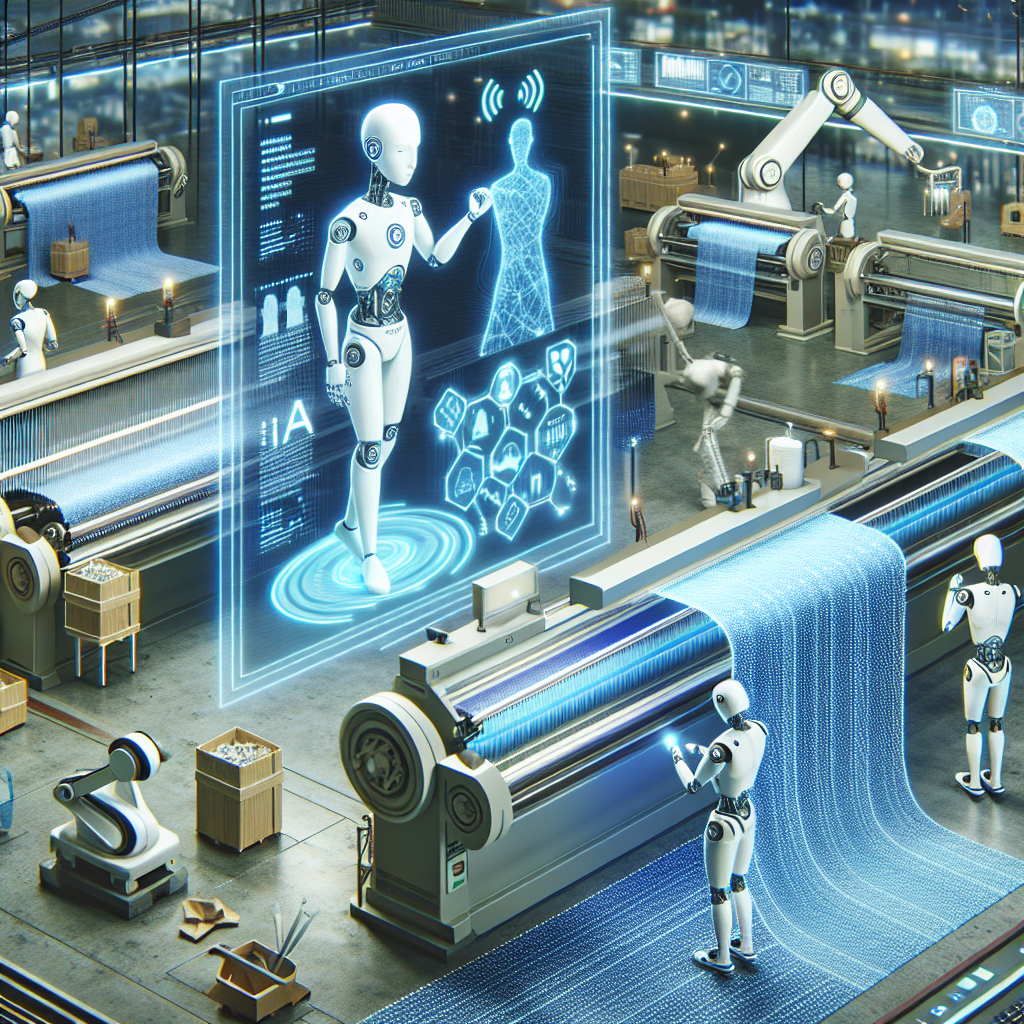
Artificial Intelligence (AI) is revolutionizing the textile manufacturing industry by introducing innovative technologies and applications that streamline processes, increase efficiency, and improve product quality. From automating production lines to predicting consumer trends, AI is reshaping the way textiles are designed, produced, and distributed. In this article, we will explore the various innovations and applications of AI in textile manufacturing and discuss the potential impact on the industry.
Innovations in AI and Textile Manufacturing
AI has been integrated into various aspects of textile manufacturing to enhance productivity and drive innovation. Some of the key innovations in AI and textile manufacturing include:
1. Predictive Maintenance: AI algorithms can analyze data from sensors and machines to predict equipment failures before they occur, allowing manufacturers to schedule maintenance proactively and minimize downtime. This helps to improve efficiency and reduce maintenance costs.
2. Quality Control: AI-powered image recognition technologies can inspect fabrics for defects with high accuracy, identifying imperfections such as stains, holes, or irregularities. This ensures that only high-quality products are sent to market, reducing waste and improving customer satisfaction.
3. Design Optimization: AI can analyze consumer preferences, market trends, and historical data to generate design recommendations for textiles. By leveraging AI, manufacturers can create products that are more likely to resonate with consumers, leading to increased sales and profitability.
4. Supply Chain Management: AI algorithms can optimize inventory levels, forecast demand, and streamline logistics operations, ensuring that materials are available when needed and reducing lead times. This results in a more efficient supply chain and lower production costs.
5. Personalization: AI technologies enable manufacturers to offer personalized products to customers, such as custom-fit clothing or personalized designs. By leveraging AI, manufacturers can create unique products that cater to individual preferences, leading to increased customer loyalty and brand differentiation.
Applications of AI in Textile Manufacturing
AI is being applied in various ways across the textile manufacturing industry, transforming traditional processes and enabling new capabilities. Some of the key applications of AI in textile manufacturing include:
1. Automated Production: AI-powered robots and machines can perform tasks such as cutting, sewing, and finishing textiles with high precision and efficiency. This automation reduces labor costs, improves production speed, and ensures consistent product quality.
2. Demand Forecasting: AI algorithms can analyze historical sales data, market trends, and external factors to predict consumer demand for textiles. This enables manufacturers to adjust production levels accordingly, minimizing excess inventory and stockouts.
3. Sustainability: AI technologies can optimize resource usage, reduce waste, and minimize environmental impact in textile manufacturing. By analyzing data on energy consumption, water usage, and material waste, manufacturers can identify opportunities to improve sustainability practices.
4. Virtual Prototyping: AI-powered software can create virtual prototypes of textile products, allowing designers to visualize and test designs before physical production. This accelerates the design process, reduces costs, and enables rapid iteration to refine products.
5. Textile Recycling: AI can facilitate the recycling and repurposing of textiles by identifying materials, sorting fabrics, and creating new products from recycled materials. This promotes circular economy practices and reduces waste in the textile industry.
FAQs
Q: How is AI used in fabric design?
A: AI is used in fabric design to analyze consumer preferences, market trends, and historical data to generate design recommendations. AI algorithms can suggest color palettes, patterns, and textures that are likely to appeal to target audiences, helping designers create products that resonate with consumers.
Q: Can AI improve production efficiency in textile manufacturing?
A: Yes, AI can improve production efficiency in textile manufacturing by automating tasks, optimizing processes, and reducing downtime. AI-powered machines and robots can perform tasks with high precision and speed, leading to increased productivity and reduced labor costs.
Q: How does AI enhance quality control in textile manufacturing?
A: AI enhances quality control in textile manufacturing by using image recognition technologies to inspect fabrics for defects. AI algorithms can identify imperfections such as stains, holes, or irregularities with high accuracy, ensuring that only high-quality products are produced and minimizing waste.
Q: What are the benefits of using AI in textile manufacturing?
A: The benefits of using AI in textile manufacturing include improved production efficiency, enhanced quality control, personalized products, sustainability practices, and innovation in design. AI enables manufacturers to streamline processes, reduce costs, and create products that meet consumer demands.
In conclusion, AI is transforming the textile manufacturing industry by introducing innovative technologies and applications that improve efficiency, quality, and sustainability. From automated production lines to personalized products, AI is reshaping the way textiles are designed, produced, and distributed. As AI continues to evolve and advance, the textile industry can expect further innovations that drive growth and innovation in the future.