
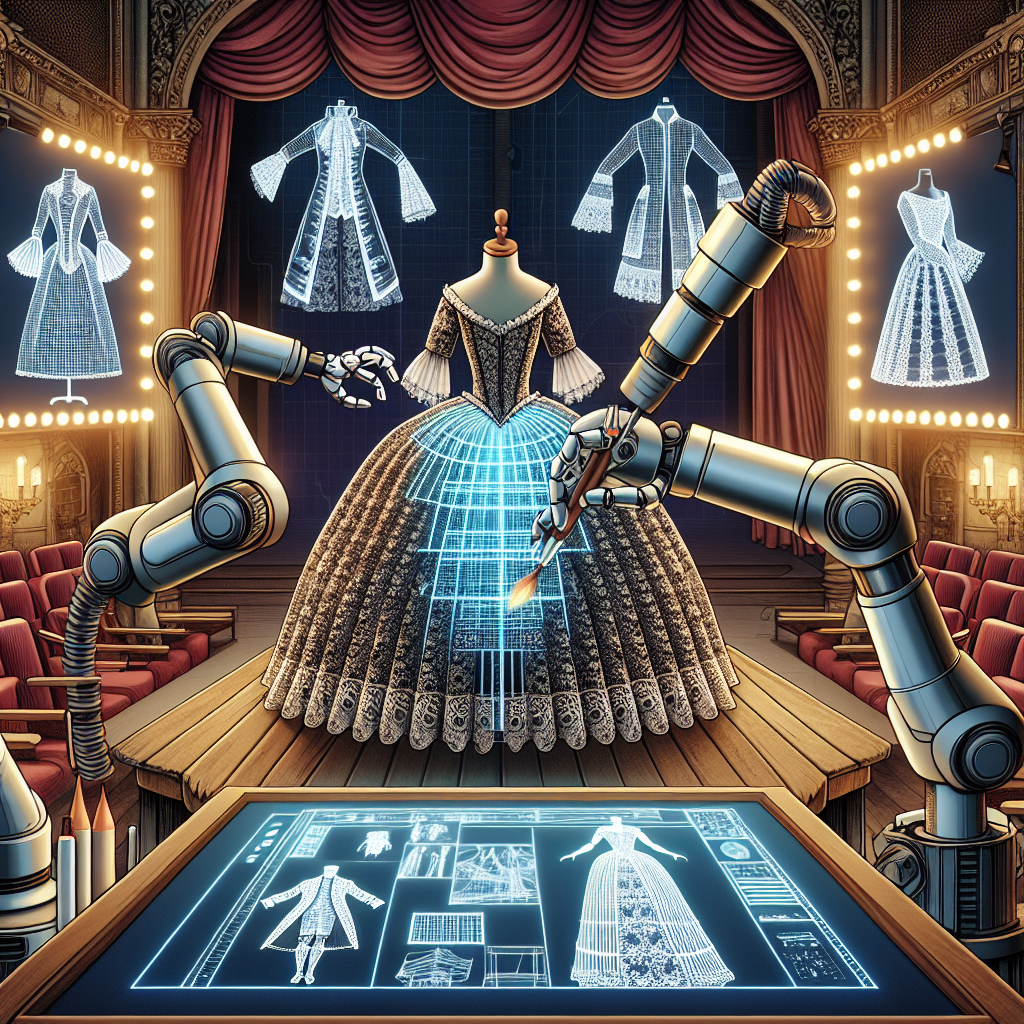
Artificial Intelligence (AI) has been making waves in various industries, from healthcare to finance to entertainment. One area where AI is starting to make a significant impact is in theater costume design. The use of AI in creating elaborate and lifelike costumes is revolutionizing the way costumes are designed and produced for stage productions.
AI technology has the ability to analyze vast amounts of data and information to create unique and innovative designs that would be difficult for a human designer to come up with on their own. By using AI algorithms, designers can input specific criteria and parameters, such as the time period of the production, the characters’ personalities, and even the actors’ measurements, to generate customized costume designs that perfectly fit the vision of the production.
One of the key advantages of using AI in costume design is the speed and efficiency with which designs can be created. AI algorithms can generate multiple design options in a fraction of the time it would take a human designer to do so, allowing for more time to be spent on perfecting the final design. This not only saves time and resources but also allows for more creative freedom and exploration in the design process.
Another benefit of using AI in costume design is the ability to create costumes that are more intricate and detailed than ever before. AI algorithms can analyze and synthesize different design elements, textures, and materials to create costumes that are truly one-of-a-kind. This level of detail and complexity would be extremely time-consuming and labor-intensive for a human designer to achieve on their own.
Furthermore, AI can also help in the production process by providing accurate measurements and patterns for each costume, ensuring a perfect fit for each actor. This eliminates the need for multiple fittings and adjustments, saving time and resources for both the designers and the production team.
In addition to design and production, AI can also be used in costume creation to enhance the overall theatrical experience for audiences. By incorporating sensors and other technology into the costumes, designers can create interactive and immersive experiences that blur the lines between reality and fantasy. For example, costumes could change colors or patterns in real-time based on the actors’ movements or the audience’s reactions, creating a dynamic and engaging visual spectacle.
Despite the many benefits of using AI in theater costume design, there are also some challenges and limitations to consider. One of the main concerns is the potential loss of the human touch and creativity in the design process. While AI can generate innovative and unique designs, there is still a need for human designers to bring their own artistic vision and interpretation to the final product.
Another challenge is the cost and accessibility of AI technology for smaller theater productions. While larger theaters and production companies may have the resources to invest in AI technology, smaller theaters may struggle to afford the upfront costs of implementing AI into their costume design process. However, as AI technology continues to evolve and become more mainstream, it is likely that the cost of implementation will decrease, making it more accessible to a wider range of theaters and productions.
In conclusion, AI is transforming the world of theater costume design by enabling designers to create elaborate and lifelike costumes that push the boundaries of creativity and innovation. By harnessing the power of AI algorithms, designers can generate unique and immersive designs that enhance the overall theatrical experience for audiences. While there are challenges and limitations to consider, the potential benefits of using AI in costume design are vast and exciting, paving the way for a new era of creativity and innovation in the world of theater.
FAQs:
1. How does AI technology generate costume designs?
AI technology uses algorithms to analyze data and information input by designers to create customized costume designs based on specific criteria and parameters. This allows for the generation of multiple design options in a fraction of the time it would take a human designer to do so.
2. What are the benefits of using AI in theater costume design?
Some of the benefits of using AI in theater costume design include increased speed and efficiency in the design process, the ability to create intricate and detailed costumes, accurate measurements and patterns for each costume, and the potential for creating interactive and immersive experiences for audiences.
3. What are the challenges of using AI in theater costume design?
Some of the challenges of using AI in theater costume design include the potential loss of the human touch and creativity in the design process, as well as the cost and accessibility of AI technology for smaller theater productions. However, as AI technology continues to evolve and become more mainstream, these challenges are likely to be addressed over time.