
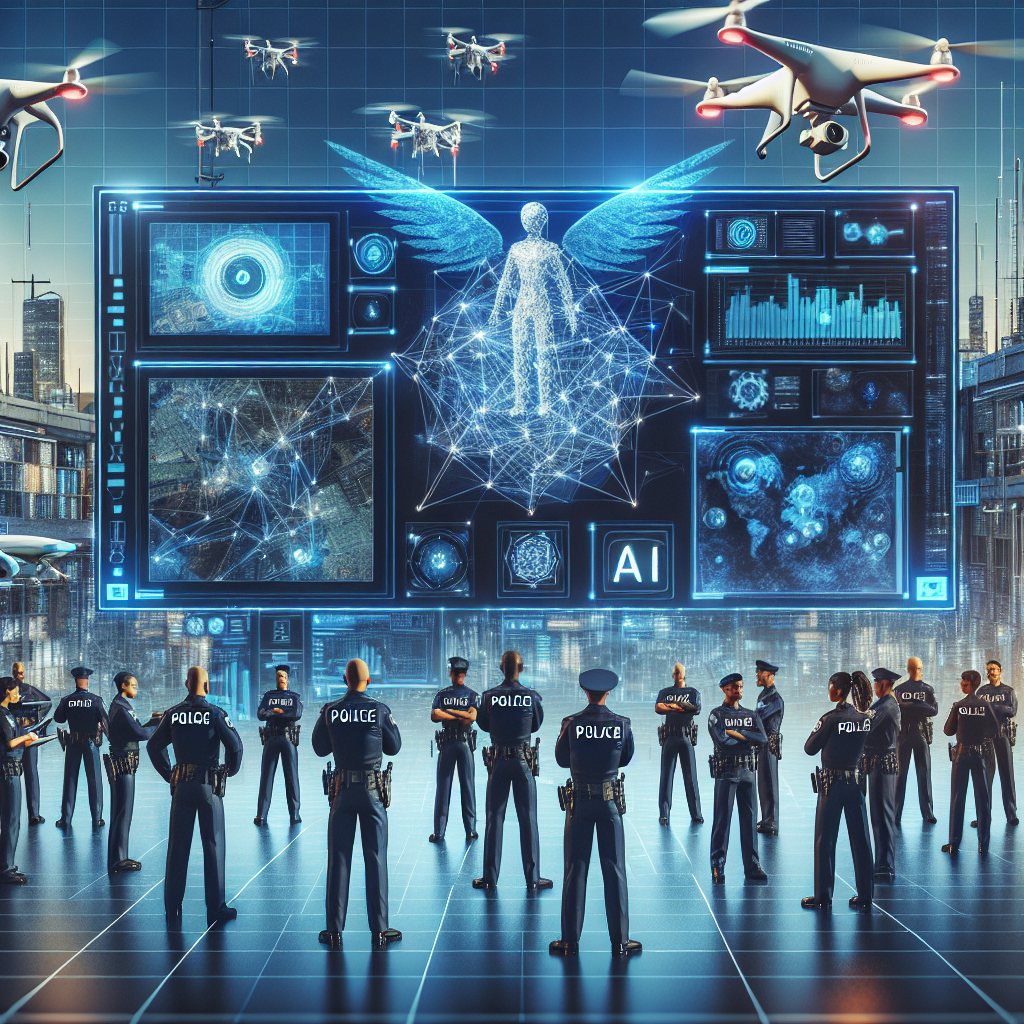
In recent years, the integration of artificial intelligence (AI) in law enforcement has become increasingly prevalent. From predictive policing to facial recognition technology, AI has the potential to revolutionize the way law enforcement agencies operate and enhance public safety. However, with this technological advancement also come concerns about privacy, bias, and ethics. In this article, we will explore the benefits and challenges of AI integration in law enforcement and discuss how it can be used to improve public safety.
Benefits of AI Integration in Law Enforcement
1. Predictive Policing: One of the key benefits of AI integration in law enforcement is predictive policing. By analyzing large amounts of data, AI algorithms can identify patterns and trends that can help law enforcement agencies predict where crimes are likely to occur. This can help police departments allocate resources more effectively and prevent crimes before they happen.
2. Facial Recognition Technology: Another important application of AI in law enforcement is facial recognition technology. This technology can be used to identify suspects in real-time by comparing their faces to a database of known criminals. This can help law enforcement agencies track down suspects more quickly and efficiently.
3. Crime Analysis: AI algorithms can also be used to analyze crime data and identify patterns that can help law enforcement agencies solve crimes more efficiently. By analyzing data from multiple sources, AI can help police departments connect the dots and solve cases that may have otherwise gone unsolved.
4. Risk Assessment: AI can also be used to assess the risk of individuals who come into contact with law enforcement. By analyzing factors such as criminal history, behavior, and social media activity, AI algorithms can help police departments determine the likelihood that a person will commit a crime in the future. This can help law enforcement agencies make informed decisions about how to handle individuals they encounter.
Challenges of AI Integration in Law Enforcement
1. Privacy Concerns: One of the main concerns about AI integration in law enforcement is privacy. As AI algorithms collect and analyze large amounts of data, there is a risk that personal information could be compromised or misused. This has raised concerns about the potential for mass surveillance and the erosion of civil liberties.
2. Bias in AI Algorithms: Another challenge of AI integration in law enforcement is the risk of bias in AI algorithms. Because AI algorithms are trained on historical data, they can inherit biases present in that data. This can lead to discriminatory outcomes, such as the targeting of minority communities or the unfairly targeting of individuals based on factors such as race or gender.
3. Lack of Transparency: Another challenge of AI integration in law enforcement is the lack of transparency in how AI algorithms are developed and used. Without transparency, it can be difficult for the public to understand how decisions are being made and to hold law enforcement agencies accountable for their actions.
4. Ethical Concerns: There are also ethical concerns surrounding the use of AI in law enforcement. For example, there are concerns about the use of AI to make life-or-death decisions, such as in the case of autonomous weapons or predictive policing. There are also concerns about the potential for AI to infringe on human rights, such as the right to privacy or freedom of expression.
FAQs
Q: How is AI being used in law enforcement?
A: AI is being used in law enforcement in a variety of ways, including predictive policing, facial recognition technology, crime analysis, risk assessment, and more.
Q: What are the benefits of AI integration in law enforcement?
A: The benefits of AI integration in law enforcement include improved predictive policing, faster identification of suspects, more efficient crime analysis, and better risk assessment.
Q: What are the challenges of AI integration in law enforcement?
A: The challenges of AI integration in law enforcement include privacy concerns, bias in AI algorithms, lack of transparency, and ethical concerns.
Q: How can law enforcement agencies address the challenges of AI integration?
A: Law enforcement agencies can address the challenges of AI integration by implementing policies and procedures to ensure transparency, accountability, and fairness in the use of AI technologies.
Q: What are some ethical considerations when using AI in law enforcement?
A: Some ethical considerations when using AI in law enforcement include the potential for bias in AI algorithms, the risk of infringing on human rights, and the implications of using AI to make life-or-death decisions.
In conclusion, the integration of AI in law enforcement has the potential to enhance public safety and improve the efficiency of law enforcement agencies. However, it is important for law enforcement agencies to address the challenges of privacy, bias, transparency, and ethics that come with the use of AI technologies. By implementing policies and procedures to ensure accountability and fairness, law enforcement agencies can harness the power of AI to better protect and serve their communities.