
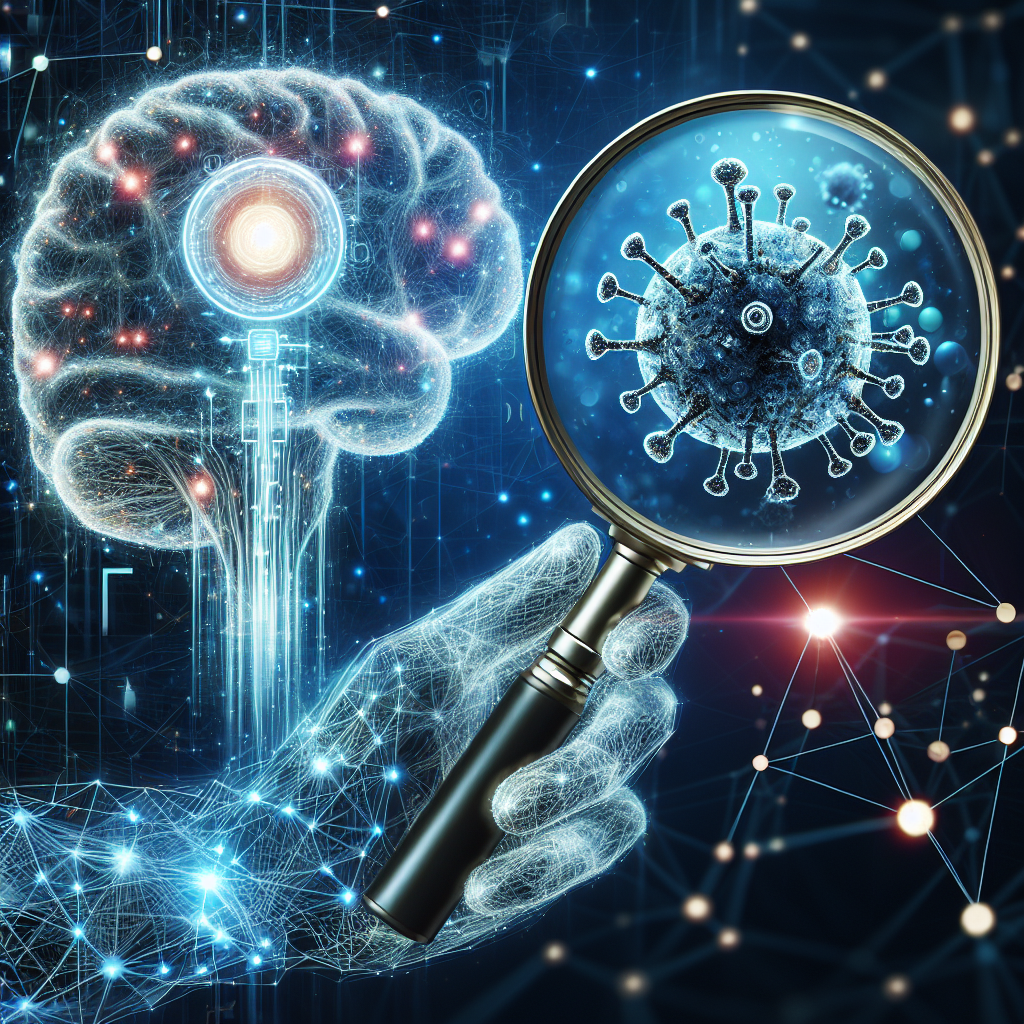
In recent years, the field of artificial intelligence (AI) has shown great promise in revolutionizing various aspects of healthcare, including disease surveillance. AI platforms have the potential to enhance the monitoring, detection, and response to outbreaks of infectious diseases, ultimately improving public health outcomes. In this article, we will explore the role of AI platforms in disease surveillance and discuss their potential impact on the future of healthcare.
AI platforms in disease surveillance
AI platforms leverage advanced algorithms and data analytics to process large volumes of data from various sources, such as electronic health records, social media, and wearable devices, to identify patterns and trends that may indicate the presence of a disease outbreak. These platforms can provide real-time insights into the spread of infectious diseases, enabling public health officials to take timely and targeted interventions to prevent further transmission.
One of the key advantages of AI platforms in disease surveillance is their ability to analyze data at a much faster pace than traditional methods. By automating the data collection and analysis process, AI platforms can detect outbreaks earlier, allowing for a more rapid response. This can be particularly crucial in the case of emerging infectious diseases, where early detection and containment are essential to prevent widespread transmission.
AI platforms can also help to improve the accuracy and reliability of disease surveillance data. By integrating data from multiple sources and applying machine learning algorithms, AI platforms can identify patterns and correlations that may not be apparent to human analysts. This can help to reduce false positives and false negatives in disease surveillance, leading to more precise and actionable insights.
Furthermore, AI platforms can enhance the scalability and efficiency of disease surveillance efforts. By automating data collection and analysis tasks, AI platforms can free up human resources to focus on more complex and strategic tasks, such as developing response plans and implementing interventions. This can help to streamline the disease surveillance process and ensure that public health resources are deployed effectively.
Overall, AI platforms have the potential to transform disease surveillance by providing real-time, accurate, and scalable insights into the spread of infectious diseases. By leveraging the power of AI, public health officials can more effectively monitor and respond to outbreaks, ultimately improving the health outcomes of populations around the world.
The future of disease surveillance with AI platforms
As AI technology continues to advance, the future of disease surveillance looks promising. AI platforms are becoming increasingly sophisticated, with the ability to analyze complex data sets and identify subtle patterns and trends that may indicate the presence of a disease outbreak. In the coming years, we can expect to see AI platforms play an even greater role in disease surveillance, offering new capabilities and insights that can help to improve public health outcomes.
One area where AI platforms are expected to make a significant impact is in the monitoring of infectious diseases with pandemic potential. By analyzing data from a wide range of sources, including social media, news reports, and electronic health records, AI platforms can provide early warning signals of potential outbreaks, enabling public health officials to take proactive measures to prevent further transmission. This can be particularly important in the case of emerging infectious diseases, where rapid detection and containment are critical to preventing a global pandemic.
AI platforms can also help to improve the efficiency and effectiveness of public health response efforts. By automating data collection and analysis tasks, AI platforms can provide public health officials with timely and accurate information on the spread of infectious diseases, allowing for more targeted and effective interventions. This can help to reduce the burden on healthcare systems and minimize the impact of disease outbreaks on communities.
Furthermore, AI platforms can enhance the collaboration and coordination of disease surveillance efforts across different regions and countries. By sharing data and insights in real-time, public health officials can work together to identify and respond to outbreaks more effectively. This can help to prevent the spread of infectious diseases across borders and reduce the global impact of pandemics.
Overall, the future of disease surveillance with AI platforms holds great promise for improving public health outcomes. By harnessing the power of AI technology, public health officials can more effectively monitor, detect, and respond to outbreaks of infectious diseases, ultimately saving lives and reducing the burden on healthcare systems.
FAQs:
Q: What are some examples of AI platforms used in disease surveillance?
A: Some examples of AI platforms used in disease surveillance include HealthMap, BlueDot, and Metabiota. These platforms leverage advanced algorithms and data analytics to monitor and analyze data from various sources to identify patterns and trends that may indicate the presence of a disease outbreak.
Q: How accurate are AI platforms in disease surveillance?
A: AI platforms in disease surveillance are becoming increasingly accurate, thanks to advancements in machine learning algorithms and data analytics. While no system is perfect, AI platforms can help to improve the accuracy and reliability of disease surveillance data by identifying patterns and correlations that may not be apparent to human analysts.
Q: How can AI platforms improve the efficiency of disease surveillance efforts?
A: AI platforms can improve the efficiency of disease surveillance efforts by automating data collection and analysis tasks, enabling public health officials to detect outbreaks earlier and respond more quickly. By streamlining the surveillance process, AI platforms can help to ensure that public health resources are deployed effectively.
Q: What are some challenges associated with using AI platforms in disease surveillance?
A: Some challenges associated with using AI platforms in disease surveillance include data privacy concerns, data quality issues, and the need for ongoing training and validation of algorithms. It is important for public health officials to address these challenges to ensure the accuracy and reliability of AI platforms in disease surveillance.