
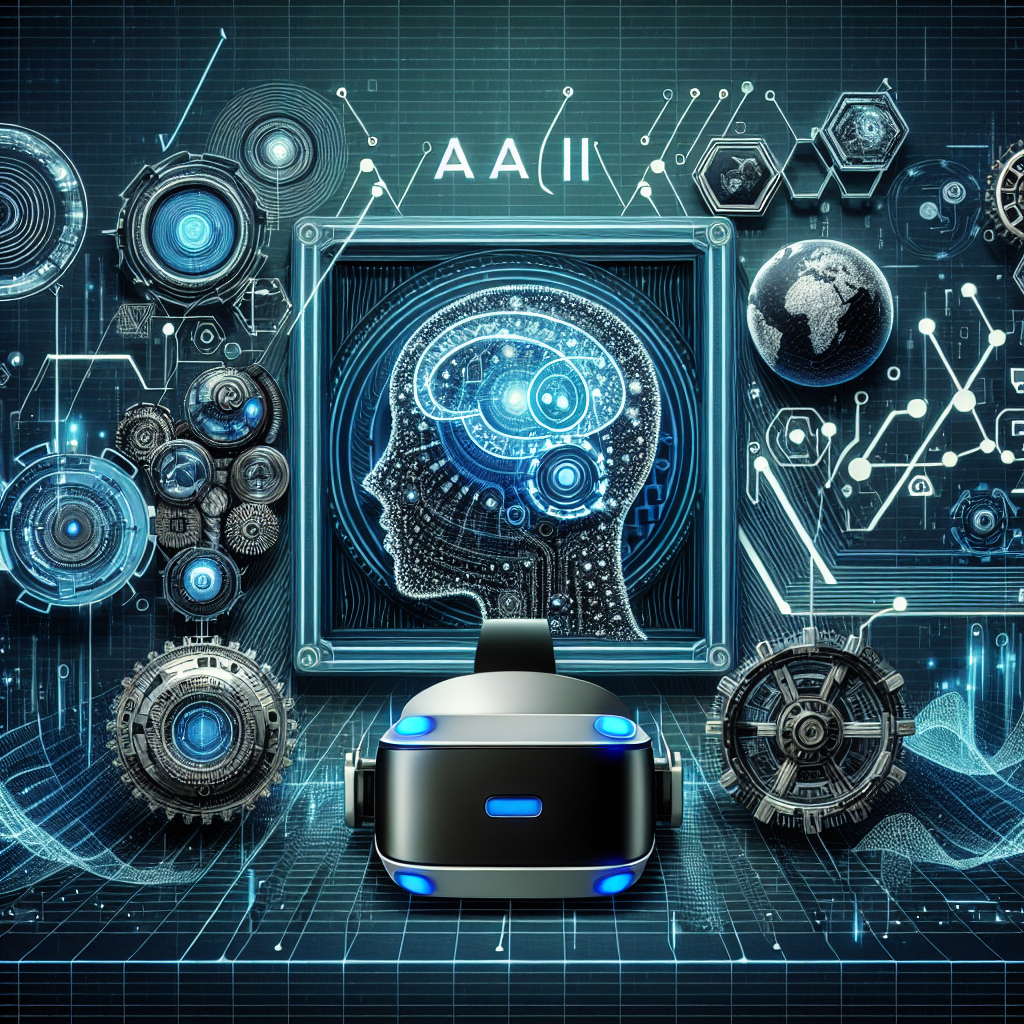
In recent years, artificial intelligence (AI) and virtual reality (VR) have been two of the most talked-about technologies in the tech world. AI platforms are increasingly being used to enhance VR experiences, opening up a whole new world of possibilities for immersive and interactive content. In this article, we will explore the intersection of AI and VR, and discuss the future of these technologies.
AI Platforms and Virtual Reality
AI platforms are software systems that utilize machine learning algorithms to analyze data, make predictions, and automate tasks. These platforms have the ability to learn from data and improve over time, making them incredibly powerful tools for a wide range of applications. In the context of virtual reality, AI platforms can be used to enhance the user experience in a number of ways.
One of the most common applications of AI in VR is in the creation of more realistic and immersive environments. AI algorithms can be used to generate lifelike textures, lighting effects, and soundscapes, creating a more convincing virtual world for users to explore. This can help to bridge the gap between the virtual and physical worlds, making VR experiences more engaging and compelling.
AI platforms can also be used to personalize VR experiences for individual users. By analyzing data on a user’s preferences, behavior, and interactions within a VR environment, AI algorithms can tailor the experience to suit their needs and interests. This can help to create more engaging and meaningful interactions, leading to a more satisfying overall experience for users.
Another key application of AI in VR is in the development of intelligent virtual assistants. These AI-powered bots can help users navigate virtual environments, provide information and guidance, and even engage in conversations. This can make VR experiences more interactive and dynamic, creating a more engaging and immersive experience for users.
The Future of AI and VR
The future of AI and VR is bright, with both technologies expected to play a significant role in shaping the way we interact with digital content in the years to come. As AI platforms continue to evolve and improve, we can expect to see even more advanced and sophisticated applications of AI in VR.
One of the key trends that we can expect to see in the future is the integration of AI and VR into a wide range of industries and applications. From gaming and entertainment to healthcare, education, and beyond, AI and VR have the potential to revolutionize the way we work, learn, and play. For example, in the healthcare industry, VR simulations powered by AI algorithms could be used to train medical professionals, while AI-powered virtual assistants could help patients navigate complex medical information.
Another key trend that we can expect to see in the future is the development of more immersive and interactive VR experiences. As AI platforms become more advanced, we can expect to see even more realistic and lifelike virtual environments, with AI-powered characters and objects that behave and interact in a more natural and intelligent way. This could open up a whole new world of possibilities for storytelling, gaming, and social interaction in virtual reality.
Overall, the future of AI and VR is likely to be a convergence of these two technologies, with AI platforms playing a key role in enhancing and enriching VR experiences. As both technologies continue to evolve and improve, we can expect to see even more exciting and innovative applications of AI in VR, leading to a more immersive, interactive, and engaging digital future.
FAQs
Q: How is AI used in virtual reality?
A: AI is used in virtual reality to enhance the user experience by creating more realistic and immersive environments, personalizing experiences for individual users, and developing intelligent virtual assistants to help users navigate virtual environments.
Q: What are some examples of AI-powered VR applications?
A: Some examples of AI-powered VR applications include AI algorithms that generate lifelike textures, lighting effects, and soundscapes in virtual environments, AI-powered bots that act as virtual assistants to help users navigate VR experiences, and personalized VR experiences tailored to individual user preferences.
Q: What are the key trends in the future of AI and VR?
A: Some key trends in the future of AI and VR include the integration of AI and VR into a wide range of industries and applications, the development of more immersive and interactive VR experiences, and the convergence of AI and VR technologies to create more engaging and compelling digital content.