
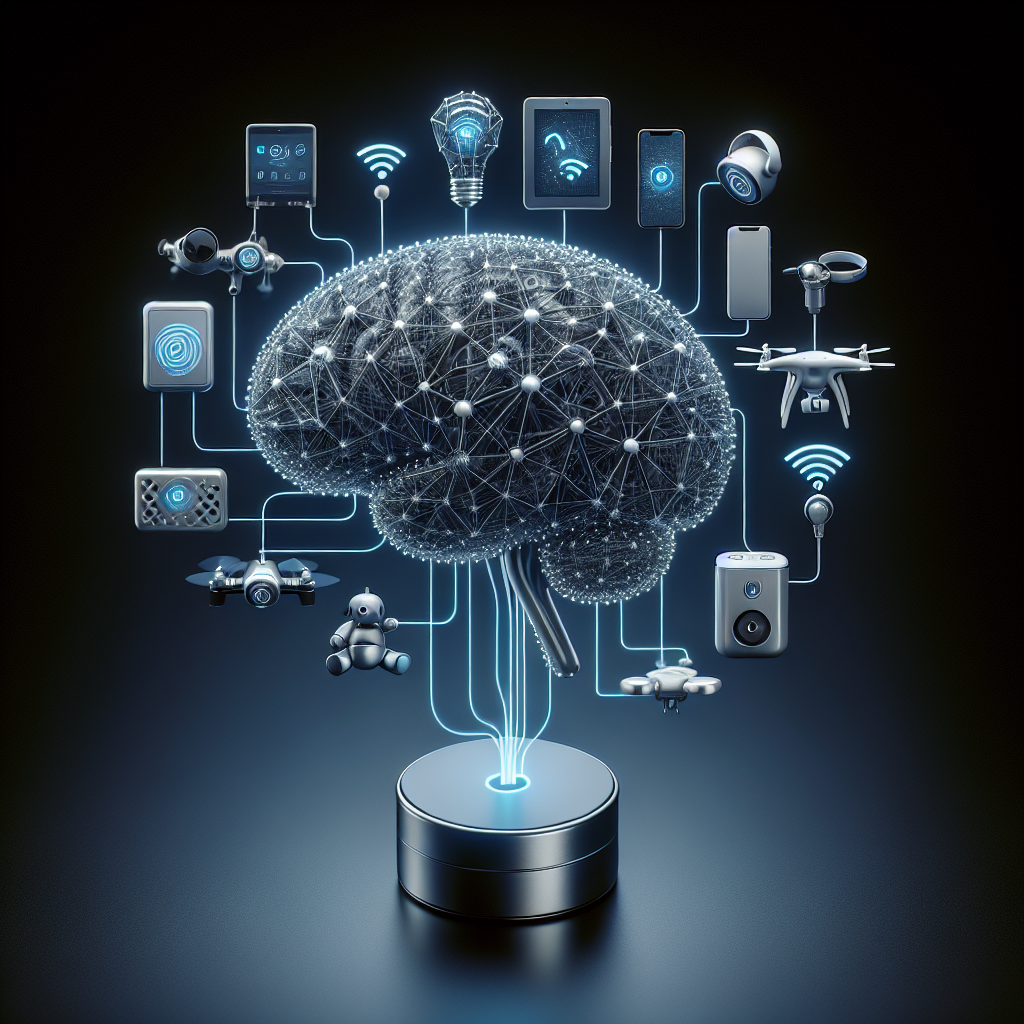
AI Platforms and the Internet of Things: A Perfect Pair
In today’s digital age, the Internet of Things (IoT) and Artificial Intelligence (AI) are two of the most transformative technologies that are shaping the way we live, work, and interact with the world around us. The convergence of these two technologies has the potential to revolutionize industries, improve efficiency, and enhance our everyday lives. In this article, we will explore how AI platforms and IoT are a perfect pair, and how they can work together to create a more connected and intelligent world.
The Internet of Things (IoT) is a network of interconnected devices that collect and exchange data over the internet. These devices can range from smart appliances in our homes to sensors in industrial machinery and vehicles. The data collected by these devices can provide valuable insights into how they are being used, the environment they are operating in, and how they can be optimized for better performance.
Artificial Intelligence (AI) is a branch of computer science that aims to create machines that can perform tasks that typically require human intelligence, such as learning, reasoning, problem-solving, and decision-making. AI algorithms can analyze large amounts of data, identify patterns, and make predictions or recommendations based on this analysis.
When AI platforms and IoT are combined, the possibilities are endless. AI can process the massive amounts of data generated by IoT devices, identify trends and patterns, and provide real-time insights that can be used to improve decision-making, optimize processes, and enhance user experiences. This combination of AI and IoT is often referred to as AIoT or Artificial Intelligence of Things.
One of the key benefits of combining AI and IoT is predictive maintenance. By analyzing data from sensors in machinery and equipment, AI algorithms can predict when a component is likely to fail and alert maintenance teams before a breakdown occurs. This can help companies avoid costly downtime, reduce maintenance costs, and extend the lifespan of their assets.
Another area where AI and IoT are making a big impact is in smart cities. By deploying sensors throughout a city to monitor traffic flow, air quality, energy consumption, and other variables, city officials can make more informed decisions about urban planning, transportation, and environmental policies. AI algorithms can analyze this data in real-time and provide recommendations for optimizing traffic flow, reducing emissions, and improving public services.
AI platforms are also being used to enhance the capabilities of IoT devices. For example, AI-powered voice assistants like Amazon Alexa and Google Assistant can control smart home devices, answer questions, and provide personalized recommendations based on user preferences. By integrating AI into IoT devices, companies can create more intelligent and interactive products that offer a more seamless user experience.
In the healthcare industry, AI and IoT are being used to improve patient care and outcomes. Wearable devices that monitor vital signs and activity levels can provide real-time data to healthcare providers, allowing them to track patients’ health status remotely and intervene quickly if necessary. AI algorithms can analyze this data to identify trends and patterns that may indicate a potential health issue, enabling early intervention and personalized treatment plans.
Overall, the combination of AI platforms and IoT has the potential to revolutionize industries, improve efficiency, and enhance our everyday lives. By harnessing the power of AI to analyze the vast amounts of data generated by IoT devices, companies can gain valuable insights that can drive innovation, increase productivity, and create new opportunities for growth.
FAQs:
Q: What are some examples of AI platforms that are commonly used in conjunction with IoT?
A: Some popular AI platforms that are used in conjunction with IoT include IBM Watson, Microsoft Azure Cognitive Services, Google Cloud AI, and Amazon Web Services (AWS) AI.
Q: How can AI and IoT be used to improve energy efficiency in buildings?
A: By deploying sensors to monitor energy usage in buildings, AI algorithms can analyze this data to identify opportunities for energy savings, such as adjusting heating and cooling systems based on occupancy levels, optimizing lighting schedules, and identifying inefficient equipment that may need to be replaced.
Q: What are some challenges associated with integrating AI and IoT?
A: Some challenges associated with integrating AI and IoT include data privacy and security concerns, interoperability issues between different devices and platforms, and the need for specialized skills and expertise to develop and deploy AI algorithms.
Q: How can companies get started with implementing AIoT solutions?
A: Companies can start by identifying use cases where AI and IoT can provide value, such as predictive maintenance, smart city initiatives, or personalized customer experiences. They can then pilot small-scale projects to test the feasibility and ROI of AIoT solutions before scaling up to larger deployments.
In conclusion, AI platforms and the Internet of Things are a perfect pair that have the potential to transform industries, improve efficiency, and enhance our everyday lives. By combining the power of AI to analyze data with the connectivity of IoT devices, companies can unlock new insights, drive innovation, and create more intelligent and interactive products and services. The future of AIoT is bright, and we can expect to see even more exciting developments in the years to come.