
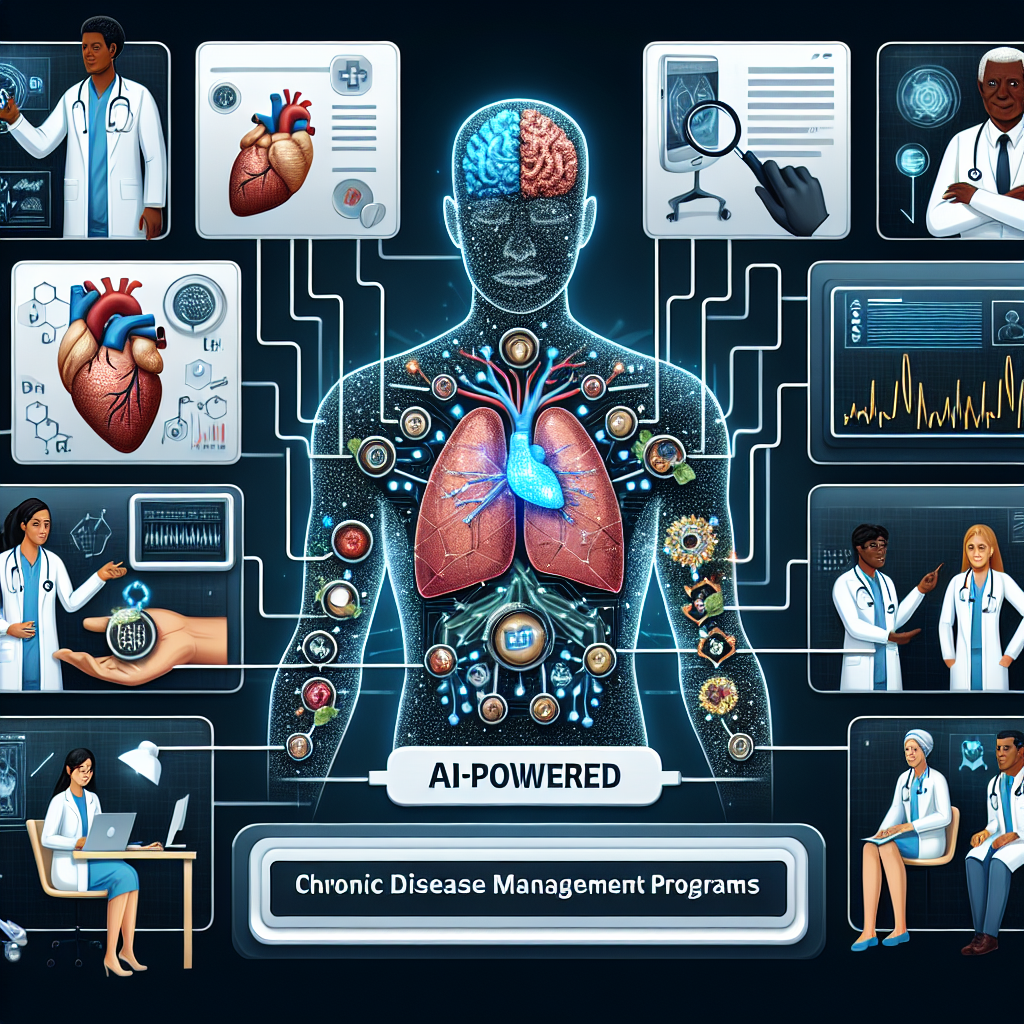
Chronic diseases are on the rise globally, with conditions such as diabetes, heart disease, and hypertension affecting millions of people every year. These diseases require constant management and monitoring to prevent complications and improve quality of life. In recent years, AI-powered chronic disease management programs have emerged as a promising solution to help patients better manage their conditions.
AI-powered chronic disease management programs utilize artificial intelligence technology to analyze patient data, provide personalized recommendations, and track progress over time. These programs can help patients better understand their condition, make informed decisions about their health, and stay on track with their treatment plan.
One of the key benefits of AI-powered chronic disease management programs is the ability to provide personalized care. By analyzing data such as patient health records, lab results, and lifestyle habits, AI algorithms can tailor treatment plans to meet the specific needs of each individual. This personalized approach can lead to better outcomes for patients and improved overall health.
Another advantage of AI-powered chronic disease management programs is the ability to track patient progress over time. By continuously monitoring patient data, AI algorithms can detect changes in health status and alert healthcare providers to potential issues. This proactive approach can help prevent complications and reduce the need for emergency care.
AI-powered chronic disease management programs can also improve patient engagement and adherence to treatment plans. By providing real-time feedback, reminders, and educational resources, these programs can help patients stay motivated and informed about their condition. This can lead to better health outcomes and increased patient satisfaction.
Despite the numerous benefits of AI-powered chronic disease management programs, there are still some challenges and considerations to be aware of. For example, data privacy and security concerns are a major issue when it comes to AI technology. Patients need to trust that their personal health information is being protected and used responsibly by healthcare providers and AI algorithms.
Additionally, there may be limitations to the accuracy and reliability of AI algorithms in certain situations. For example, AI-powered programs may struggle to interpret complex or ambiguous data, leading to inaccurate recommendations or conclusions. Healthcare providers need to be aware of these limitations and use AI technology as a tool to support their decision-making process, rather than relying solely on automated recommendations.
In terms of implementation, healthcare providers need to consider the cost and resources required to adopt AI-powered chronic disease management programs. Training staff, integrating new technology systems, and ensuring compliance with regulatory requirements can be time-consuming and expensive. However, the long-term benefits of improved patient outcomes and reduced healthcare costs may outweigh these initial challenges.
Overall, AI-powered chronic disease management programs have the potential to revolutionize the way patients with chronic conditions are treated and managed. By harnessing the power of artificial intelligence, healthcare providers can deliver more personalized, proactive, and effective care to patients, leading to better health outcomes and improved quality of life.
FAQs:
1. How do AI-powered chronic disease management programs work?
AI-powered chronic disease management programs utilize artificial intelligence technology to analyze patient data, provide personalized recommendations, and track progress over time. These programs can help patients better understand their condition, make informed decisions about their health, and stay on track with their treatment plan.
2. What are the benefits of AI-powered chronic disease management programs?
Some of the key benefits of AI-powered chronic disease management programs include personalized care, improved patient engagement, proactive monitoring, and better health outcomes. These programs can help patients better manage their condition, prevent complications, and improve their quality of life.
3. What are the limitations of AI-powered chronic disease management programs?
Some limitations of AI-powered chronic disease management programs include data privacy and security concerns, accuracy and reliability issues with AI algorithms, and the cost and resources required for implementation. Healthcare providers need to be aware of these limitations and use AI technology as a tool to support their decision-making process.
4. How can healthcare providers implement AI-powered chronic disease management programs?
Healthcare providers can implement AI-powered chronic disease management programs by investing in training staff, integrating new technology systems, and ensuring compliance with regulatory requirements. By leveraging the power of artificial intelligence, healthcare providers can deliver more personalized, proactive, and effective care to patients with chronic conditions.