
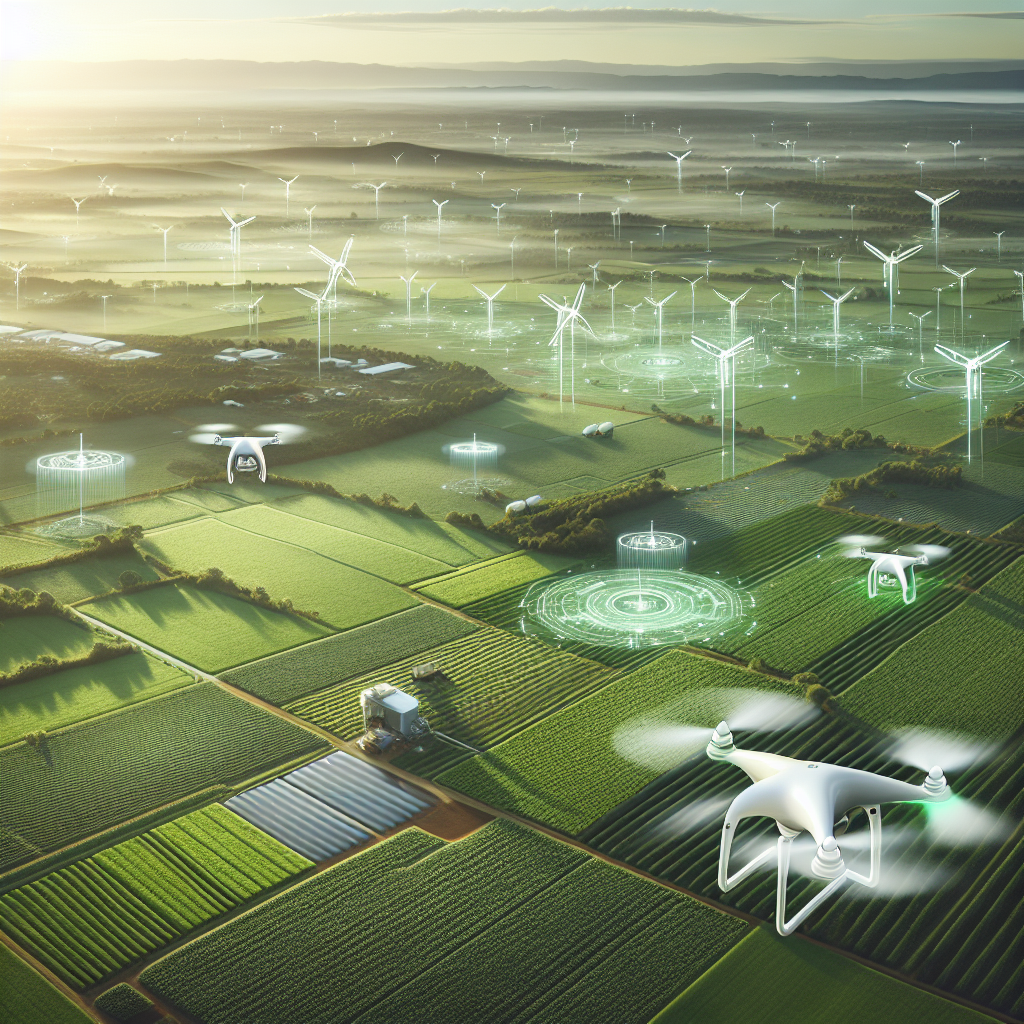
AI-powered drones have become a game-changer in the agriculture industry, revolutionizing the way farmers approach crop management and monitoring. With the ability to collect and analyze data in real-time, these drones provide valuable insights that help farmers make informed decisions, optimize resources, and increase yields.
One of the key advantages of AI-powered drones in agriculture is their ability to capture high-resolution images of crops, soil, and other important elements of the farming landscape. By using advanced imaging technology, these drones can identify early signs of disease, pest infestations, nutrient deficiencies, and other issues that can impact crop health and yield. This information allows farmers to take proactive measures to address these issues before they escalate, saving time and resources in the process.
In addition to monitoring crop health, AI-powered drones can also help farmers optimize irrigation practices. By analyzing data on soil moisture levels, temperature, and other relevant factors, these drones can generate precise watering schedules that ensure crops receive the right amount of water at the right time. This not only improves crop health and yield but also conserves water and reduces the risk of overwatering.
Furthermore, AI-powered drones can assist farmers in evaluating the effectiveness of their crop management practices. By tracking crop growth patterns, identifying areas of underperformance, and monitoring the impact of different treatments, these drones enable farmers to fine-tune their strategies and maximize productivity. This data-driven approach allows farmers to make data-driven decisions that lead to better outcomes and increased profitability.
Another important application of AI-powered drones in agriculture is in the area of crop spraying. By equipping drones with spraying mechanisms, farmers can apply fertilizers, pesticides, and other treatments with precision and efficiency. This not only reduces the risk of chemical drift and runoff but also minimizes the exposure of farmworkers to potentially harmful substances. Additionally, by using AI algorithms to calculate the optimal spray patterns and amounts, these drones can ensure uniform coverage and improve the effectiveness of treatments.
The integration of AI-powered drones in agriculture also enhances the overall sustainability of farming practices. By reducing the need for manual labor, minimizing the use of chemicals, and optimizing resource allocation, these drones help farmers operate more efficiently and environmentally responsibly. This not only benefits the environment but also contributes to long-term profitability and resilience in the face of changing climate conditions.
Despite the numerous benefits of AI-powered drones in agriculture, there are some challenges and limitations to consider. One of the primary concerns is the cost of acquiring and operating these drones, which can be prohibitive for small-scale farmers or those with limited financial resources. Additionally, there may be regulatory hurdles and privacy issues to navigate, as the use of drones in agricultural settings is subject to rules and restrictions imposed by local authorities.
Another potential drawback is the need for specialized training and expertise to operate and interpret the data collected by AI-powered drones. Farmers may require additional skills and knowledge to effectively leverage the capabilities of these drones, which could be a barrier for some individuals or organizations. Additionally, there may be concerns about data security and the potential for misuse or unauthorized access to sensitive information collected by these drones.
Despite these challenges, the potential benefits of AI-powered drones in agriculture far outweigh the drawbacks. By harnessing the power of artificial intelligence and drone technology, farmers can gain valuable insights, improve decision-making, and optimize their operations in ways that were previously not possible. As the technology continues to evolve and become more accessible, we can expect to see even greater advancements in the use of AI-powered drones in agriculture in the years to come.
FAQs:
Q: What are some of the key benefits of using AI-powered drones in agriculture?
A: AI-powered drones offer numerous benefits in agriculture, including improved crop monitoring, optimized irrigation practices, enhanced crop spraying, and increased sustainability.
Q: How do AI-powered drones help farmers make informed decisions?
A: By collecting and analyzing data on crop health, soil conditions, and other relevant factors, AI-powered drones provide farmers with valuable insights that help them make data-driven decisions and optimize their operations.
Q: What are some of the challenges associated with using AI-powered drones in agriculture?
A: Some of the challenges include high costs, regulatory hurdles, the need for specialized training, and concerns about data security and privacy.
Q: How can farmers overcome these challenges and maximize the benefits of using AI-powered drones?
A: Farmers can overcome these challenges by investing in training and education, collaborating with experts and service providers, staying informed about regulations, and implementing robust data security measures.
Q: What are some of the future trends and developments in the use of AI-powered drones in agriculture?
A: Future trends may include the integration of additional sensors and technologies, the development of more advanced AI algorithms, and the expansion of drone applications to new areas of agriculture.