
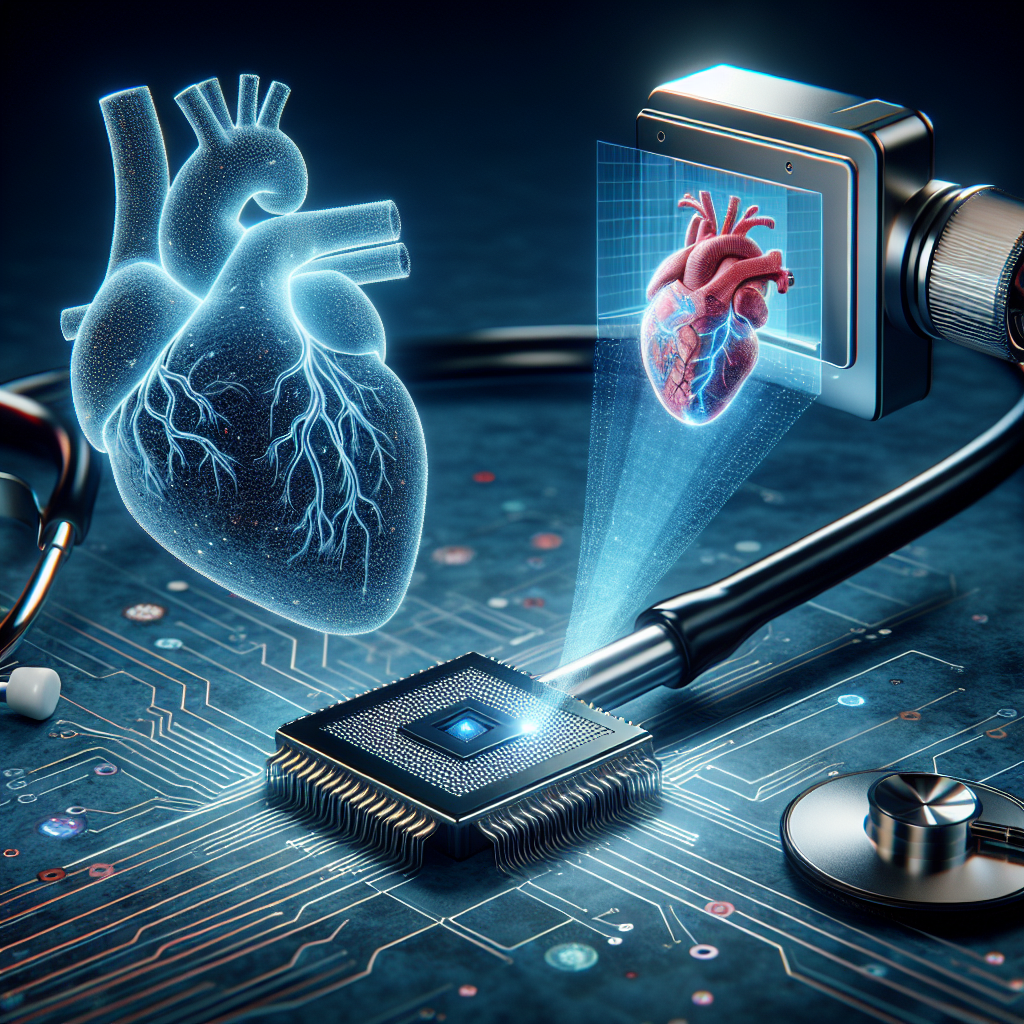
Artificial intelligence (AI) has made significant advancements in the field of medical imaging in recent years, revolutionizing the way healthcare providers diagnose and treat patients. AI-powered medical imaging technology has the potential to improve accuracy, efficiency, and patient outcomes, making it a valuable tool in the healthcare industry. In this article, we will explore the advancements and applications of AI-powered medical imaging, as well as answer some frequently asked questions about this innovative technology.
Advancements in AI-powered Medical Imaging
AI-powered medical imaging technology uses machine learning algorithms to analyze medical images, such as X-rays, MRIs, and CT scans, to assist healthcare providers in making more accurate diagnoses. These algorithms can detect patterns and abnormalities in images that may be difficult for the human eye to discern, leading to earlier and more accurate diagnoses of various medical conditions.
One of the key advancements in AI-powered medical imaging is the development of deep learning algorithms. Deep learning is a subset of machine learning that uses artificial neural networks to analyze and interpret complex data, such as medical images. These algorithms can learn from vast amounts of data and improve their performance over time, making them well-suited for tasks that require pattern recognition and image analysis.
Another significant advancement in AI-powered medical imaging is the integration of computer-aided detection (CAD) systems with traditional imaging technologies. CAD systems use AI algorithms to assist radiologists in interpreting medical images, helping them to identify suspicious areas that may require further evaluation. By combining the expertise of radiologists with the analytical power of AI, healthcare providers can achieve more accurate and efficient diagnoses.
Applications of AI-powered Medical Imaging
AI-powered medical imaging technology has a wide range of applications across various medical specialties. Some of the key applications of AI-powered medical imaging include:
1. Early detection of diseases: AI algorithms can analyze medical images to detect early signs of diseases, such as cancer, before symptoms are present. This early detection can lead to more effective treatment and improved patient outcomes.
2. Personalized treatment planning: AI-powered medical imaging can help healthcare providers develop personalized treatment plans for patients based on their unique medical imaging data. This personalized approach can improve treatment outcomes and reduce the risk of adverse effects.
3. Image interpretation: AI algorithms can assist radiologists in interpreting medical images by highlighting areas of interest and providing diagnostic insights. This can help radiologists make more accurate and efficient diagnoses, leading to better patient care.
4. Surgical planning: AI-powered medical imaging can be used to assist surgeons in planning complex surgical procedures by providing detailed 3D reconstructions of patient anatomy. This can help surgeons navigate delicate structures and improve surgical outcomes.
5. Monitoring disease progression: AI algorithms can analyze medical images over time to track disease progression and treatment response. This can help healthcare providers adjust treatment plans as needed and monitor patient outcomes.
Frequently Asked Questions
Q: How accurate is AI-powered medical imaging compared to traditional imaging methods?
A: AI-powered medical imaging has been shown to be highly accurate in detecting patterns and abnormalities in medical images. In some cases, AI algorithms have outperformed human radiologists in diagnosing certain medical conditions. However, it is important to note that AI is intended to assist healthcare providers in making diagnoses, not replace them entirely.
Q: Is AI-powered medical imaging safe for patients?
A: AI-powered medical imaging technology is safe for patients and has been approved by regulatory agencies, such as the Food and Drug Administration (FDA), for clinical use. The algorithms used in AI-powered medical imaging have undergone rigorous testing to ensure their safety and effectiveness in diagnosing medical conditions.
Q: How is patient data protected in AI-powered medical imaging?
A: Patient data privacy and security are top priorities in AI-powered medical imaging. Healthcare providers must adhere to strict regulations, such as the Health Insurance Portability and Accountability Act (HIPAA), to protect patient information. AI algorithms used in medical imaging are designed to anonymize patient data and comply with privacy regulations to ensure patient confidentiality.
Q: How accessible is AI-powered medical imaging technology?
A: AI-powered medical imaging technology is becoming increasingly accessible to healthcare providers around the world. Many hospitals and healthcare facilities are adopting AI-powered medical imaging systems to enhance their diagnostic capabilities and improve patient care. As the technology continues to advance, it is expected to become more widely available and affordable for healthcare providers of all sizes.
In conclusion, AI-powered medical imaging technology has the potential to transform the healthcare industry by improving accuracy, efficiency, and patient outcomes. With advancements in deep learning algorithms and the integration of CAD systems, AI-powered medical imaging is revolutionizing the way healthcare providers diagnose and treat patients. By leveraging the power of AI, healthcare providers can achieve more accurate diagnoses, personalized treatment plans, and improved patient care. As the technology continues to evolve, it is expected to play a crucial role in the future of healthcare.