
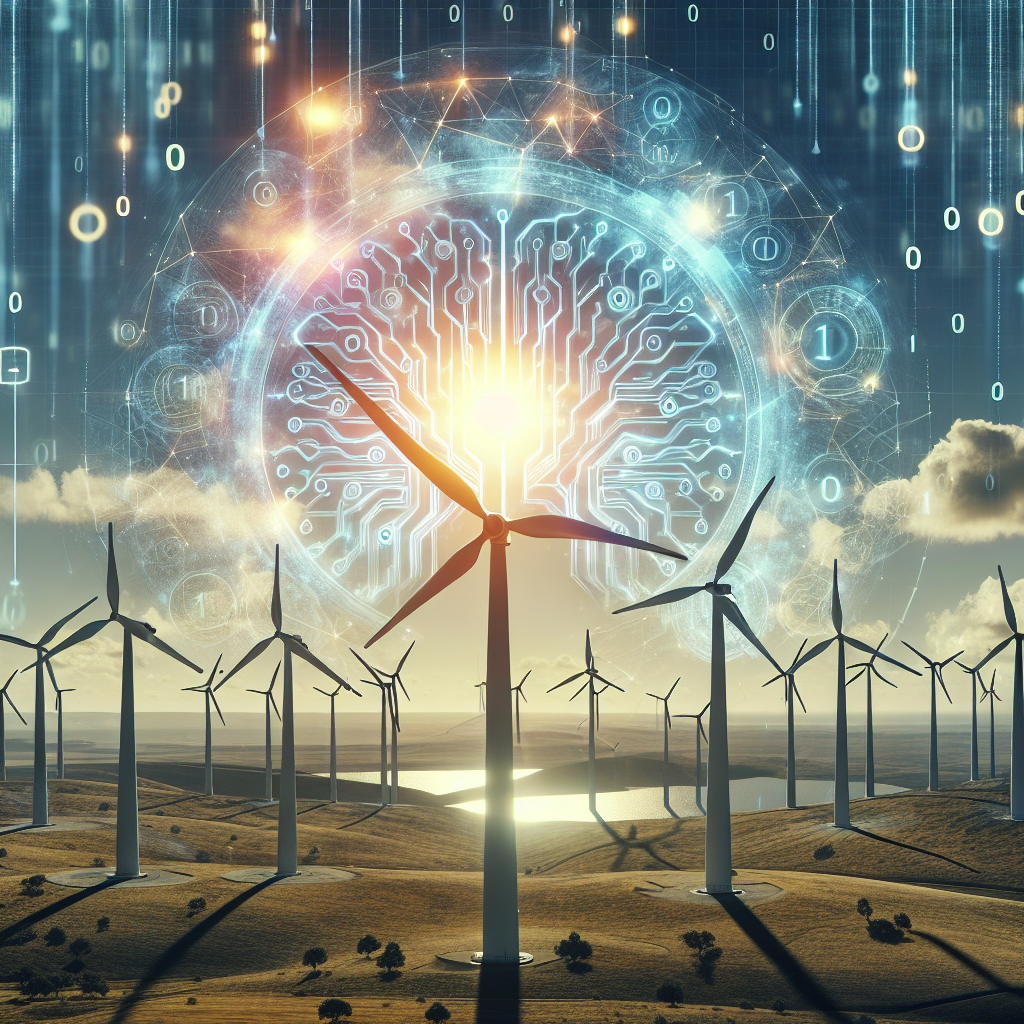
Artificial intelligence (AI) is revolutionizing the way we approach renewable energy market forecasting. By harnessing the power of machine learning algorithms, AI-powered tools can analyze vast amounts of data to provide more accurate and timely predictions about renewable energy trends and market dynamics.
In recent years, the renewable energy sector has experienced rapid growth as governments and businesses around the world have increasingly prioritized the transition to cleaner and more sustainable energy sources. This shift towards renewables has created a complex and dynamic market environment, with factors such as weather patterns, policy changes, and technological advancements all influencing the supply and demand for renewable energy.
Traditional methods of market forecasting, such as regression analysis and time series modeling, have limitations when it comes to capturing the nuances and complexities of the renewable energy market. AI, on the other hand, excels at processing and analyzing large volumes of data from multiple sources in real-time, allowing it to generate more accurate and actionable insights.
One of the key advantages of AI-powered renewable energy market forecasting is its ability to adapt to changing market conditions and incorporate new data as it becomes available. This flexibility enables AI algorithms to continuously refine their predictions and improve their accuracy over time, making them invaluable tools for energy companies, policymakers, and investors looking to make informed decisions in the rapidly evolving renewable energy landscape.
AI-powered forecasting tools can help stakeholders in the renewable energy market in several ways, including:
1. Predicting energy demand: By analyzing historical consumption patterns, weather data, and other relevant factors, AI algorithms can forecast future energy demand with greater accuracy, helping energy companies optimize their production and distribution strategies.
2. Identifying investment opportunities: AI-powered tools can analyze market trends and identify emerging opportunities in the renewable energy sector, helping investors make more informed decisions about where to allocate their capital.
3. Optimizing energy production: AI algorithms can analyze data from sensors and other monitoring devices to predict energy output from renewable sources such as solar panels and wind turbines, allowing energy producers to optimize their operations and maximize their efficiency.
4. Improving grid stability: By forecasting fluctuations in renewable energy production and demand, AI-powered tools can help grid operators anticipate and mitigate potential disruptions, ensuring a more stable and reliable energy supply.
5. Informing policy decisions: Policymakers can use AI-powered forecasting tools to better understand the impact of regulatory changes and other policy interventions on the renewable energy market, enabling them to design more effective and sustainable energy policies.
Despite the many benefits of AI-powered renewable energy market forecasting, there are also challenges and limitations to consider. For example, AI algorithms rely on historical data to make predictions, which means that they may struggle to accurately forecast events that have not occurred before or that are outside the scope of their training data. In addition, AI algorithms can be vulnerable to biases and errors in the data they are trained on, which can lead to inaccurate predictions and flawed decision-making.
To address these challenges, developers of AI-powered forecasting tools must carefully design their algorithms to account for uncertainties and biases in the data, as well as to incorporate feedback mechanisms that allow the algorithms to learn and adapt over time. Transparency and accountability are also crucial, as stakeholders must be able to understand how AI-powered predictions are generated and to assess the reliability and accuracy of the forecasts.
In conclusion, AI-powered renewable energy market forecasting has the potential to revolutionize the way we understand and navigate the complex and dynamic renewable energy landscape. By harnessing the power of AI algorithms to analyze vast amounts of data and generate more accurate predictions, stakeholders in the renewable energy sector can make more informed decisions and drive sustainable growth and innovation in the industry.
FAQs:
Q: How accurate are AI-powered renewable energy market forecasts?
A: The accuracy of AI-powered forecasts depends on the quality and quantity of the data used to train the algorithms, as well as the design and implementation of the algorithms themselves. In general, AI-powered tools can provide more accurate and timely predictions than traditional forecasting methods, but they are not infallible and may still be subject to errors and biases.
Q: How can AI-powered forecasting tools help energy companies optimize their operations?
A: AI algorithms can analyze data from sensors and monitoring devices to predict energy output from renewable sources, forecast energy demand, and identify opportunities for optimization. By using AI-powered tools, energy companies can improve their production and distribution strategies, maximize their efficiency, and reduce costs.
Q: What are the limitations of AI-powered renewable energy market forecasting?
A: AI algorithms rely on historical data to make predictions, which means that they may struggle to accurately forecast events that have not occurred before or that are outside the scope of their training data. In addition, AI algorithms can be vulnerable to biases and errors in the data they are trained on, which can lead to inaccurate predictions and flawed decision-making.
Q: How can policymakers use AI-powered forecasting tools to inform energy policy decisions?
A: Policymakers can use AI-powered tools to better understand the impact of regulatory changes and other policy interventions on the renewable energy market. By analyzing market trends and forecasting future developments, policymakers can design more effective and sustainable energy policies that support the growth of renewable energy sources.
Q: What are some best practices for developers of AI-powered renewable energy market forecasting tools?
A: Developers of AI-powered forecasting tools should carefully design their algorithms to account for uncertainties and biases in the data, as well as to incorporate feedback mechanisms that allow the algorithms to learn and adapt over time. Transparency and accountability are also crucial, as stakeholders must be able to understand how AI-powered predictions are generated and to assess the reliability and accuracy of the forecasts.