
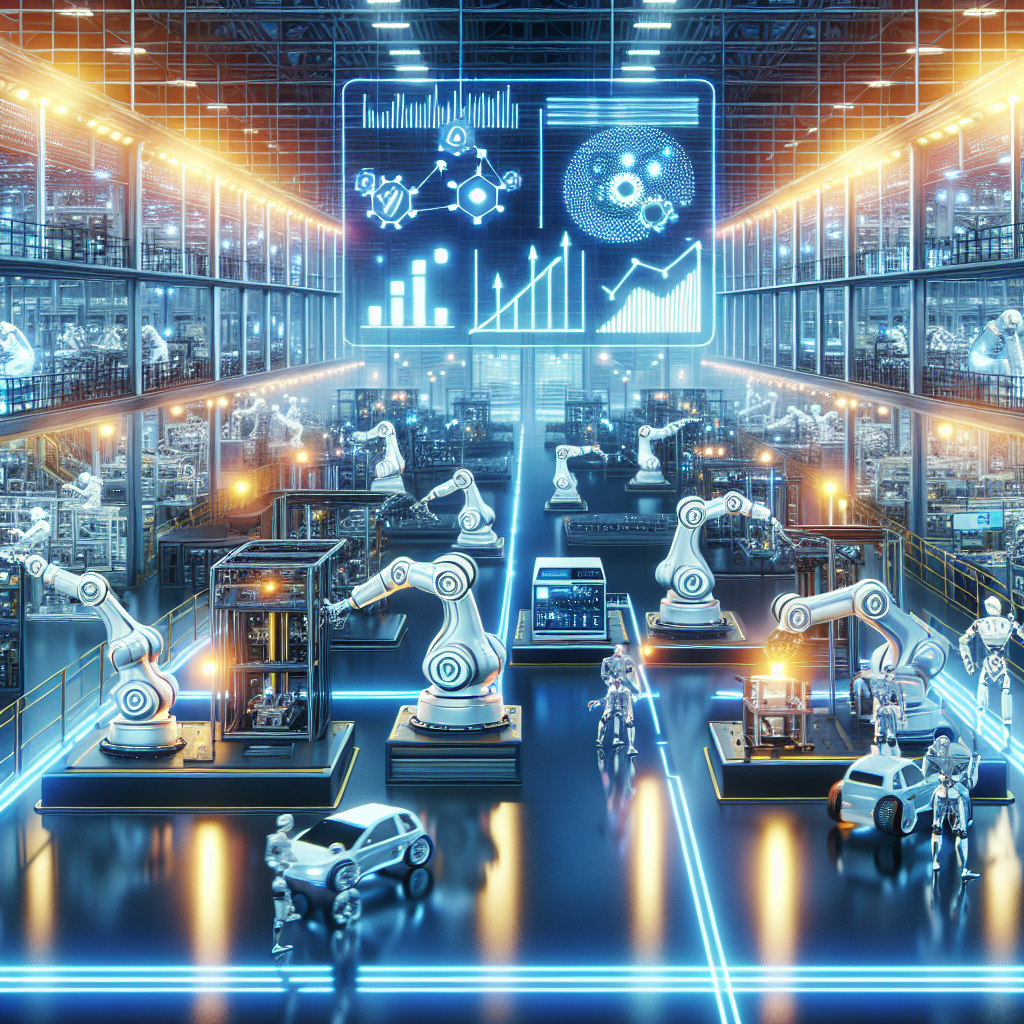
Artificial Intelligence (AI) and robotics have been transforming the manufacturing industry in recent years. The combination of AI-powered technologies and robotics has enabled manufacturers to improve efficiency, quality, and productivity in their production processes. This growing trend in AI-powered robotics is revolutionizing the way goods are produced, leading to increased automation and optimization across various industries.
AI-powered robotics in manufacturing involve the use of advanced algorithms and machine learning techniques to enhance the capabilities of robots. These intelligent robots are equipped with sensors, cameras, and other devices that enable them to perceive and interact with their environment. By leveraging AI, these robots can make decisions, learn from their experiences, and adapt to changing conditions in real-time.
One of the key benefits of AI-powered robotics in manufacturing is the ability to automate repetitive and labor-intensive tasks. By delegating these tasks to robots, manufacturers can free up human workers to focus on more complex and creative tasks that require human judgment and problem-solving skills. This not only improves efficiency but also reduces the risk of errors and accidents in the production process.
Another advantage of AI-powered robotics in manufacturing is the ability to optimize production processes. By analyzing large amounts of data in real-time, AI-powered robots can identify patterns and trends that humans may not be able to detect. This allows manufacturers to make data-driven decisions that lead to improved quality, reduced waste, and increased productivity.
Furthermore, AI-powered robotics can also enhance the safety of manufacturing operations. By taking on dangerous or hazardous tasks, robots can help reduce the risk of workplace injuries and accidents. Additionally, AI-powered robots can be programmed to adhere to strict safety protocols, ensuring that they operate in a safe and controlled manner at all times.
The adoption of AI-powered robotics in manufacturing is expected to continue growing in the coming years. With advancements in AI technologies, robots are becoming more intelligent, flexible, and capable of performing a wider range of tasks. This trend is likely to reshape the manufacturing industry, leading to greater automation, efficiency, and competitiveness.
FAQs:
Q: What are some examples of AI-powered robotics in manufacturing?
A: Some examples of AI-powered robotics in manufacturing include robotic arms that can assemble products, autonomous vehicles that transport materials within a factory, and drones that inspect and monitor production processes.
Q: How can AI-powered robotics improve efficiency in manufacturing?
A: AI-powered robotics can improve efficiency in manufacturing by automating repetitive tasks, optimizing production processes, and reducing the risk of errors and accidents. This leads to faster production cycles, lower costs, and higher quality products.
Q: Are AI-powered robots replacing human workers in manufacturing?
A: While AI-powered robots are capable of performing certain tasks more efficiently than humans, they are not necessarily replacing human workers in manufacturing. Instead, they are augmenting human labor by taking on repetitive or dangerous tasks, allowing humans to focus on more complex and creative tasks.
Q: What are some challenges of implementing AI-powered robotics in manufacturing?
A: Some challenges of implementing AI-powered robotics in manufacturing include high initial costs, the need for skilled technicians to operate and maintain the robots, and concerns about job displacement. Additionally, integrating AI technologies with existing manufacturing systems can be complex and require careful planning and coordination.
In conclusion, AI-powered robotics in manufacturing is a growing trend that is reshaping the industry and driving innovation. By leveraging the power of AI and robotics, manufacturers can improve efficiency, quality, and productivity in their production processes. As this trend continues to evolve, it is important for manufacturers to stay informed about the latest advancements in AI technologies and robotics to remain competitive in the global marketplace.