
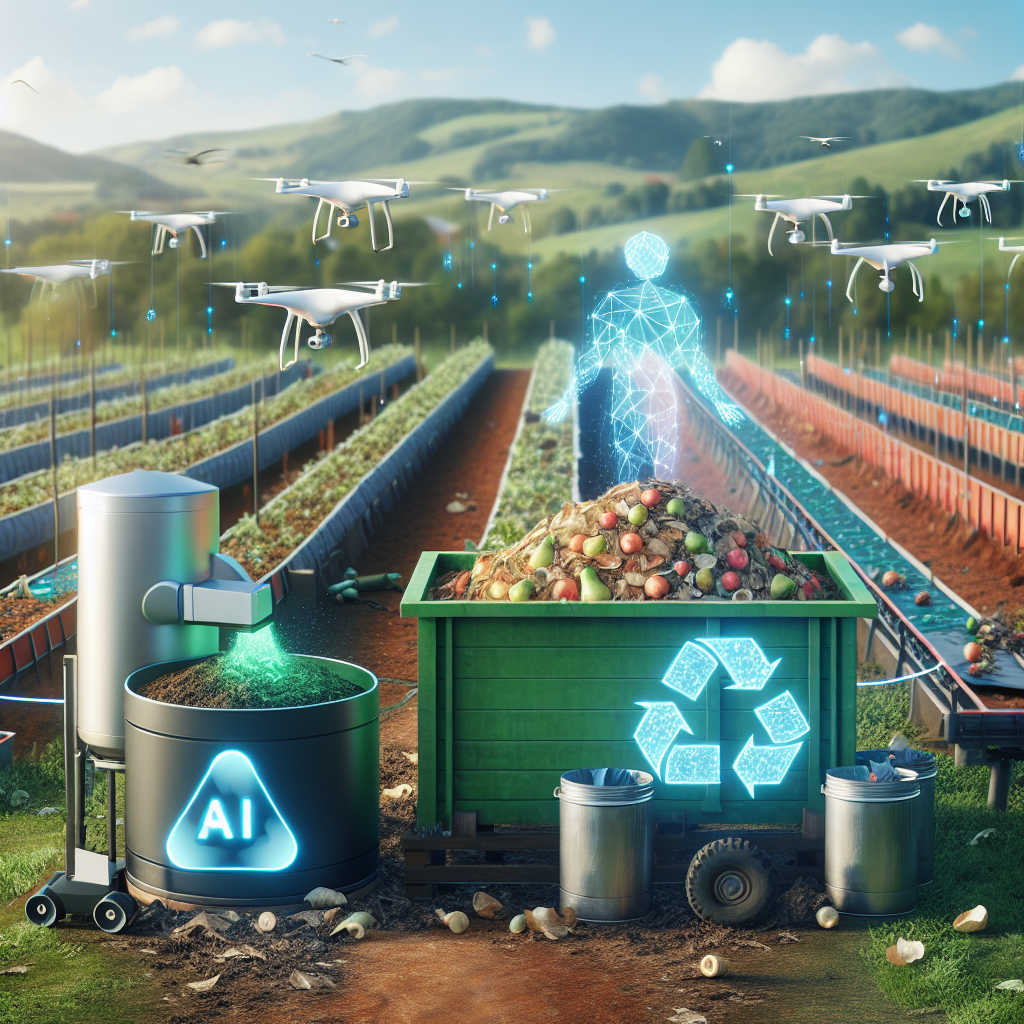
Food waste is a significant issue that impacts not only the environment but also the economy and society as a whole. According to the Food and Agriculture Organization of the United Nations, approximately one-third of all food produced for human consumption is lost or wasted globally. In terms of economic value, this amounts to about $1 trillion annually.
In agriculture, food waste occurs at various stages of the food supply chain, from production and harvesting to processing, distribution, and consumption. One of the main reasons for food waste in agriculture is the lack of efficient and accurate forecasting and planning, which leads to overproduction, improper storage, and spoilage of crops.
To address this problem, many companies and organizations are turning to artificial intelligence (AI) powered solutions to optimize the food supply chain, reduce waste, and increase efficiency. AI technology can analyze vast amounts of data, make predictions, and provide insights that can help farmers, producers, distributors, and retailers make better decisions to minimize food waste.
One of the main applications of AI in agriculture is predictive analytics, which involves using historical data, weather forecasts, market trends, and other relevant information to predict crop yields, demand, and prices. By leveraging AI algorithms, farmers can optimize their planting, harvesting, and storage processes to ensure that they produce just enough to meet demand without generating excess waste.
AI-powered solutions can also help in monitoring and managing inventory levels, identifying potential risks of spoilage or contamination, and optimizing transportation routes to reduce food waste during distribution. By using sensors, IoT devices, and AI algorithms, companies can track the condition of their products in real-time and take proactive measures to prevent losses.
In addition, AI can be used to develop smart packaging solutions that extend the shelf life of perishable products, such as fruits and vegetables, by controlling temperature, humidity, and other environmental factors. By implementing intelligent packaging technologies, food producers can reduce spoilage and ensure that their products reach consumers in optimal condition.
Furthermore, AI can be used to develop precision agriculture techniques that enable farmers to monitor and manage their crops more effectively. By using drones, satellites, and other advanced technologies, farmers can collect data on soil conditions, weather patterns, crop health, and pest infestations to make informed decisions about irrigation, fertilization, and pest control. This can help reduce the use of chemicals, water, and other resources, while increasing crop yields and quality.
Overall, AI-powered solutions offer a promising opportunity to address the challenge of food waste in agriculture and create a more sustainable food system. By leveraging the capabilities of AI technology, companies can optimize their operations, reduce waste, and improve profitability while contributing to environmental conservation and social welfare.
FAQs:
1. What are some examples of AI-powered solutions for food waste reduction in agriculture?
– Predictive analytics for crop yield forecasting
– Inventory management systems with AI algorithms
– Smart packaging technologies for extending shelf life
– Precision agriculture techniques for optimizing crop production
2. How can AI technology help farmers reduce food waste?
– By providing accurate predictions of crop yields and demand
– By monitoring and managing inventory levels in real-time
– By detecting potential risks of spoilage or contamination
– By optimizing transportation routes to reduce losses during distribution
3. What are the benefits of using AI-powered solutions for food waste reduction?
– Increased efficiency and profitability for food producers
– Reduced environmental impact of food waste
– Improved food security and availability for consumers
– Enhanced sustainability of the food supply chain
4. Are AI-powered solutions for food waste reduction cost-effective?
– While implementing AI technology may require upfront investment, the long-term benefits in terms of reduced waste, improved efficiency, and increased profitability can outweigh the initial costs.
– Many companies offer AI solutions as a service, which allows farmers and food producers to access advanced technology without significant capital expenditures.
5. How can farmers and food producers adopt AI-powered solutions for food waste reduction?
– By partnering with technology providers and solution vendors
– By investing in training and education to develop in-house AI capabilities
– By collaborating with research institutions and government agencies to leverage AI technologies for food waste reduction initiatives.