
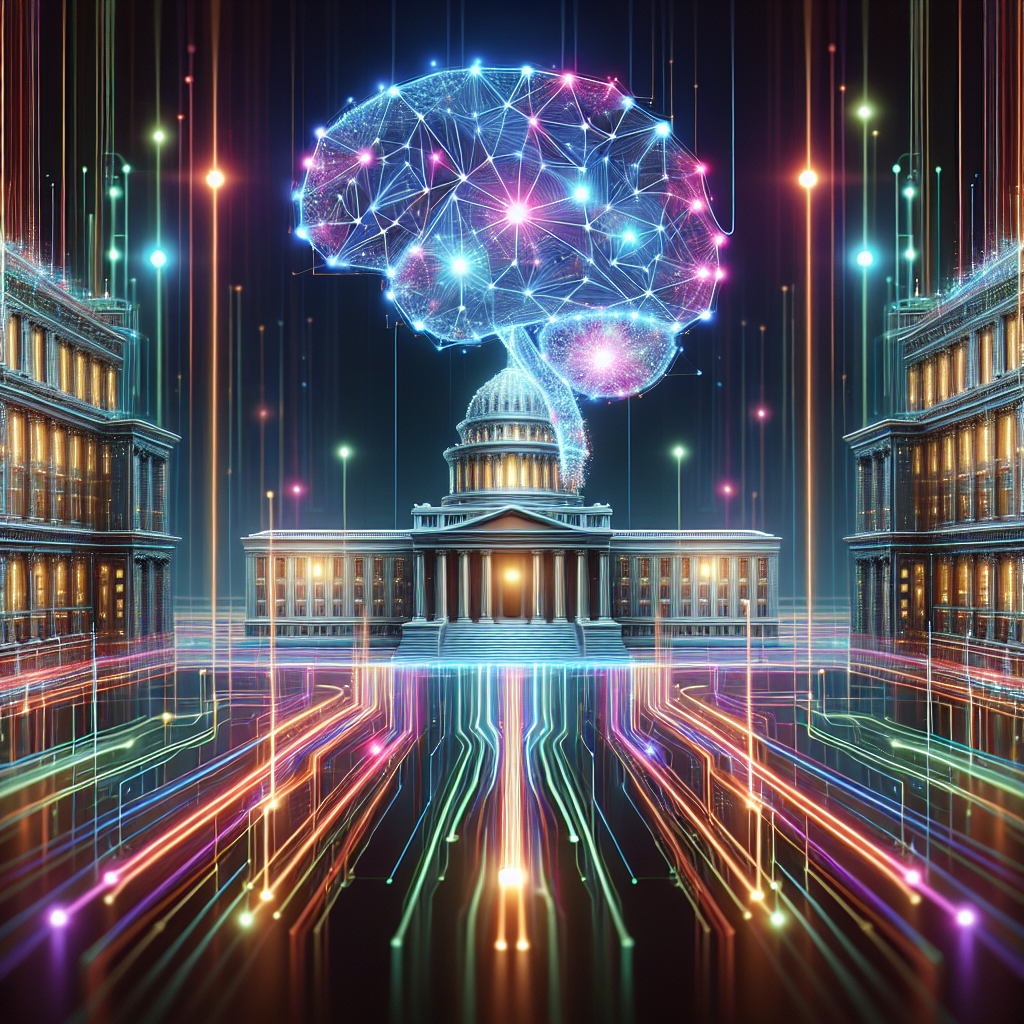
Artificial Intelligence (AI) has been transforming various industries, and the government sector is no exception. AI-powered solutions are being increasingly adopted by governments around the world to improve efficiency, reduce costs, and enhance service delivery to citizens. From automating routine tasks to predicting future trends, AI is revolutionizing the way governments operate.
In this article, we will explore how AI-powered solutions are being used to drive government efficiency and discuss some of the key benefits and challenges associated with their implementation.
—
**AI in Government: Driving Efficiency**
Governments are under increasing pressure to deliver services more efficiently and effectively, all while facing budget constraints and growing demands from citizens. AI offers a powerful tool to help governments meet these challenges by automating tasks, analyzing data, and improving decision-making processes.
One of the key areas where AI is being used in government is in the automation of routine tasks. AI-powered chatbots, for example, can handle a wide range of inquiries from citizens, freeing up human employees to focus on more complex issues. This not only improves efficiency but also enhances the citizen experience by providing faster and more accurate responses.
AI is also being used to analyze vast amounts of data to identify trends and patterns that can help governments make better decisions. For example, AI algorithms can analyze traffic data to optimize transportation routes, or predict areas at risk of natural disasters to improve emergency response planning.
Another area where AI is making a big impact is in fraud detection and prevention. AI algorithms can analyze financial transactions and identify suspicious patterns that may indicate fraudulent activity. This not only saves governments money by preventing fraud but also helps ensure that public funds are being used effectively.
Overall, AI-powered solutions are helping governments streamline operations, improve service delivery, and make better decisions based on data-driven insights.
—
**Benefits of AI-Powered Solutions in Government**
There are several key benefits of using AI-powered solutions in government:
1. **Improved Efficiency:** By automating routine tasks and streamlining processes, AI helps governments operate more efficiently and effectively.
2. **Cost Savings:** AI can help governments reduce costs by automating tasks that would otherwise require human labor, and by improving decision-making processes to optimize resources.
3. **Enhanced Service Delivery:** AI-powered solutions can improve the quality and speed of services provided to citizens, leading to higher levels of satisfaction.
4. **Data-Driven Insights:** AI can analyze vast amounts of data to identify trends and patterns that can help governments make better decisions and improve service delivery.
5. **Fraud Detection:** AI algorithms can help governments detect and prevent fraud, saving money and ensuring that public funds are used effectively.
—
**Challenges of Implementing AI in Government**
While the benefits of using AI in government are clear, there are also some challenges associated with its implementation:
1. **Data Privacy and Security:** Governments must ensure that the data being used by AI algorithms is secure and protected from unauthorized access.
2. **Ethical Considerations:** AI algorithms can sometimes produce biased results, leading to unfair outcomes. Governments must be vigilant in ensuring that AI systems are fair and unbiased.
3. **Lack of Expertise:** Implementing AI-powered solutions requires specialized expertise that may not always be available within government agencies. Training staff or hiring external experts can be costly and time-consuming.
4. **Resistance to Change:** Some employees may be resistant to adopting AI-powered solutions, fearing that they will be replaced by machines. Governments must address these concerns and provide training and support to employees to ensure a smooth transition.
5. **Regulatory Compliance:** Governments must ensure that AI-powered solutions comply with relevant regulations and standards, particularly in sensitive areas such as privacy and security.
—
**FAQs**
1. **What are some examples of AI-powered solutions being used in government?**
– AI-powered chatbots for citizen inquiries
– Predictive analytics for emergency response planning
– Fraud detection algorithms for financial transactions
2. **How can AI help governments save money?**
– By automating routine tasks
– By optimizing resources through data-driven insights
– By detecting and preventing fraud
3. **What are some challenges of implementing AI in government?**
– Data privacy and security concerns
– Ethical considerations around bias in AI algorithms
– Lack of expertise and resistance to change
4. **How can governments address the challenges of implementing AI?**
– Ensuring data privacy and security measures are in place
– Monitoring and addressing bias in AI algorithms
– Providing training and support to employees
– Ensuring regulatory compliance
In conclusion, AI-powered solutions have the potential to revolutionize government operations by improving efficiency, reducing costs, and enhancing service delivery to citizens. While there are challenges associated with implementing AI in government, the benefits far outweigh the risks. By addressing these challenges and leveraging the power of AI, governments can better serve their citizens and drive meaningful change in the public sector.