
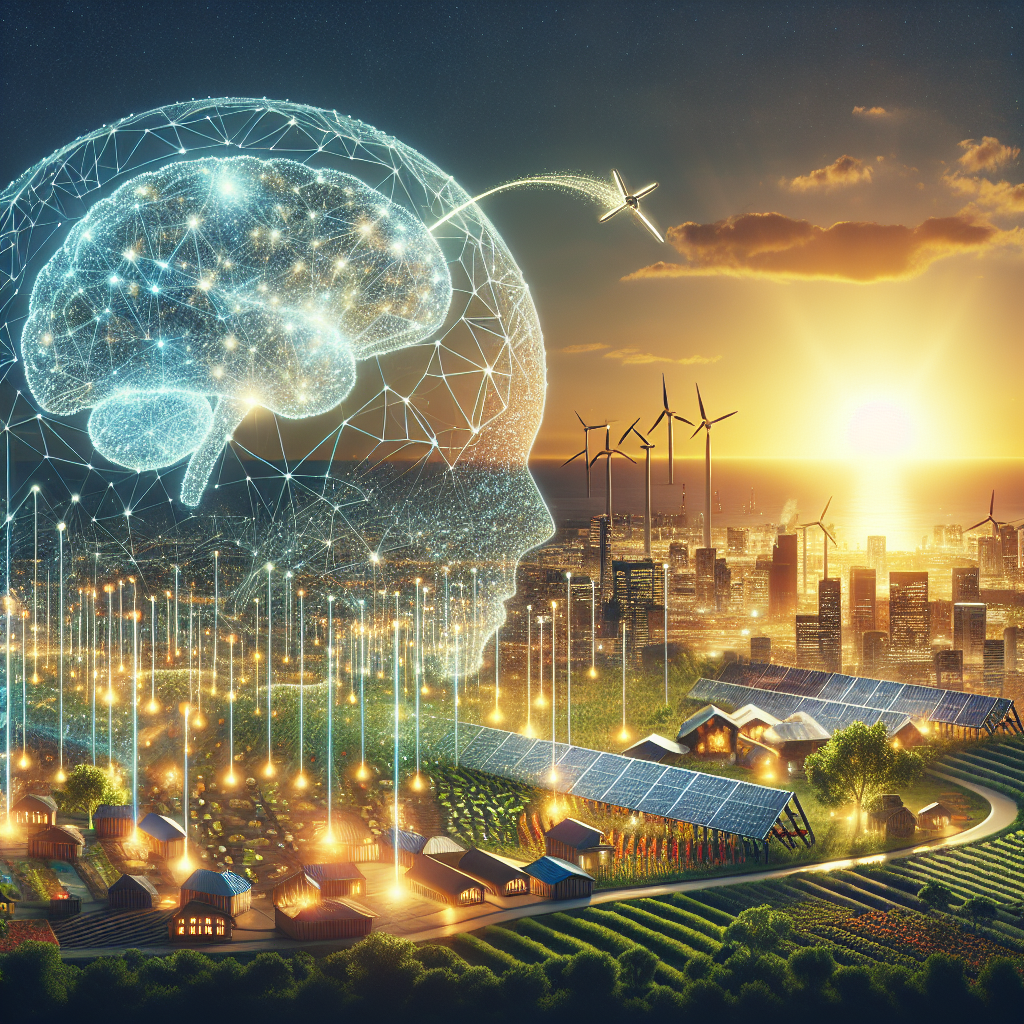
Artificial Intelligence (AI) is revolutionizing various industries, including agriculture, healthcare, finance, and education. One of the key areas where AI-powered solutions have the potential to make a significant impact is in promoting sustainable livelihoods and economic development. By leveraging the power of AI, organizations and governments can address some of the most pressing challenges facing communities around the world, including poverty, unemployment, and environmental degradation.
AI-powered solutions for sustainable livelihoods and economic development can help improve productivity, efficiency, and decision-making in various sectors. For example, in agriculture, AI can be used to optimize crop yields, monitor soil health, and predict weather patterns, helping farmers increase their income and reduce their environmental impact. In healthcare, AI can be used to improve diagnostics, personalize treatment plans, and streamline administrative processes, making healthcare more accessible and affordable for all.
In the finance sector, AI-powered solutions can help expand access to financial services, assess credit risk, and detect fraud, empowering individuals and businesses to achieve their financial goals. In education, AI can be used to personalize learning experiences, provide educational resources to underserved communities, and improve the quality of teaching, ensuring that all individuals have the opportunity to acquire the skills they need to succeed in the digital economy.
Overall, AI-powered solutions for sustainable livelihoods and economic development have the potential to drive inclusive growth, create new opportunities for innovation, and promote social and environmental sustainability. By harnessing the power of AI, organizations and governments can build more resilient and equitable societies, where all individuals have the opportunity to thrive and contribute to their communities.
FAQs:
1. What are some examples of AI-powered solutions for sustainable livelihoods and economic development?
– Some examples of AI-powered solutions include:
– Precision agriculture technologies that use AI to optimize crop yields and reduce environmental impact.
– Healthcare applications that use AI to improve diagnostics, personalize treatment plans, and streamline administrative processes.
– Financial services platforms that use AI to expand access to credit, assess credit risk, and detect fraud.
– Education tools that use AI to personalize learning experiences, provide educational resources to underserved communities, and improve the quality of teaching.
2. How can AI help promote sustainable livelihoods and economic development?
– AI can help promote sustainable livelihoods and economic development by:
– Improving productivity and efficiency in various sectors, such as agriculture, healthcare, finance, and education.
– Enhancing decision-making processes by providing data-driven insights and predictions.
– Expanding access to services and resources for underserved communities.
– Fostering innovation and entrepreneurship by creating new opportunities for growth and development.
– Promoting social and environmental sustainability by reducing waste, improving resource management, and mitigating risks.
3. What are some challenges and risks associated with AI-powered solutions for sustainable livelihoods and economic development?
– Some challenges and risks associated with AI-powered solutions include:
– Data privacy and security concerns, as AI systems may collect and analyze sensitive information.
– Bias and discrimination in AI algorithms, which can perpetuate existing inequalities and injustices.
– Job displacement and workforce changes, as AI technologies may automate certain tasks and roles.
– Regulatory and ethical issues, as AI systems may raise questions about accountability, transparency, and fairness.
– Environmental impacts, as AI technologies may consume significant amounts of energy and resources.
4. How can organizations and governments ensure that AI-powered solutions for sustainable livelihoods and economic development are inclusive and equitable?
– Organizations and governments can ensure that AI-powered solutions are inclusive and equitable by:
– Engaging with diverse stakeholders, including communities, experts, and policymakers, to co-design and implement AI initiatives.
– Ensuring transparency and accountability in AI systems, by explaining how decisions are made and providing mechanisms for recourse.
– Promoting diversity and inclusion in AI development teams, to ensure that different perspectives and voices are represented.
– Monitoring and evaluating the impacts of AI technologies on various social and environmental indicators, to identify and address any unintended consequences.
– Investing in education and training programs to equip individuals with the skills and knowledge needed to adapt to the digital economy.
In conclusion, AI-powered solutions have the potential to transform sustainable livelihoods and economic development by improving productivity, efficiency, and decision-making in various sectors. By harnessing the power of AI, organizations and governments can address some of the most pressing challenges facing communities around the world, creating new opportunities for growth, innovation, and sustainability. However, it is essential to address the challenges and risks associated with AI technologies and ensure that they are inclusive, equitable, and beneficial for all individuals and communities.