
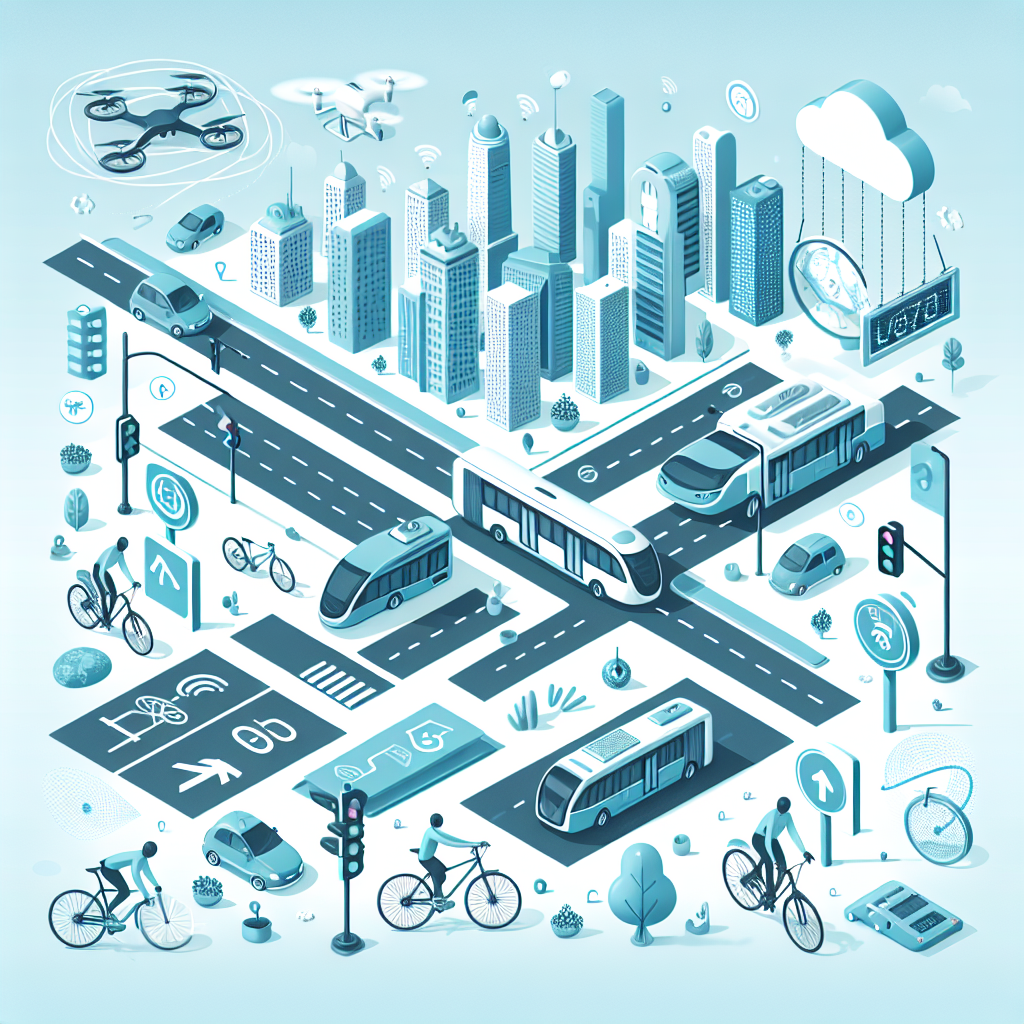
In recent years, urban mobility and transportation have become increasingly important topics as cities around the world face challenges related to congestion, pollution, and inefficient transportation systems. To address these issues, many cities are turning to AI-powered solutions to create more sustainable and efficient transportation networks. In this article, we will explore the various ways in which AI technology is being used to improve urban mobility and transportation, and how it can help cities achieve their sustainability goals.
AI-powered solutions for urban mobility and transportation encompass a wide range of technologies and applications, from traffic management systems to ride-sharing platforms and autonomous vehicles. These solutions leverage artificial intelligence algorithms to analyze data, optimize routes, and make real-time decisions to improve the overall efficiency and sustainability of transportation networks.
One of the key benefits of AI-powered solutions is their ability to collect and analyze large amounts of data from various sources, such as sensors, cameras, and mobile devices. This data can then be used to identify traffic patterns, predict demand, and optimize routes in real-time. By analyzing this data, AI algorithms can help cities reduce congestion, improve air quality, and enhance the overall efficiency of their transportation systems.
For example, AI-powered traffic management systems can use data from sensors and cameras to monitor traffic flow and congestion in real-time. By analyzing this data, these systems can identify bottlenecks and accidents, and adjust traffic signals and routing to alleviate congestion and improve the overall flow of traffic. This can help reduce travel times, fuel consumption, and emissions, leading to a more sustainable transportation system.
Another important application of AI technology in urban mobility is in the development of autonomous vehicles. These vehicles use AI algorithms to navigate roads, avoid obstacles, and make decisions in real-time. By leveraging AI technology, autonomous vehicles can improve road safety, reduce accidents, and increase the efficiency of transportation networks. In addition, autonomous vehicles can also help reduce emissions by optimizing routes and driving patterns to minimize fuel consumption.
AI-powered ride-sharing platforms are another innovative solution that can help cities reduce congestion and emissions. These platforms use AI algorithms to match riders with drivers and optimize routes to minimize detours and reduce empty miles. By encouraging ride-sharing and pooling, these platforms can help reduce the number of vehicles on the road, leading to less congestion and lower emissions.
In addition to traffic management systems, autonomous vehicles, and ride-sharing platforms, AI technology is also being used to improve public transportation systems. AI algorithms can help optimize bus routes, schedules, and capacity to ensure efficient and reliable service for passengers. By analyzing data on ridership patterns, traffic conditions, and weather forecasts, AI-powered public transportation systems can adjust service levels in real-time to meet demand and improve the overall quality of service.
Overall, AI-powered solutions have the potential to revolutionize urban mobility and transportation by making systems more efficient, sustainable, and user-friendly. By leveraging the power of artificial intelligence, cities can reduce congestion, improve air quality, and enhance the overall quality of life for residents.
FAQs:
Q: How can AI-powered solutions help reduce congestion in cities?
A: AI-powered solutions can analyze traffic patterns, optimize routes, and adjust traffic signals in real-time to alleviate congestion and improve the flow of traffic.
Q: What are some examples of AI-powered solutions for sustainable urban mobility?
A: Examples include traffic management systems, autonomous vehicles, ride-sharing platforms, and AI-powered public transportation systems.
Q: How can AI-powered ride-sharing platforms help reduce emissions?
A: By matching riders with drivers and optimizing routes, ride-sharing platforms can reduce the number of vehicles on the road, leading to lower emissions and improved air quality.
Q: Are AI-powered public transportation systems already in use?
A: Yes, some cities are already using AI technology to optimize bus routes, schedules, and capacity to improve the quality and efficiency of public transportation services.