
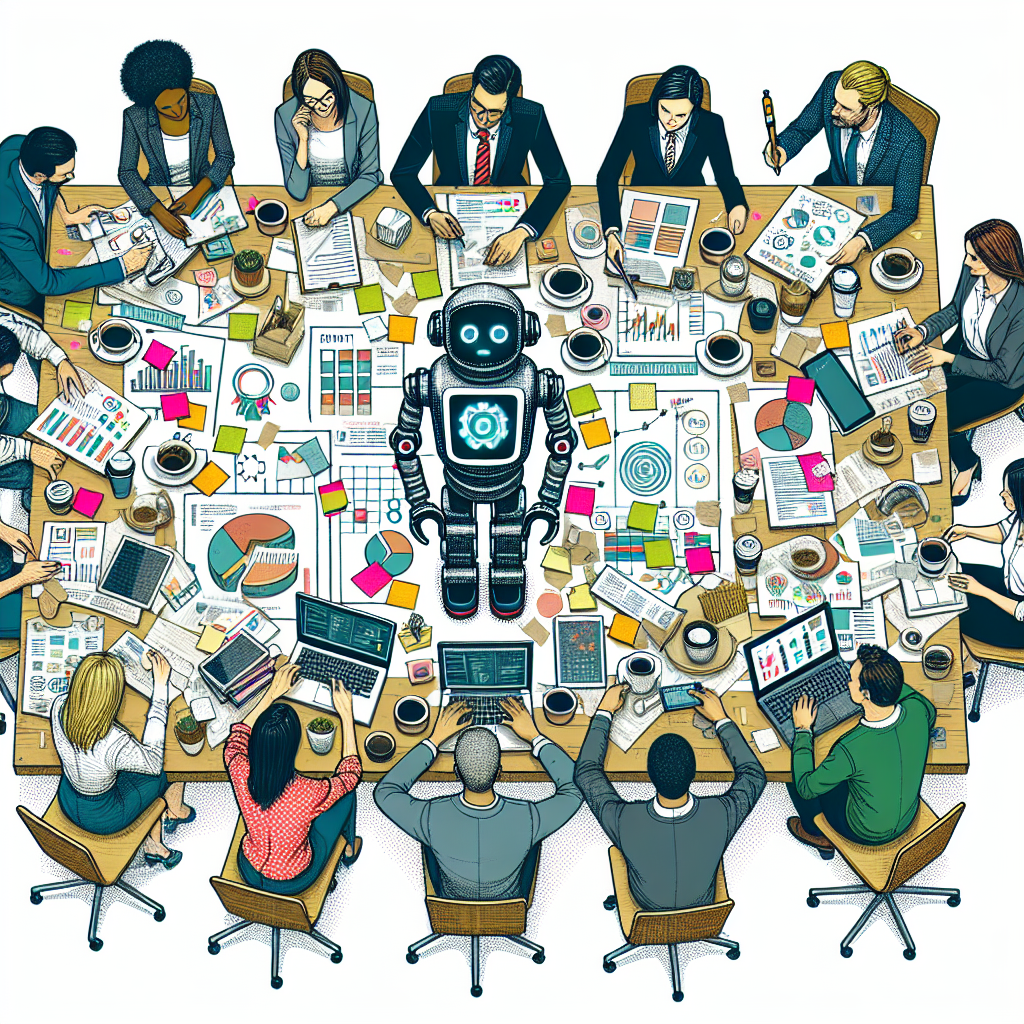
AI Project Management: Overcoming Common Challenges
Artificial Intelligence (AI) has revolutionized many industries, including project management. AI technologies can automate repetitive tasks, analyze data, and improve decision-making processes. However, implementing AI in project management comes with its own set of challenges. In this article, we will discuss some of the common challenges faced in AI project management and strategies to overcome them.
1. Lack of Understanding
One of the biggest challenges in implementing AI in project management is the lack of understanding among project managers and team members. Many people are unfamiliar with AI technologies and how they can be used to improve project outcomes. To overcome this challenge, it is important to provide training and education on AI concepts and how they can be applied in project management. This will help team members become more comfortable with using AI tools and technologies in their day-to-day work.
2. Data Quality
Another common challenge in AI project management is data quality. AI algorithms rely on large amounts of data to make accurate predictions and recommendations. If the data used is incomplete, inaccurate, or outdated, the AI system may provide incorrect results. To overcome this challenge, project managers should ensure that they have access to high-quality data and that it is regularly updated and maintained. Data cleansing and normalization techniques can also be used to improve data quality before feeding it into AI systems.
3. Integration with Existing Systems
Integrating AI technologies with existing project management systems can be a complex and time-consuming process. Many organizations struggle to connect AI tools with their current project management software and processes. To overcome this challenge, project managers should work closely with IT and AI experts to develop a seamless integration plan. This may involve customizing existing systems or developing new interfaces to allow for easy data exchange between AI tools and project management software.
4. Change Management
Implementing AI in project management often requires significant changes in workflow and processes. This can be met with resistance from team members who are comfortable with the current way of working. To overcome this challenge, project managers should involve team members in the decision-making process and communicate the benefits of AI implementation. Providing training and support to help team members adapt to new ways of working can also help ease the transition.
5. Ethical and Legal Considerations
AI technologies raise ethical and legal concerns related to data privacy, bias, and accountability. Project managers must ensure that AI systems are developed and used in compliance with relevant laws and regulations. They should also implement safeguards to prevent bias and discrimination in AI algorithms. To overcome this challenge, project managers should work closely with legal and compliance teams to develop AI policies and guidelines that address ethical and legal considerations.
FAQs
Q: How can AI improve project management?
A: AI technologies can improve project management by automating repetitive tasks, analyzing data to identify patterns and trends, and providing real-time insights to support decision-making. AI tools can help project managers optimize resource allocation, predict project risks, and improve project outcomes.
Q: What are some popular AI tools for project management?
A: Some popular AI tools for project management include Asana, Trello, and Microsoft Project. These tools use AI algorithms to automate tasks, analyze data, and provide recommendations to improve project performance.
Q: How can project managers overcome resistance to AI implementation?
A: Project managers can overcome resistance to AI implementation by involving team members in the decision-making process, providing training and support, and communicating the benefits of AI technologies. It is important to address concerns and fears about job security and show how AI can help team members work more efficiently and effectively.
Q: What are some best practices for integrating AI into project management?
A: Some best practices for integrating AI into project management include ensuring data quality, providing training on AI concepts, developing a seamless integration plan with existing systems, and addressing ethical and legal considerations. Project managers should also monitor AI performance and continuously optimize algorithms to improve project outcomes.
In conclusion, AI project management offers many benefits, but it also comes with its own set of challenges. By addressing common challenges such as lack of understanding, data quality, integration with existing systems, change management, and ethical and legal considerations, project managers can successfully implement AI technologies to improve project outcomes. By following best practices and providing training and support to team members, organizations can leverage the power of AI to streamline project processes and drive business success.