
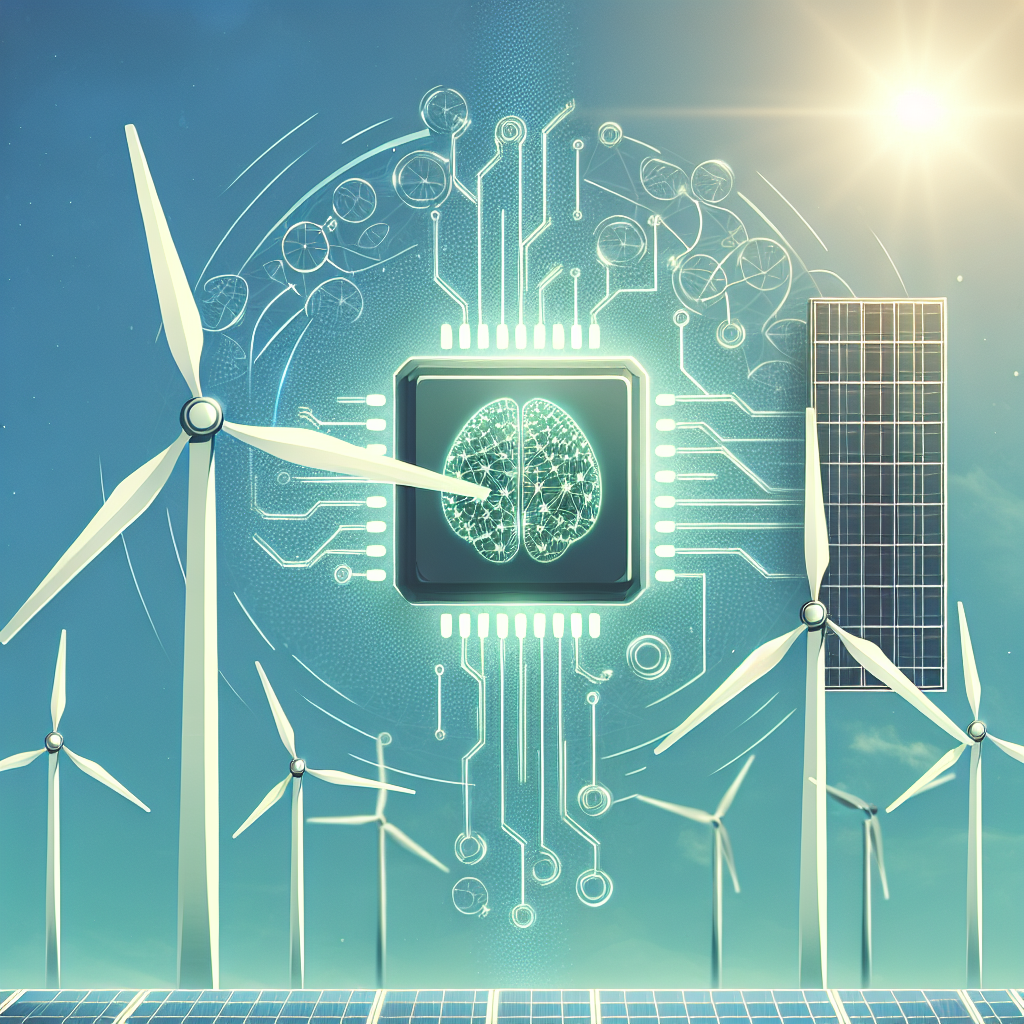
In recent years, the use of artificial intelligence (AI) technologies in the renewable energy sector has been growing rapidly. AI has the potential to revolutionize the way energy is produced, distributed, and consumed, leading to significant improvements in energy efficiency and sustainability. This article will explore the various applications of AI in enhancing energy efficiency in renewables and the benefits that these technologies can bring to the renewable energy industry.
AI technologies, such as machine learning, neural networks, and natural language processing, have the ability to analyze vast amounts of data in real-time and make intelligent decisions based on that data. This capability is particularly useful in the renewable energy sector, where the efficiency of energy production and distribution is critical to reducing carbon emissions and combating climate change.
One of the key applications of AI in renewables is in optimizing energy production. AI algorithms can analyze weather data, energy demand patterns, and other factors to predict when and where renewable energy sources, such as solar panels and wind turbines, will produce the most energy. By adjusting the output of these sources in real-time based on these predictions, AI can help maximize energy production and minimize waste.
AI can also be used to optimize the distribution of energy from renewable sources to consumers. Smart grids, which use AI algorithms to manage energy flow and balance supply and demand, can help reduce energy losses during transmission and distribution. By intelligently routing energy from renewable sources to where it is needed most, smart grids can increase the overall efficiency of the energy system and reduce the reliance on fossil fuels.
Another important application of AI in renewables is in energy storage. Renewable energy sources, such as solar and wind, are intermittent and unpredictable, making it challenging to match supply and demand in real-time. AI technologies can help address this challenge by optimizing the charging and discharging of energy storage systems, such as batteries and pumped hydro storage, to ensure a reliable and stable energy supply.
In addition to optimizing energy production, distribution, and storage, AI technologies can also be used to improve the efficiency of energy consumption. Smart buildings, which use AI to control heating, lighting, and other energy systems based on occupancy and weather conditions, can help reduce energy waste and lower energy bills. Similarly, AI-powered energy management systems can help industrial facilities and commercial buildings optimize their energy use and reduce their carbon footprint.
Overall, the integration of AI technologies in renewables has the potential to revolutionize the energy sector and accelerate the transition to a sustainable energy system. By leveraging the power of AI to optimize energy production, distribution, storage, and consumption, we can reduce our reliance on fossil fuels, lower carbon emissions, and create a more sustainable future for generations to come.
FAQs
Q: What is artificial intelligence (AI) and how is it used in the renewable energy sector?
A: AI is a branch of computer science that focuses on creating intelligent machines that can perform tasks that typically require human intelligence, such as learning, reasoning, and problem-solving. In the renewable energy sector, AI is used to optimize energy production, distribution, storage, and consumption, leading to increased energy efficiency and sustainability.
Q: How can AI technologies help improve energy efficiency in renewables?
A: AI technologies can analyze vast amounts of data in real-time and make intelligent decisions based on that data, leading to more efficient energy production, distribution, and consumption. By optimizing the output of renewable energy sources, managing energy flow in smart grids, and controlling energy systems in buildings and industrial facilities, AI can help reduce energy waste and lower carbon emissions.
Q: What are some examples of AI applications in renewables?
A: Some examples of AI applications in renewables include predicting energy production from solar panels and wind turbines, optimizing the charging and discharging of energy storage systems, managing energy flow in smart grids, controlling energy systems in smart buildings, and optimizing energy use in industrial facilities and commercial buildings.
Q: What are the benefits of using AI technologies in renewables?
A: The benefits of using AI technologies in renewables include increased energy efficiency, reduced carbon emissions, lower energy costs, improved energy system reliability, and enhanced sustainability. By leveraging the power of AI to optimize energy production, distribution, storage, and consumption, we can create a more sustainable energy system that benefits both the environment and society as a whole.