
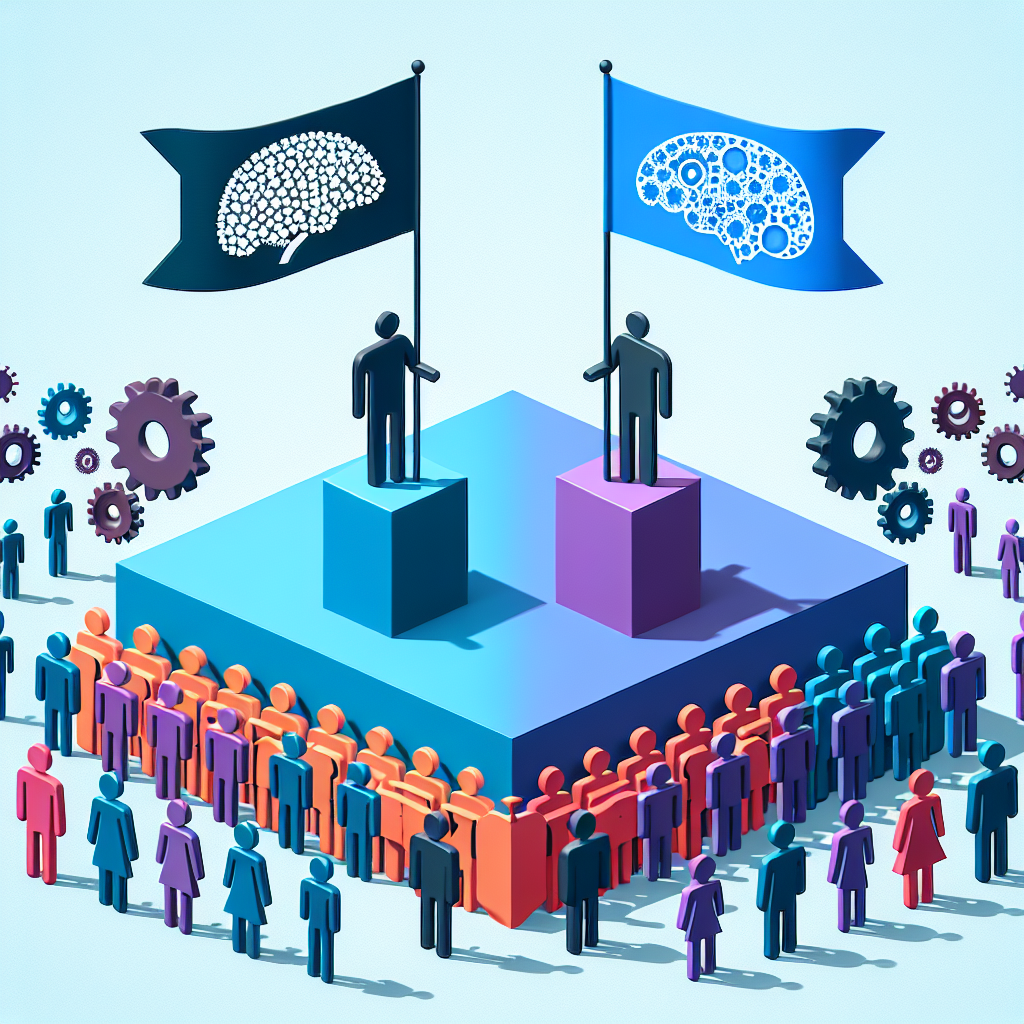
Artificial Intelligence (AI) and Machine Learning (ML) are two cutting-edge technologies that have revolutionized the way we interact with and utilize data in various industries. While both AI and ML are used interchangeably in conversations about technology, they are distinct concepts with different applications and capabilities. One of the key differences between the two is their inclusivity, or the ability to bring more people into the fold of technological advancements. In this article, we will explore the differences between AI and ML and discuss which technology is more inclusive.
AI vs ML: What’s the Difference?
AI is a broad field of computer science that seeks to create machines that can perform tasks that typically require human intelligence. This includes tasks like speech recognition, language translation, decision-making, and problem-solving. AI systems are designed to learn from experience, adapt to new information, and improve over time. The goal of AI is to create machines that can mimic human intelligence and perform tasks that require human-level cognition.
ML, on the other hand, is a subset of AI that focuses on the development of algorithms that can learn from data and make predictions or decisions based on that data. ML systems are trained on large datasets and use statistical techniques to identify patterns and relationships in the data. The key difference between AI and ML is that AI is focused on creating intelligent machines, while ML is focused on developing algorithms that can learn from data.
Inclusivity in AI and ML
Inclusivity in technology refers to the ability of technology to be accessible and usable by a wide range of people, regardless of their background, abilities, or limitations. In the context of AI and ML, inclusivity refers to the ability of these technologies to be used and understood by a diverse range of users, including those with disabilities, non-technical backgrounds, or limited access to resources.
One of the key factors that determine the inclusivity of AI and ML technologies is the level of expertise required to use and understand them. AI systems are often complex and require specialized knowledge in areas like computer science, mathematics, and statistics. This can be a barrier to entry for individuals who do not have a technical background or who may not have access to resources to learn these skills. ML systems, on the other hand, are more accessible to a wider range of users, as they often come with user-friendly interfaces and tools that make it easier to train and deploy ML models.
Another factor that impacts the inclusivity of AI and ML technologies is the availability of data. ML systems require large amounts of data to train and make predictions, which can be a challenge for individuals or organizations that do not have access to large datasets. This can create a barrier to entry for those who want to use ML technologies but do not have the resources to collect or acquire the necessary data. AI systems, on the other hand, can be trained on smaller datasets or pre-existing models, making them more accessible to a wider range of users.
Which Technology is More Inclusive?
When it comes to inclusivity, ML is generally considered to be more inclusive than AI. ML systems are often easier to use and understand, making them more accessible to a wider range of users. ML tools and platforms like TensorFlow and scikit-learn come with user-friendly interfaces and documentation that make it easier for non-experts to train and deploy ML models. Additionally, ML systems can be trained on smaller datasets or pre-existing models, making them more accessible to those who may not have access to large amounts of data.
AI systems, on the other hand, are often more complex and require specialized knowledge to use and understand. This can be a barrier to entry for individuals who do not have a technical background or who may not have access to resources to learn these skills. Additionally, AI systems often require large amounts of data to train and make predictions, which can be a challenge for individuals or organizations that do not have access to large datasets.
FAQs
Q: What are some examples of AI and ML technologies that are inclusive?
A: Some examples of inclusive AI and ML technologies include speech recognition systems that can understand a wide range of accents and languages, language translation tools that can translate text in real-time, and image recognition systems that can identify objects and scenes in images. These technologies are designed to be accessible and usable by a wide range of users, regardless of their background or abilities.
Q: How can organizations ensure that their AI and ML technologies are inclusive?
A: Organizations can ensure that their AI and ML technologies are inclusive by designing systems that are easy to use and understand, providing training and support for users, and ensuring that their technologies are accessible to individuals with disabilities. Additionally, organizations can work to collect and use diverse datasets in their AI and ML models to ensure that their technologies are representative of a wide range of users.
Q: What are some challenges to inclusivity in AI and ML technologies?
A: Some challenges to inclusivity in AI and ML technologies include the lack of diversity in datasets used to train models, the complexity of AI systems, and the barriers to entry for individuals who do not have a technical background. Additionally, ethical concerns around bias and fairness in AI and ML models can create barriers to inclusivity and accessibility.
In conclusion, both AI and ML have the potential to revolutionize the way we interact with and utilize data in various industries. While both technologies have their strengths and weaknesses when it comes to inclusivity, ML is generally considered to be more inclusive than AI. ML systems are easier to use and understand, making them more accessible to a wider range of users. However, organizations must work to ensure that their AI and ML technologies are inclusive and accessible to all users, regardless of their background or abilities. By addressing these challenges and working towards inclusivity, we can ensure that AI and ML technologies benefit everyone in society.