
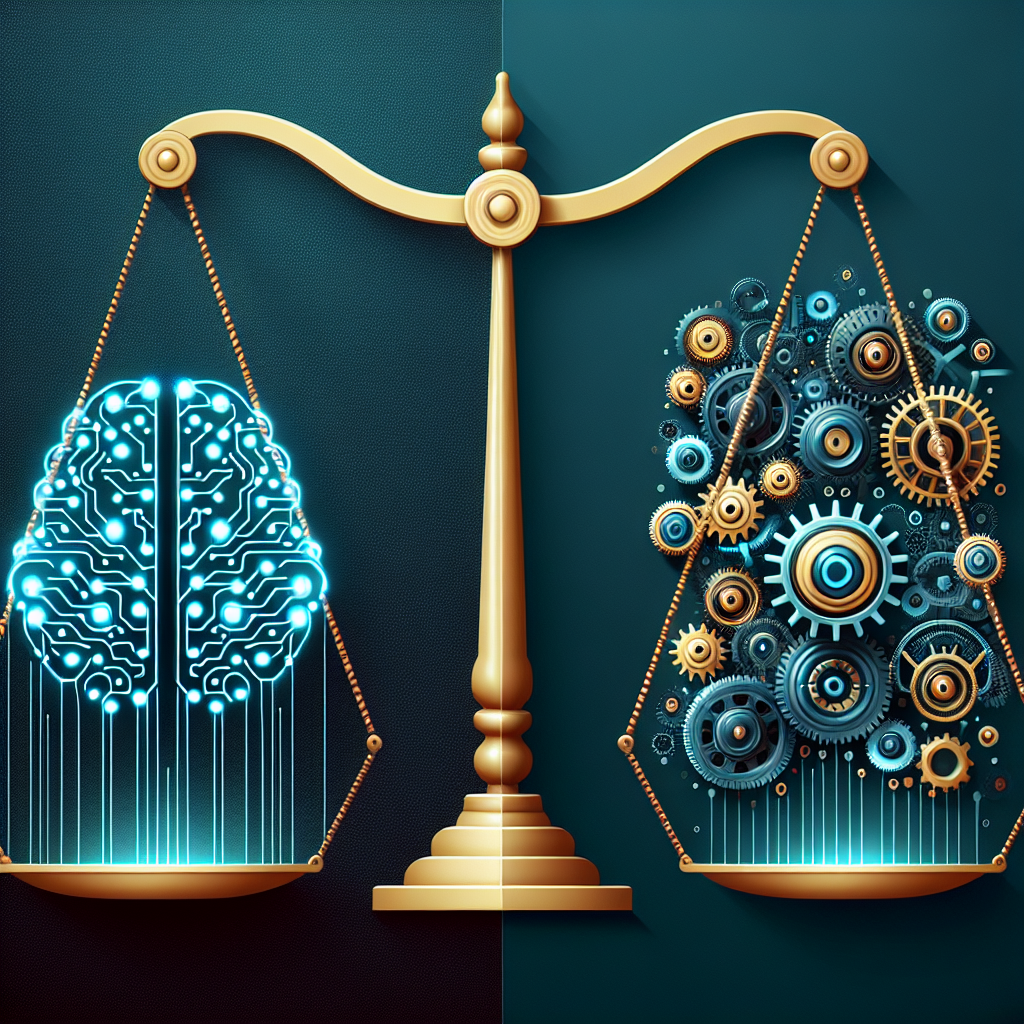
Artificial Intelligence (AI) and Machine Learning (ML) are two closely related technologies that have been making significant strides in recent years. Both AI and ML have the potential to revolutionize various industries and improve the way we live and work. However, there is often confusion about the differences between AI and ML, and which technology is more intelligent. In this article, we will explore the distinctions between AI and ML and discuss which technology is more intelligent.
What is Artificial Intelligence (AI)?
Artificial Intelligence (AI) refers to the simulation of human intelligence in machines that are programmed to think and act like humans. AI technologies enable machines to perform tasks that typically require human intelligence, such as visual perception, speech recognition, decision-making, and language translation.
There are two types of AI: Narrow AI and General AI. Narrow AI, also known as Weak AI, is designed to perform specific tasks, such as playing chess or driving a car. General AI, also known as Strong AI, is a more advanced form of AI that can understand, learn, and apply knowledge across a wide range of tasks.
What is Machine Learning (ML)?
Machine Learning (ML) is a subset of AI that focuses on the development of algorithms and models that enable computers to learn from and make predictions or decisions based on data. ML algorithms use statistical techniques to identify patterns in data and improve their performance over time without being explicitly programmed.
There are three types of ML: Supervised Learning, Unsupervised Learning, and Reinforcement Learning. In Supervised Learning, the algorithm is trained on labeled data to make predictions or classifications. In Unsupervised Learning, the algorithm is trained on unlabeled data to identify patterns or relationships. In Reinforcement Learning, the algorithm learns to make decisions by interacting with an environment and receiving feedback.
AI vs ML: Which Technology is More Intelligent?
The question of which technology is more intelligent, AI or ML, is a complex one that depends on how intelligence is defined. AI encompasses a broad range of technologies, including ML, that enable machines to perform tasks that require human intelligence. ML, on the other hand, is a specific approach to building AI systems that focuses on learning from data.
In terms of intelligence, AI can be considered more intelligent than ML because it encompasses a wider range of capabilities, such as reasoning, planning, and problem-solving, beyond just learning from data. AI systems can be designed to mimic human cognitive processes and perform complex tasks that require reasoning and decision-making.
On the other hand, ML is a powerful tool for building AI systems that can learn from data and make predictions or decisions based on patterns and relationships in the data. ML algorithms have been successful in a wide range of applications, such as image recognition, natural language processing, and recommendation systems.
Ultimately, both AI and ML are important technologies that complement each other and have the potential to revolutionize various industries. AI provides the broader framework for building intelligent systems, while ML provides the specific tools and techniques for learning from data.
FAQs
Q: What are some examples of AI applications?
A: Some examples of AI applications include virtual assistants like Siri and Alexa, self-driving cars, recommendation systems like Netflix and Amazon, and facial recognition technology.
Q: How is AI different from ML?
A: AI is a broader concept that encompasses a wide range of technologies, including ML. ML is a specific approach to building AI systems that focuses on learning from data.
Q: Can AI systems learn on their own?
A: AI systems can be designed to learn from data and improve their performance over time without being explicitly programmed. This process is known as machine learning.
Q: What are the ethical implications of AI and ML?
A: AI and ML raise ethical concerns related to privacy, bias, accountability, and job displacement. It is important to consider these ethical implications when developing and deploying AI systems.
In conclusion, both AI and ML are powerful technologies that have the potential to revolutionize various industries and improve the way we live and work. While AI can be considered more intelligent in terms of its broader capabilities, ML is a specific approach to building AI systems that focuses on learning from data. Ultimately, both technologies are important tools for building intelligent systems and driving innovation in the field of artificial intelligence.