
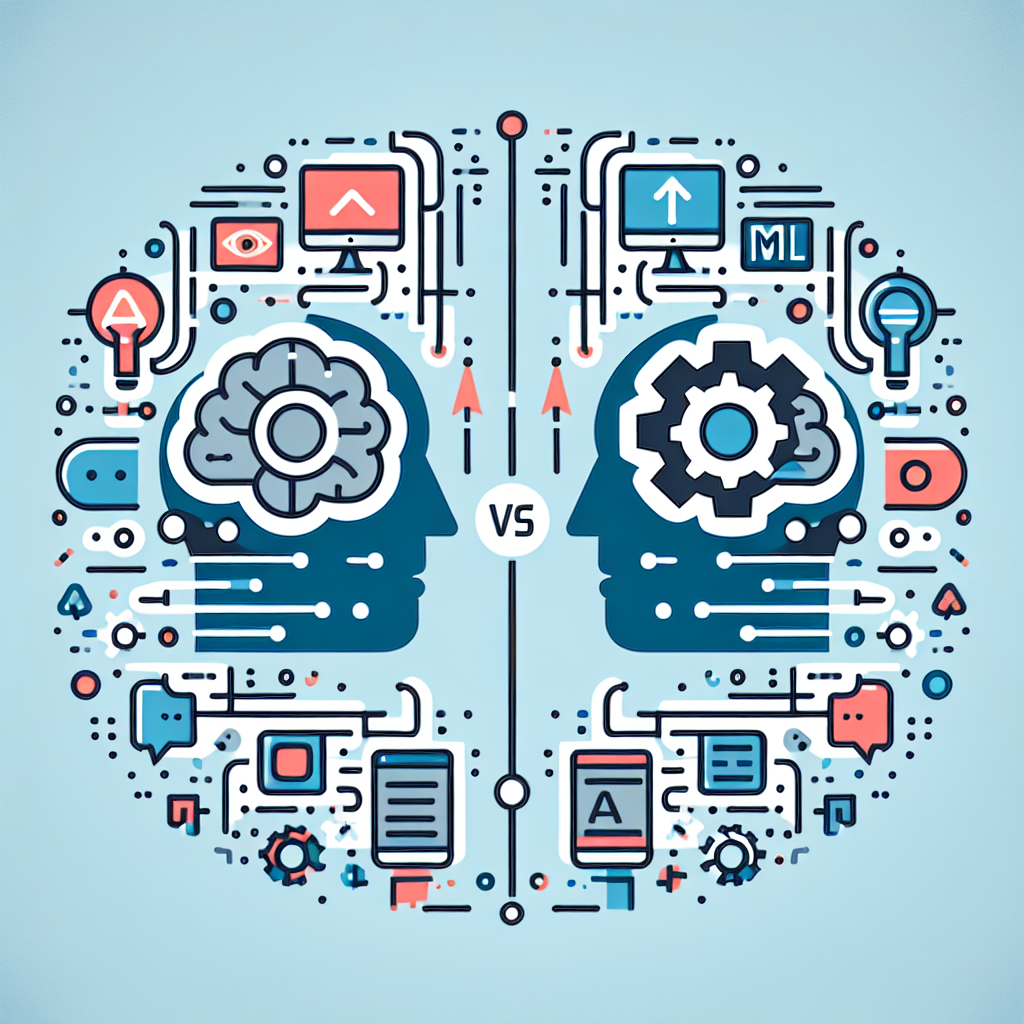
In today’s rapidly evolving technological landscape, artificial intelligence (AI) and machine learning (ML) have become buzzwords that are often used interchangeably. However, these two technologies are distinct and serve different purposes. AI refers to the development of computer systems that can perform tasks that normally require human intelligence, such as speech recognition, decision-making, and problem-solving. On the other hand, ML is a subset of AI that focuses on the development of algorithms that can learn from and make predictions or decisions based on data.
One of the key differences between AI and ML is their level of interactivity. In this article, we will explore the characteristics of each technology and determine which one is more interactive.
AI: The Power of Human-Like Intelligence
Artificial intelligence aims to replicate human intelligence in machines. This involves the development of systems that can learn, reason, and solve problems like humans do. AI systems can perform a wide range of tasks, from recognizing faces in images to playing complex games like chess and Go.
One of the defining features of AI is its ability to interact with users in a human-like manner. For example, virtual assistants like Siri, Alexa, and Google Assistant use AI algorithms to understand and respond to natural language queries. These systems can carry on conversations with users, answer questions, and perform tasks such as setting reminders, sending messages, and playing music.
Another example of interactive AI technology is chatbots. These are AI-powered programs that can simulate conversations with users through text or voice interfaces. Chatbots are used in customer service, marketing, and other applications to provide instant responses to user queries and support.
Overall, AI systems are designed to be highly interactive and responsive to user inputs. They can adapt to different scenarios, learn from user interactions, and provide personalized experiences based on individual preferences.
ML: The Power of Data-Driven Insights
Machine learning, on the other hand, focuses on the development of algorithms that can learn from data and make predictions or decisions without being explicitly programmed. ML algorithms analyze large datasets to identify patterns and relationships, which can then be used to make informed decisions or predictions.
One of the key benefits of ML is its ability to provide data-driven insights and recommendations. For example, recommendation systems use ML algorithms to analyze user behavior and preferences in order to suggest personalized content, products, or services. These systems can improve user engagement and satisfaction by delivering relevant and timely recommendations.
Another application of ML is predictive analytics, which uses historical data to forecast future trends or outcomes. This can be used in various industries, such as finance, healthcare, and marketing, to optimize decision-making processes and improve business performance.
While ML algorithms are not inherently interactive in the same way as AI systems, they can be integrated into interactive applications to provide intelligent capabilities. For example, ML algorithms can be used to automate repetitive tasks, such as image recognition, speech recognition, and natural language processing, in interactive systems.
AI vs. ML: Which Technology is More Interactive?
When comparing AI and ML in terms of interactivity, it is important to consider their respective strengths and weaknesses. AI systems excel at emulating human-like intelligence and interacting with users in natural language. These systems can understand context, learn from user inputs, and provide personalized responses and recommendations.
On the other hand, ML algorithms are more focused on analyzing data and making predictions or decisions based on patterns and relationships in the data. While ML algorithms may not have the same level of interactivity as AI systems, they can be integrated into interactive applications to provide intelligent capabilities, such as recommendation systems, predictive analytics, and automation.
In conclusion, both AI and ML have their own unique strengths when it comes to interactivity. AI systems are designed to interact with users in a human-like manner and provide personalized experiences, while ML algorithms are focused on analyzing data and providing data-driven insights and recommendations. Ultimately, the choice between AI and ML depends on the specific requirements of the application and the desired level of interactivity.
FAQs
Q: What are some examples of AI applications that showcase interactivity?
A: Some examples of AI applications that showcase interactivity include virtual assistants like Siri, Alexa, and Google Assistant, chatbots, recommendation systems, and personalization engines.
Q: How can ML algorithms be integrated into interactive applications?
A: ML algorithms can be integrated into interactive applications to provide intelligent capabilities, such as recommendation systems, predictive analytics, and automation. These algorithms can analyze data in real-time to make informed decisions or predictions.
Q: What are the key differences between AI and ML in terms of interactivity?
A: AI systems are designed to interact with users in a human-like manner and provide personalized experiences, while ML algorithms are focused on analyzing data and providing data-driven insights and recommendations. AI systems excel at emulating human-like intelligence, while ML algorithms excel at analyzing data and making predictions or decisions based on patterns and relationships.
Q: How can businesses leverage AI and ML for interactive applications?
A: Businesses can leverage AI and ML for interactive applications by incorporating these technologies into their customer service, marketing, and product development strategies. AI-powered virtual assistants, chatbots, recommendation systems, and predictive analytics can help businesses provide personalized experiences, improve customer engagement, and optimize decision-making processes.