
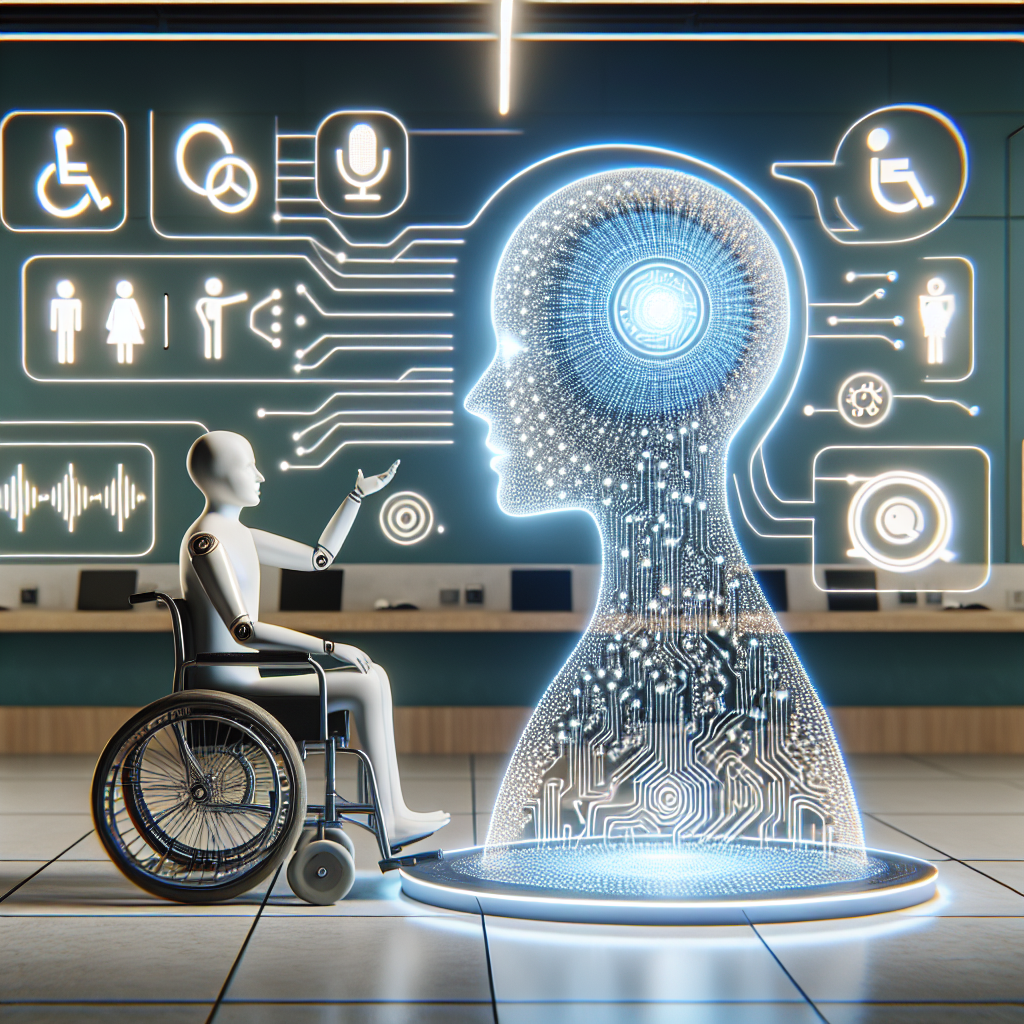
Conversational AI: Enhancing Accessibility for People with Disabilities
Introduction
Conversational AI, also known as chatbots or virtual assistants, are becoming increasingly popular in various industries as a way to automate customer interactions and provide personalized assistance. These AI-powered systems can understand natural language and engage in conversation with users to provide information, answer questions, and even perform tasks. While conversational AI has the potential to benefit everyone, it offers unique advantages for people with disabilities by enhancing accessibility and improving their overall user experience.
In this article, we will explore how conversational AI technology is revolutionizing accessibility for people with disabilities, the benefits it offers, and some common FAQs about this emerging technology.
Benefits of Conversational AI for People with Disabilities
Conversational AI technology has the potential to greatly improve the lives of people with disabilities in various ways. Here are some key benefits:
1. Improved communication: For people with speech or hearing impairments, conversational AI offers a more natural and intuitive way to communicate. They can interact with chatbots using text or voice commands, allowing them to access information and services more easily.
2. Increased independence: Conversational AI can help people with disabilities perform tasks independently that they may have previously needed assistance with. For example, a visually impaired person can use a virtual assistant to read out text messages, set reminders, or even order groceries online.
3. Accessibility features: Many conversational AI platforms are designed with accessibility features in mind, such as high contrast interfaces, screen reader compatibility, and voice command options. These features make it easier for people with disabilities to navigate and use the technology effectively.
4. Personalized assistance: Conversational AI can provide personalized assistance and support to people with disabilities based on their specific needs and preferences. This can include reminders for medication, assistance with daily tasks, or even emotional support through conversation.
5. Equal access to information: Conversational AI can help bridge the gap in access to information for people with disabilities. By providing real-time responses to queries and offering information in a variety of formats, chatbots can empower individuals with disabilities to stay informed and connected.
6. Improved user experience: Conversational AI offers a more user-friendly and inclusive experience for people with disabilities compared to traditional interfaces. The ability to engage in natural language conversations and receive instant responses can enhance the overall user experience and make it more enjoyable.
FAQs about Conversational AI for People with Disabilities
Q: How does conversational AI technology work?
A: Conversational AI technology uses natural language processing (NLP) and machine learning algorithms to understand and respond to human language. These systems analyze text or voice inputs, extract meaning, and generate appropriate responses based on pre-defined rules or learning from previous interactions.
Q: What types of disabilities can benefit from conversational AI?
A: Conversational AI can benefit people with a wide range of disabilities, including but not limited to visual impairments, hearing impairments, speech impairments, mobility impairments, cognitive disabilities, and neurodivergent conditions. The technology can be customized to meet the specific needs of each individual.
Q: Are conversational AI platforms accessible to people with disabilities?
A: Many conversational AI platforms are designed with accessibility in mind and offer features such as screen reader compatibility, voice command options, and high contrast interfaces. However, it is important for developers to prioritize accessibility and ensure that their chatbots are usable by people with disabilities.
Q: How can conversational AI improve accessibility in public spaces?
A: Conversational AI can be integrated into public spaces such as airports, shopping malls, and government offices to provide information and assistance to people with disabilities. For example, a chatbot can help a visually impaired person navigate a complex building or provide real-time updates on transportation schedules.
Q: What are some challenges in implementing conversational AI for people with disabilities?
A: Some challenges in implementing conversational AI for people with disabilities include ensuring that the technology is inclusive and accessible to all users, addressing privacy and security concerns, and providing ongoing support and training for individuals with different needs and abilities.
Conclusion
Conversational AI technology has the potential to revolutionize accessibility for people with disabilities by providing personalized assistance, improving communication, and increasing independence. By leveraging the power of natural language processing and machine learning, chatbots can offer a more inclusive and user-friendly experience for individuals with a wide range of disabilities. As this technology continues to evolve, it is important for developers and designers to prioritize accessibility and ensure that conversational AI platforms are usable by everyone, regardless of their abilities.
Overall, conversational AI holds great promise in enhancing accessibility and empowering people with disabilities to live more independently and participate fully in society. By embracing this technology and harnessing its potential, we can create a more inclusive and equitable future for all.