
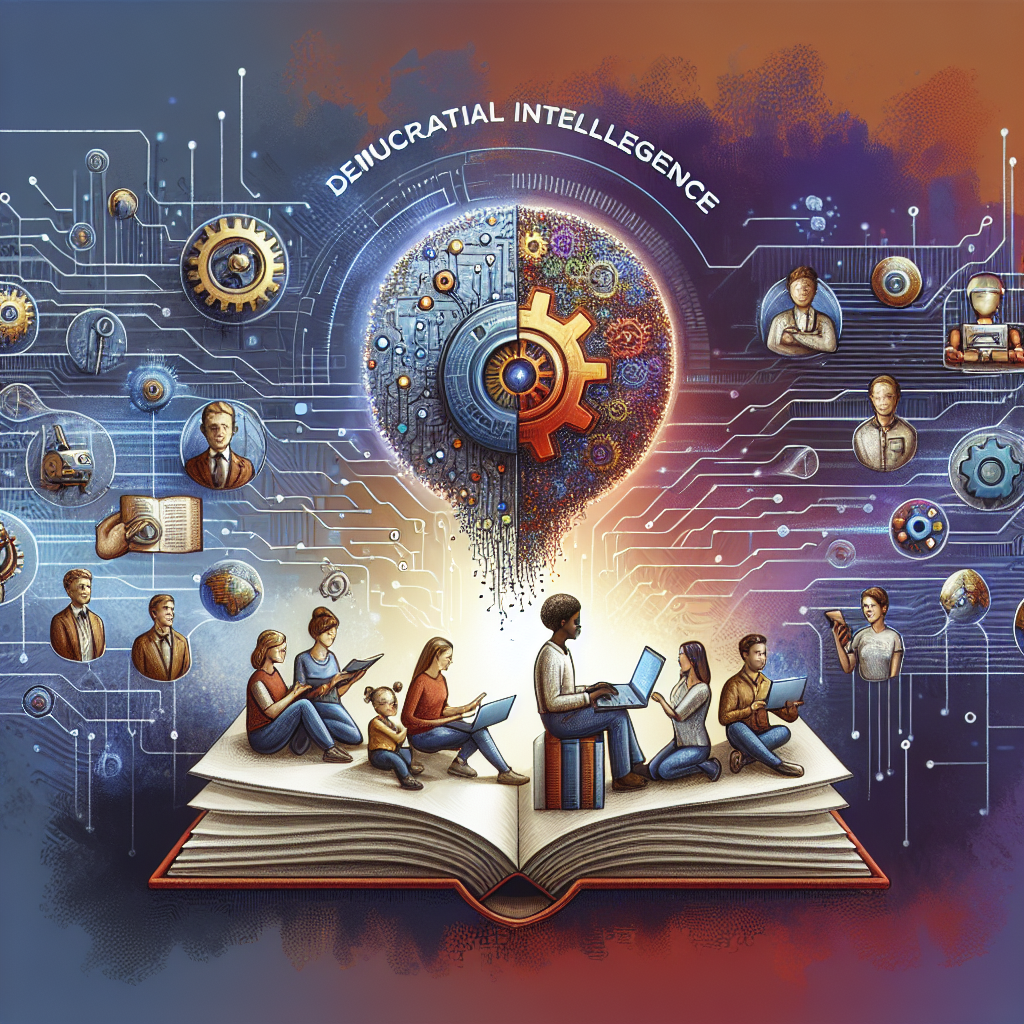
In recent years, artificial intelligence (AI) has become a powerful tool for businesses and individuals looking to innovate and create new solutions. However, the democratization of AI – making it more accessible to a wider range of people – is essential for fostering even greater levels of innovation and creativity. By making AI tools and technologies more widely available, we can empower individuals and organizations to harness the power of AI in new and exciting ways.
One of the key benefits of democratizing AI is that it allows for greater diversity in the types of problems that can be solved with AI. When AI tools are only accessible to a small group of experts, they are often used to tackle a narrow set of problems. However, when AI is made more widely available, individuals from a variety of backgrounds and industries can use it to address a much broader range of challenges. This diversity of perspectives can lead to more innovative and creative solutions that might not have been possible with a more limited approach to AI.
Another benefit of democratizing AI is that it can help to level the playing field for smaller businesses and individuals who may not have the resources to invest in expensive AI technologies. By making AI tools more affordable and accessible, smaller organizations can compete more effectively with larger competitors and bring new products and services to market more quickly. This can help to drive greater levels of innovation and creativity across a wide range of industries.
Additionally, democratizing AI can help to address concerns about bias and fairness in AI systems. When AI tools are developed and controlled by a small group of experts, there is a risk that biases and prejudices can be built into the algorithms that power these systems. By making AI more accessible to a wider range of people, we can ensure that a greater diversity of perspectives are brought to bear on the development of AI technologies, helping to mitigate the risks of bias and discrimination.
There are a number of ways in which AI can be democratized. One approach is to develop user-friendly AI tools and platforms that make it easier for non-experts to build and deploy AI systems. For example, companies like Google and Microsoft offer AI platforms that allow users to easily create and train their own machine learning models without needing a deep understanding of the underlying algorithms. This can help to lower the barrier to entry for individuals and organizations looking to leverage AI in their work.
Another approach to democratizing AI is to provide training and education to a wider range of people on how to use AI tools effectively. This can help to empower individuals from a variety of backgrounds to incorporate AI into their work and drive innovation in their respective fields. For example, organizations like Codecademy and Coursera offer online courses on AI and machine learning that are accessible to anyone with an internet connection.
In addition to these technical and educational approaches, it is also important to consider the ethical implications of democratizing AI. As AI becomes more widely available, it is crucial to ensure that it is used in a responsible and ethical manner. This includes addressing concerns about privacy, security, and the potential impact of AI on jobs and society as a whole. By fostering a culture of responsible AI use, we can ensure that the benefits of democratizing AI are shared by all.
In conclusion, democratizing AI is essential for fostering greater levels of innovation and creativity in a wide range of industries. By making AI tools and technologies more accessible to a wider range of people, we can empower individuals and organizations to harness the power of AI in new and exciting ways. This can lead to more diverse and innovative solutions to a broad range of challenges, and help to drive progress and growth in a rapidly changing world.
FAQs:
1. How can I get started with AI if I don’t have a technical background?
There are a number of online courses and tutorials available that can help you get started with AI, even if you don’t have a technical background. Websites like Codecademy, Coursera, and Udacity offer courses on AI and machine learning that are accessible to beginners.
2. How can I ensure that the AI tools I use are ethical and responsible?
When using AI tools, it is important to consider the ethical implications of the technology and ensure that it is used in a responsible manner. This includes addressing concerns about privacy, security, and bias in AI systems. It is also important to stay informed about the latest developments in AI ethics and best practices.
3. What are some examples of how AI is being democratized in the real world?
Companies like Google, Microsoft, and Amazon are leading the way in democratizing AI by offering user-friendly AI platforms and tools that make it easier for non-experts to build and deploy AI systems. Additionally, organizations like Codecademy and Coursera are providing training and education on AI to a wider range of people.
4. How can democratizing AI help to address bias and discrimination in AI systems?
By making AI tools more widely available, we can ensure that a greater diversity of perspectives are brought to bear on the development of AI technologies, helping to mitigate the risks of bias and discrimination. This can lead to more fair and equitable AI systems that benefit everyone.
5. What are some potential challenges in democratizing AI?
One potential challenge in democratizing AI is ensuring that the technology is accessible to a wide range of people, including those in developing countries and marginalized communities. Additionally, there are concerns about the potential impact of AI on jobs and society, and it is important to address these issues as AI becomes more widely available.