
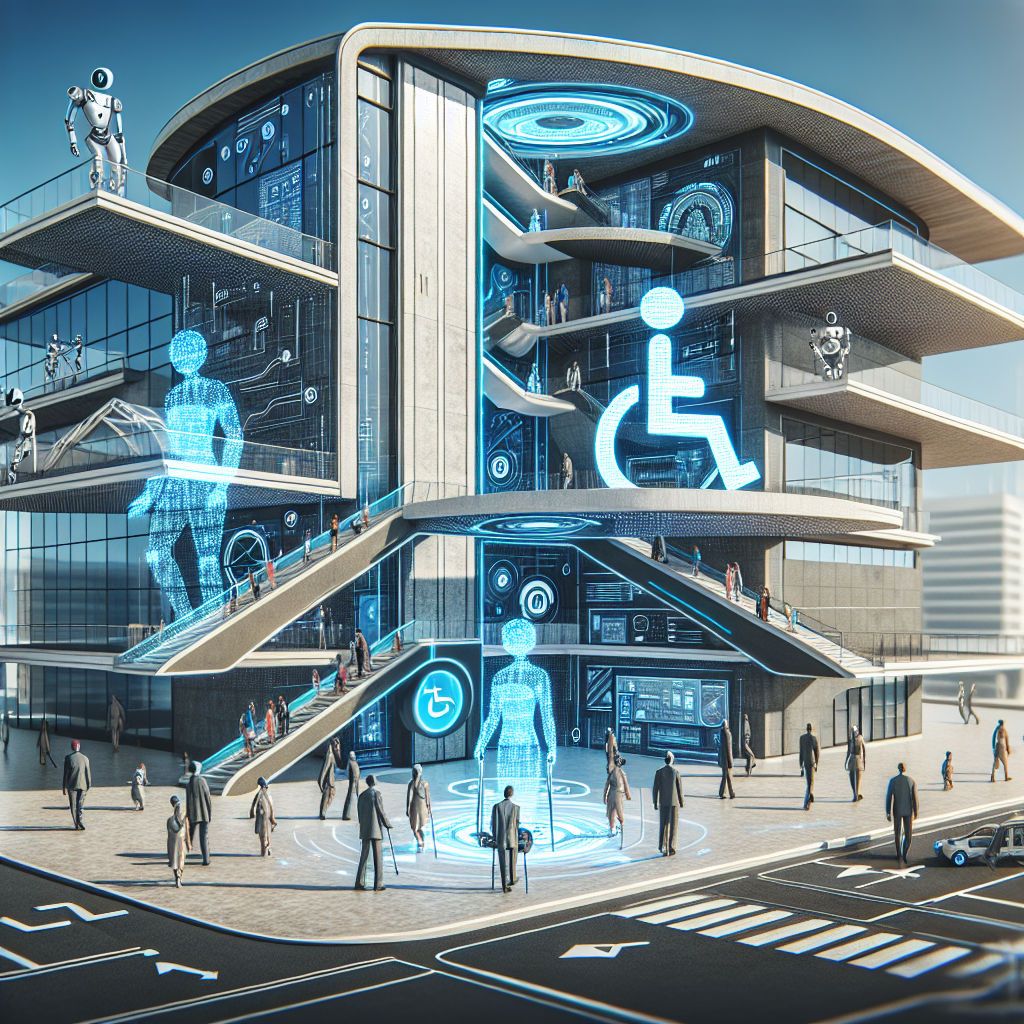
Enhancing Architectural Accessibility with AI
In recent years, the field of architecture has seen significant advancements in technology that have greatly improved the accessibility of buildings for individuals with disabilities. One such technology that has been instrumental in this progress is artificial intelligence (AI). AI has the potential to revolutionize the way architects design and construct buildings, making them more inclusive and accessible for all individuals. In this article, we will explore the ways in which AI is being used to enhance architectural accessibility, as well as the benefits and challenges associated with this technology.
One of the primary ways in which AI is being used to enhance architectural accessibility is through the use of smart design tools. These tools use AI algorithms to analyze data on accessibility requirements and guidelines, such as the Americans with Disabilities Act (ADA), and then suggest design modifications to improve accessibility. For example, AI can analyze floor plans and suggest changes to door widths, ramp gradients, and other features to make buildings more accessible for individuals with disabilities.
AI can also be used to improve the design process by generating 3D models of buildings that can be easily modified to meet accessibility requirements. These models can be used to simulate the experience of individuals with disabilities navigating through a building, allowing architects to identify potential barriers and make necessary modifications before construction begins. This can help to save time and money by avoiding costly retrofits later on.
Another way in which AI is enhancing architectural accessibility is through the use of smart sensors and IoT devices. These devices can be installed in buildings to monitor factors such as temperature, lighting, and air quality, and then adjust these factors in real-time to meet the needs of individuals with disabilities. For example, smart sensors can automatically adjust the height of countertops in a kitchen to accommodate someone in a wheelchair, or change the lighting levels in a room to make it easier for someone with a visual impairment to navigate.
AI can also be used to improve the wayfinding experience for individuals with disabilities. By analyzing data on building layouts and accessibility features, AI can generate personalized navigation routes for individuals based on their specific needs. For example, someone with a mobility impairment may be directed to an elevator instead of stairs, or someone with a visual impairment may be provided with audio cues to help them navigate through a building.
Overall, the use of AI in architecture has the potential to greatly improve the accessibility of buildings for individuals with disabilities. By analyzing data, generating design suggestions, and providing personalized navigation routes, AI can help architects to create more inclusive and accessible spaces that meet the needs of all individuals.
Benefits of AI in Enhancing Architectural Accessibility
There are several benefits to using AI in enhancing architectural accessibility. Some of the key benefits include:
1. Improved design accuracy: AI algorithms can analyze vast amounts of data on accessibility requirements and guidelines, allowing architects to make more informed design decisions that meet the needs of individuals with disabilities.
2. Cost savings: By identifying potential accessibility barriers early in the design process, AI can help to avoid costly retrofits later on. This can result in significant cost savings for building owners and developers.
3. Time savings: AI can streamline the design process by generating 3D models of buildings and suggesting design modifications. This can help to save time and speed up the construction process.
4. Personalized navigation: AI can generate personalized navigation routes for individuals with disabilities, helping them to navigate through buildings with ease and confidence.
Challenges of AI in Enhancing Architectural Accessibility
While there are many benefits to using AI in enhancing architectural accessibility, there are also some challenges that need to be considered. Some of the key challenges include:
1. Data privacy concerns: AI algorithms rely on vast amounts of data to analyze accessibility requirements and generate design suggestions. This raises concerns about data privacy and security, especially when sensitive information about individuals with disabilities is involved.
2. Bias in AI algorithms: AI algorithms can be biased if they are trained on data that is not representative of the diverse range of individuals with disabilities. This can result in design suggestions that do not meet the needs of all individuals.
3. Technical limitations: AI technology is still evolving, and there may be technical limitations that need to be addressed in order to fully realize the potential of AI in enhancing architectural accessibility.
4. Accessibility of AI tools: It is important to ensure that AI tools used in architecture are themselves accessible to individuals with disabilities. This includes ensuring that the tools are compatible with assistive technologies and meet accessibility guidelines.
FAQs
Q: How can AI help architects design more accessible buildings?
A: AI can analyze data on accessibility requirements and guidelines, suggest design modifications, generate 3D models of buildings, and provide personalized navigation routes for individuals with disabilities.
Q: What are some of the benefits of using AI in enhancing architectural accessibility?
A: Some of the benefits include improved design accuracy, cost savings, time savings, and personalized navigation for individuals with disabilities.
Q: What are some of the challenges of using AI in enhancing architectural accessibility?
A: Some of the challenges include data privacy concerns, bias in AI algorithms, technical limitations, and ensuring the accessibility of AI tools.
Q: How can architects ensure that AI tools used in architecture are accessible to individuals with disabilities?
A: Architects should ensure that AI tools are compatible with assistive technologies and meet accessibility guidelines to ensure that they are accessible to individuals with disabilities.
In conclusion, AI has the potential to greatly enhance architectural accessibility by analyzing data, generating design suggestions, and providing personalized navigation routes for individuals with disabilities. While there are challenges that need to be addressed, the benefits of using AI in enhancing architectural accessibility are clear. By leveraging the power of AI technology, architects can create more inclusive and accessible spaces that meet the needs of all individuals.