
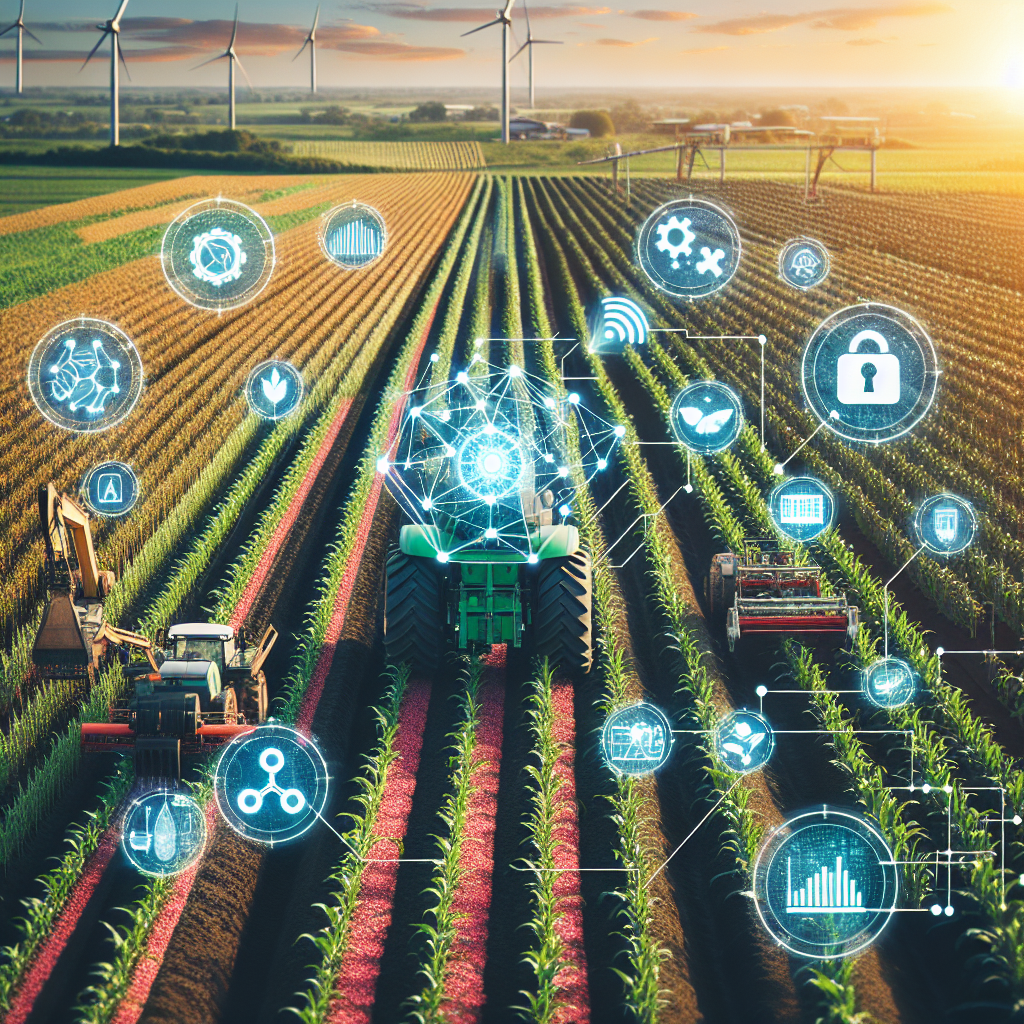
In recent years, the global population has been growing at an unprecedented rate, leading to an increased demand for food production. This has put pressure on farmers to produce more food efficiently while facing challenges such as climate change, water scarcity, and limited resources. In order to address these issues and enhance food security, the agricultural industry has turned to AI-driven innovations to revolutionize farming practices.
AI, or artificial intelligence, refers to the simulation of human intelligence processes by machines, particularly computer systems. In agriculture, AI technologies are being used to improve various aspects of farming, from crop monitoring and pest management to predictive analytics and precision agriculture. By harnessing the power of AI, farmers can make more informed decisions, optimize resource use, and increase crop yields.
One of the key areas where AI is making a significant impact is in crop monitoring. Traditional methods of monitoring crops, such as visual inspection or satellite imagery, can be time-consuming and labor-intensive. AI technologies, on the other hand, can analyze vast amounts of data from various sources, including drones, sensors, and satellites, to provide real-time information on the health and growth of crops. This allows farmers to detect issues such as pests, diseases, or nutrient deficiencies early on and take corrective actions to prevent crop loss.
Another area where AI is driving innovation in agriculture is in pest management. Pests can wreak havoc on crops, leading to significant losses for farmers. AI technologies can help farmers identify and track pests more accurately, enabling them to deploy targeted interventions such as precision spraying or biological control methods. By using AI-driven pest management strategies, farmers can reduce the use of chemical pesticides, minimize environmental impact, and increase crop yields.
Predictive analytics is another AI-driven innovation that is transforming agriculture. By analyzing historical data on weather patterns, soil conditions, and crop performance, AI algorithms can predict future trends and risks, helping farmers make informed decisions about planting, irrigation, and harvesting. This can lead to more efficient resource use, improved crop resilience, and higher yields.
Precision agriculture is another area where AI is making a significant impact. By combining AI technologies with GPS, drones, and sensors, farmers can create detailed maps of their fields, monitor crop growth, and apply inputs such as water, fertilizers, and pesticides with precision. This not only reduces waste and environmental impact but also improves crop quality and yield.
In addition to these applications, AI is also being used to develop new agricultural technologies such as robotic harvesters, autonomous tractors, and smart irrigation systems. These innovations can help farmers automate repetitive tasks, reduce labor costs, and increase productivity. By embracing AI-driven agricultural innovations, farmers can improve efficiency, sustainability, and resilience in the face of climate change and other challenges.
Despite the numerous benefits of AI-driven agricultural innovations, there are also challenges and concerns that need to be addressed. For example, there are concerns about data privacy and security, as AI technologies rely on vast amounts of data collected from farms. There are also concerns about the potential displacement of workers as automation becomes more prevalent in agriculture. Additionally, there are challenges related to the adoption of AI technologies, such as the high cost of implementation and the need for training and technical support.
In order to address these challenges and maximize the benefits of AI-driven agricultural innovations, it is important for farmers, policymakers, and technology providers to work together to develop sustainable and inclusive solutions. This includes investing in research and development, promoting data sharing and collaboration, and providing training and support to farmers to help them adopt and use AI technologies effectively.
Overall, AI-driven agricultural innovations have the potential to revolutionize the way food is produced, making farming more efficient, sustainable, and resilient. By harnessing the power of AI, farmers can enhance food security, improve livelihoods, and contribute to a more sustainable food system for future generations.
FAQs:
Q: How is AI used in agriculture?
A: AI is used in agriculture to improve various aspects of farming, including crop monitoring, pest management, predictive analytics, precision agriculture, and the development of new agricultural technologies such as robotic harvesters and smart irrigation systems.
Q: What are the benefits of AI-driven agricultural innovations?
A: The benefits of AI-driven agricultural innovations include increased efficiency, sustainability, and resilience in farming practices, leading to higher crop yields, reduced environmental impact, and improved food security.
Q: What are some of the challenges of AI in agriculture?
A: Some of the challenges of AI in agriculture include concerns about data privacy and security, potential displacement of workers due to automation, and barriers to adoption such as high costs and the need for training and technical support.
Q: How can farmers adopt AI technologies in agriculture?
A: Farmers can adopt AI technologies in agriculture by investing in research and development, promoting data sharing and collaboration, and providing training and support to help them use AI technologies effectively.