
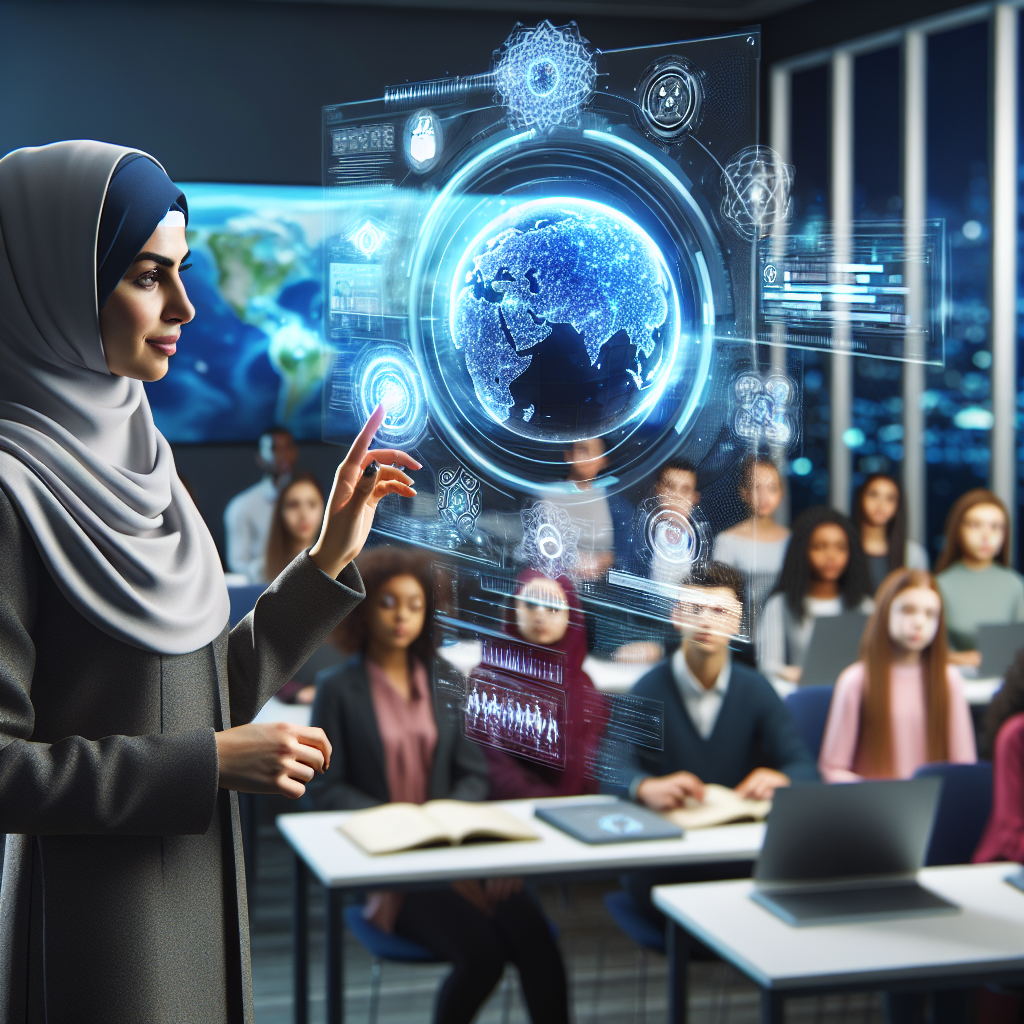
In recent years, artificial intelligence (AI) has been increasingly integrated into various aspects of education, including enhancing teacher effectiveness. AI technologies have the potential to revolutionize the way teachers plan lessons, assess student progress, and provide personalized learning experiences. By leveraging the power of AI, teachers can save time on administrative tasks, access real-time data on student performance, and receive personalized recommendations to improve their teaching methods. In this article, we will explore how AI is being used to enhance teacher effectiveness and address some common questions about this emerging technology.
One of the key ways in which AI can enhance teacher effectiveness is through automating administrative tasks. Teachers spend a significant amount of time on tasks such as grading assignments, creating lesson plans, and tracking student progress. AI can help streamline these tasks by automating grading, providing personalized lesson plan suggestions, and generating real-time insights into student performance. By offloading these administrative tasks to AI systems, teachers can focus more on creating engaging lessons, providing individualized support to students, and fostering a positive learning environment.
AI can also provide valuable insights into student performance. By analyzing data from assessments, homework assignments, and other sources, AI systems can identify patterns in student learning and provide personalized recommendations for improvement. For example, an AI-powered system can flag students who are struggling with a particular concept and suggest additional resources or interventions to help them succeed. By leveraging AI to track student progress and provide targeted support, teachers can better meet the needs of each individual student and ensure that no student falls through the cracks.
In addition to automating administrative tasks and providing insights into student performance, AI can also support teachers in creating personalized learning experiences for students. AI-powered adaptive learning platforms can tailor instruction to each student’s unique learning style, pace, and level of understanding. These platforms use algorithms to analyze student data and adjust the difficulty and pace of lessons accordingly. By providing personalized learning experiences, AI can help students stay engaged, motivated, and on track to meet their learning goals.
Furthermore, AI can support teachers in professional development and continuous learning. AI-powered tools can analyze teaching practices, student feedback, and other data to provide personalized recommendations for improving teaching effectiveness. For example, an AI system can analyze video recordings of classroom instruction and provide feedback on aspects such as classroom management, student engagement, and lesson delivery. By leveraging AI for professional development, teachers can receive targeted support to enhance their teaching skills and improve student outcomes.
Despite the many benefits of using AI to enhance teacher effectiveness, there are also some challenges and concerns associated with this technology. One common concern is the potential for AI to replace human teachers. While AI can automate certain tasks and provide valuable insights, it cannot replace the human connection and empathy that teachers bring to the classroom. It is important for educators to view AI as a tool to support, rather than replace, teachers in their work.
Another concern is the potential for bias in AI systems. AI algorithms are only as good as the data they are trained on, and if the data is biased or incomplete, the AI system may produce biased results. It is important for educators to be aware of the limitations of AI systems and to critically evaluate the recommendations and insights provided by these systems.
In conclusion, AI has the potential to enhance teacher effectiveness by automating administrative tasks, providing insights into student performance, supporting personalized learning experiences, and facilitating professional development. By leveraging the power of AI, teachers can save time, improve student outcomes, and enhance their teaching practices. However, it is important for educators to approach AI with a critical mindset, be aware of potential biases in AI systems, and view AI as a tool to support, rather than replace, teachers in their work.
FAQs:
1. How can AI help teachers save time on administrative tasks?
AI can help teachers save time on administrative tasks by automating tasks such as grading assignments, creating lesson plans, and tracking student progress. By offloading these tasks to AI systems, teachers can focus more on creating engaging lessons and providing individualized support to students.
2. Can AI provide personalized recommendations for improving teaching effectiveness?
Yes, AI can analyze teaching practices, student feedback, and other data to provide personalized recommendations for improving teaching effectiveness. For example, an AI system can analyze video recordings of classroom instruction and provide feedback on aspects such as classroom management, student engagement, and lesson delivery.
3. What are some concerns associated with using AI to enhance teacher effectiveness?
Some concerns associated with using AI to enhance teacher effectiveness include the potential for AI to replace human teachers, bias in AI systems, and the limitations of AI algorithms. It is important for educators to be aware of these concerns and to approach AI with a critical mindset.
4. How can educators ensure that AI systems are not biased?
Educators can ensure that AI systems are not biased by critically evaluating the data that the AI system is trained on, testing the AI system for bias, and making adjustments to the system as needed. It is important for educators to be aware of the limitations of AI systems and to take steps to mitigate bias in these systems.