
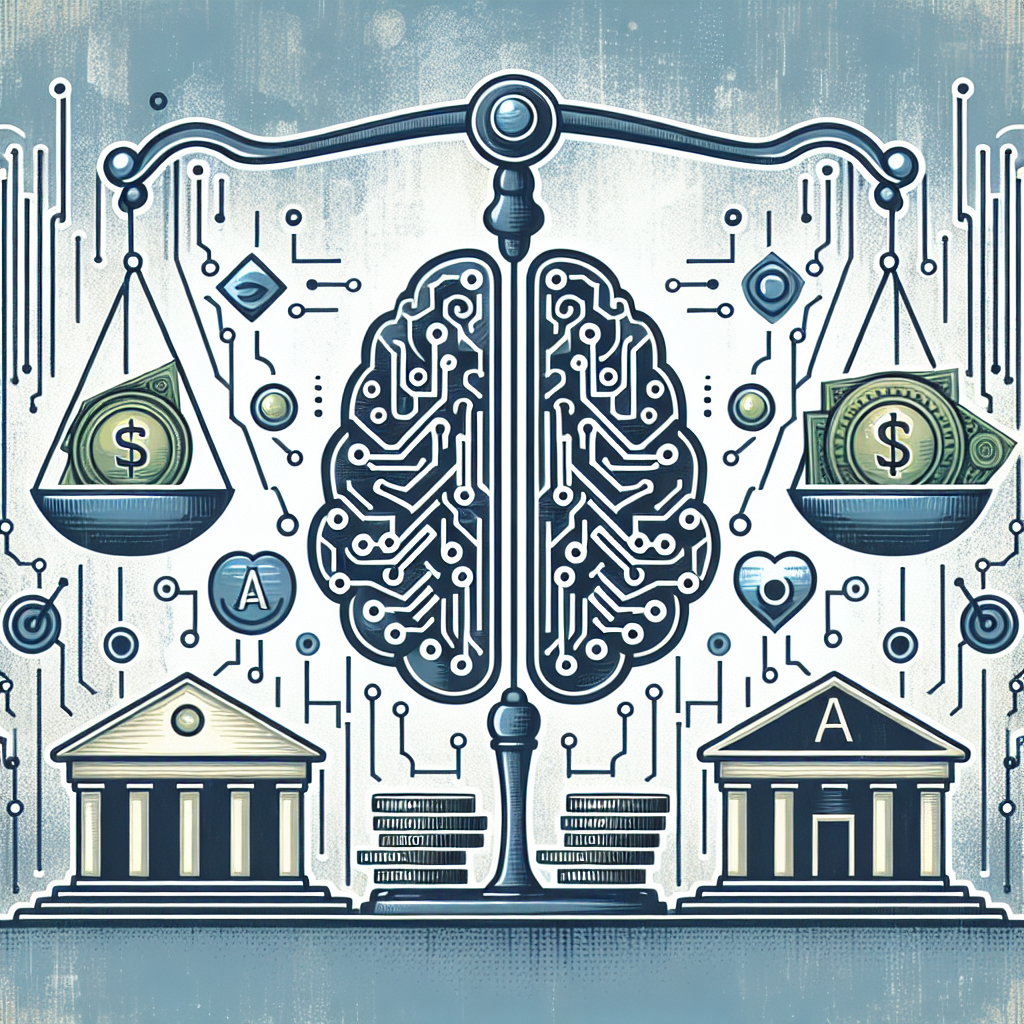
Artificial intelligence has revolutionized the way we do business in almost every industry, including finance and banking. From fraud detection to customer service, AI has the ability to analyze vast amounts of data and make decisions faster and more accurately than ever before. However, as AI becomes more prevalent in the financial sector, concerns about ethics and fairness have emerged. How can we ensure that AI is making decisions in a way that is fair and equitable for all?
Ethical AI in finance and banking refers to the use of artificial intelligence in a way that upholds moral and ethical values, ensuring that decisions made by AI systems are fair and unbiased. This is especially important in industries like finance and banking, where decisions made by AI can have significant impacts on people’s lives, such as loan approvals, credit scoring, and investment recommendations.
Ensuring fairness and equity in decision-making is crucial in the financial sector for several reasons. First and foremost, it is a matter of social justice. Discriminatory practices in lending or investment decisions can perpetuate inequality and reinforce existing biases. Secondly, fairness and equity are also essential for maintaining trust and confidence in the financial system. If people believe that AI systems are making decisions based on biased or unfair criteria, they may lose trust in those systems and the institutions that use them.
There are several key principles that can help guide the development and implementation of ethical AI in finance and banking:
Transparency: AI systems should be transparent in their decision-making processes, so that users can understand how decisions are made and why. This transparency can help identify and correct biases in the system.
Accountability: Companies using AI in finance and banking should be held accountable for any decisions made by AI systems. This includes having mechanisms in place to review and appeal decisions made by AI, as well as ensuring that there is oversight and governance of AI systems.
Fairness: AI systems should be designed to treat all individuals fairly and equally, regardless of their race, gender, or other characteristics. This means that AI systems should not discriminate against certain groups of people or favor others.
Privacy: Data privacy is a key concern when it comes to AI in finance and banking. Companies should ensure that they are collecting and using data in a way that protects people’s privacy and complies with relevant regulations.
Inclusivity: AI systems should be designed to be inclusive of all people, including those with disabilities or other marginalized groups. This means that AI systems should be accessible and usable by everyone.
There are several ways that companies can ensure that their AI systems are ethical and fair. One approach is to use diverse and representative data sets when training AI systems. By including data from a wide range of sources and populations, companies can help reduce bias in their AI systems. Additionally, companies can use techniques like bias testing and algorithm auditing to identify and correct biases in their AI systems.
Another important aspect of ethical AI in finance and banking is ensuring that decisions made by AI systems can be explained and understood. This is known as explainable AI, and it is crucial for building trust in AI systems. By providing explanations for why AI systems make certain decisions, companies can help users understand and trust those decisions.
FAQs:
Q: How can companies ensure that their AI systems are fair and unbiased?
A: Companies can ensure that their AI systems are fair and unbiased by using diverse and representative data sets, testing for bias, and providing explanations for decisions made by AI systems.
Q: What are some examples of ethical issues in AI in finance and banking?
A: Some examples of ethical issues in AI in finance and banking include discrimination in lending decisions, lack of transparency in credit scoring algorithms, and data privacy concerns.
Q: How can individuals protect themselves from biased AI systems in finance and banking?
A: Individuals can protect themselves from biased AI systems by being aware of the potential for bias in AI systems, advocating for transparency and accountability in AI systems, and seeking out companies that prioritize ethical AI practices.
In conclusion, ethical AI in finance and banking is crucial for ensuring fairness and equity in decision-making. By following principles like transparency, accountability, fairness, privacy, and inclusivity, companies can build AI systems that are ethical and trustworthy. Through careful design, testing, and oversight, we can harness the power of AI to improve financial services for all.