
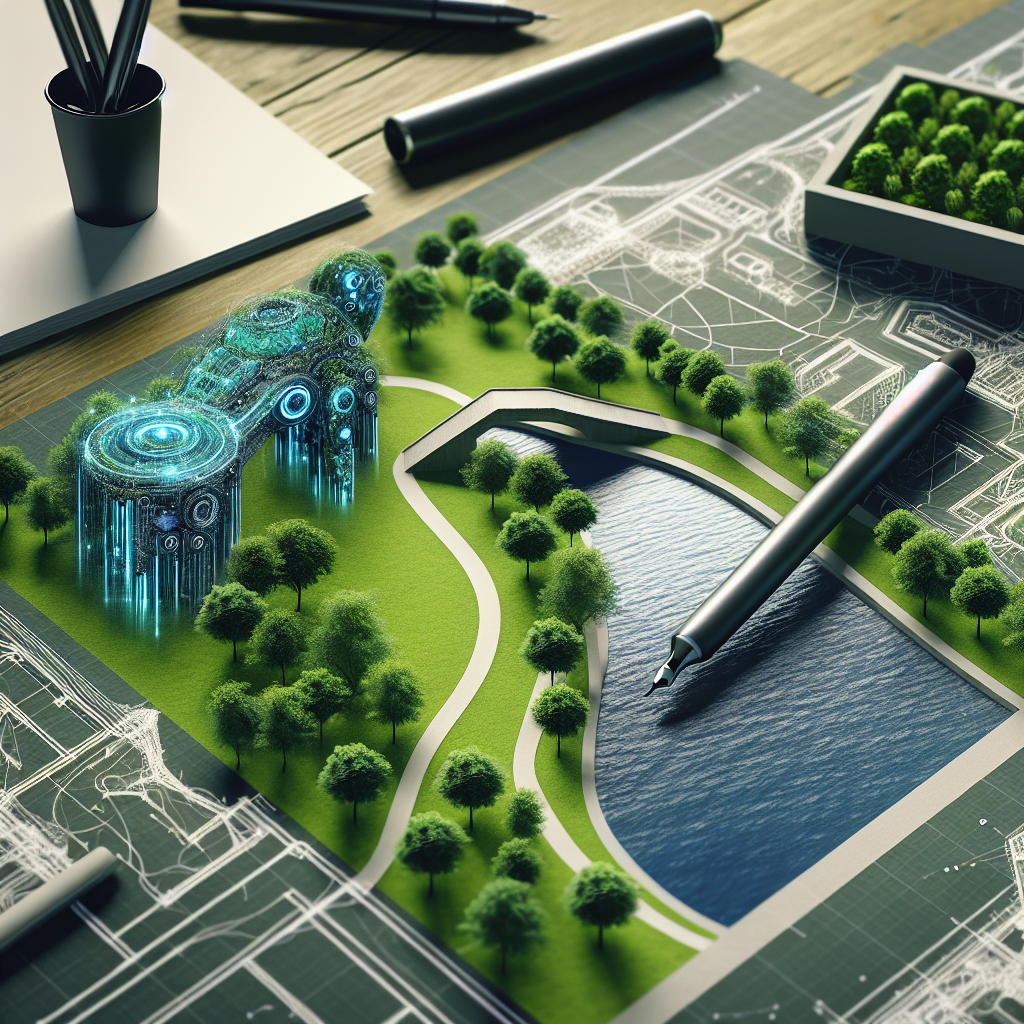
The field of landscape architecture is constantly evolving, with new technologies and design processes being integrated to enhance the way in which outdoor spaces are created and managed. One of the most significant advancements in recent years has been the integration of artificial intelligence (AI) into the design process. AI-enhanced design processes in landscape architecture have the potential to revolutionize the field, offering new ways to analyze, plan, and create outdoor spaces that are more efficient, sustainable, and visually appealing.
AI technology has the ability to process vast amounts of data and perform complex calculations at a speed and accuracy that far surpasses human capabilities. This makes it an invaluable tool for landscape architects, who must consider a wide range of factors when designing outdoor spaces, including topography, climate, vegetation, and human interaction. By using AI algorithms, designers can quickly analyze these factors and generate design solutions that are tailored to the specific needs of a project.
One of the key ways in which AI is being used in landscape architecture is through the creation of generative design tools. These tools use algorithms to explore a wide range of design possibilities based on a set of input parameters, such as site constraints, client preferences, and sustainability goals. By quickly generating and evaluating multiple design options, designers can explore a broader range of possibilities and make more informed decisions about which design solutions are most suitable for a given project.
AI-enhanced design processes also offer new ways to analyze and visualize data. For example, AI algorithms can analyze satellite imagery to create detailed maps of a site, allowing designers to better understand its topography, vegetation, and other features. This data can then be used to inform design decisions, such as the placement of buildings, roads, and vegetation, to maximize the site’s potential and minimize environmental impact.
In addition to design, AI technology can also be used to optimize the construction and maintenance of outdoor spaces. For example, AI algorithms can analyze data on soil conditions, climate patterns, and plant species to create a maintenance plan that is tailored to the specific needs of a site. This can help to ensure that outdoor spaces remain healthy and vibrant over time, with minimal intervention required.
Despite the many benefits that AI-enhanced design processes offer, there are also challenges and limitations to consider. For example, AI algorithms are only as good as the data they are trained on, so it is important to ensure that the data used in the design process is accurate and up-to-date. Additionally, AI technology can be expensive to implement and may require specialized training for designers to use effectively.
As AI technology continues to evolve, it is likely that its role in landscape architecture will only continue to grow. By harnessing the power of AI algorithms, designers can create outdoor spaces that are not only visually stunning but also sustainable, efficient, and responsive to the needs of their users. As the field of landscape architecture continues to adapt to new technologies, the possibilities for AI-enhanced design processes are virtually limitless.
—
FAQs
Q: How does AI technology improve the design process in landscape architecture?
A: AI technology allows designers to quickly analyze a wide range of data and generate design solutions that are tailored to the specific needs of a project. By using AI algorithms, designers can explore a broader range of design possibilities and make more informed decisions about which solutions are most suitable for a given project.
Q: What are some examples of AI-enhanced design tools used in landscape architecture?
A: Generative design tools are one of the key ways in which AI is being used in landscape architecture. These tools use algorithms to explore a wide range of design possibilities based on a set of input parameters, such as site constraints, client preferences, and sustainability goals.
Q: What are the limitations of using AI technology in landscape architecture?
A: AI algorithms are only as good as the data they are trained on, so it is important to ensure that the data used in the design process is accurate and up-to-date. Additionally, AI technology can be expensive to implement and may require specialized training for designers to use effectively.
Q: How can AI technology be used to optimize the construction and maintenance of outdoor spaces?
A: AI algorithms can analyze data on soil conditions, climate patterns, and plant species to create a maintenance plan that is tailored to the specific needs of a site. This can help to ensure that outdoor spaces remain healthy and vibrant over time, with minimal intervention required.