
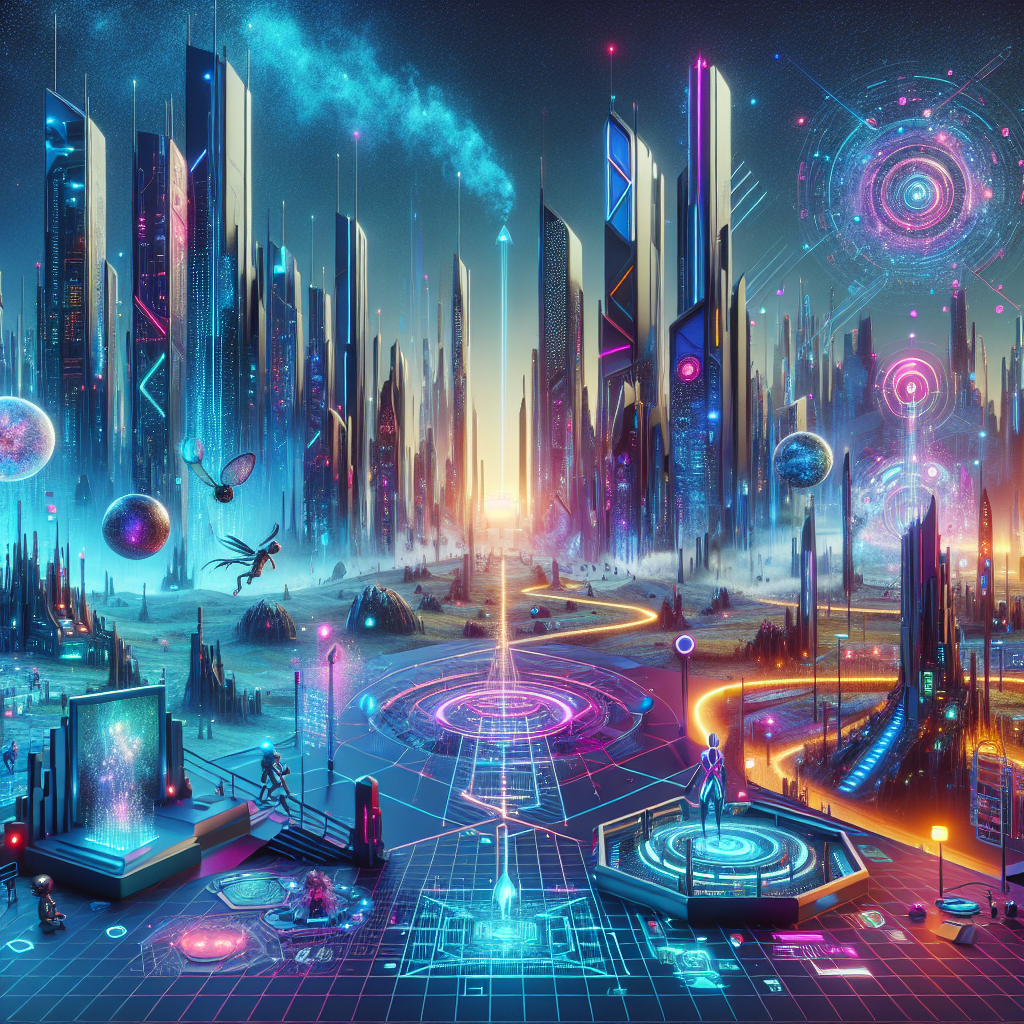
Artificial Intelligence (AI) has become an increasingly important tool in the world of game design, allowing for more immersive and engaging game environments. From creating realistic non-player characters (NPCs) to dynamic enemy behavior, AI is revolutionizing the way games are developed and played. In this article, we will explore how AI is being used in game environment design and its impact on the gaming industry.
One of the most common uses of AI in game environments is in the creation of NPCs. These are the characters in a game that are controlled by the computer rather than the player. AI algorithms are used to give these NPCs realistic behavior, making them react to the player’s actions and interact with the game world in a believable way. This can range from simple pathfinding algorithms that allow NPCs to navigate the game world, to more complex decision-making algorithms that determine how NPCs interact with the player and each other.
Another important use of AI in game environment design is in creating dynamic enemy behavior. In many games, enemies are controlled by AI algorithms that allow them to adapt to the player’s actions and provide a more challenging and engaging gameplay experience. For example, in a first-person shooter game, enemies may use different tactics depending on the player’s position and weapon choice, making each encounter feel unique and exciting.
AI is also being used to create more realistic and immersive game worlds. For example, AI algorithms can be used to generate realistic terrain, weather, and lighting effects, creating a more engaging and visually stunning game environment. AI can also be used to populate game worlds with dynamic elements such as wildlife, vehicles, and other characters, making the game world feel more alive and vibrant.
In addition to enhancing the gameplay experience, AI in game environment design can also help developers save time and resources. By automating certain tasks such as NPC behavior and enemy AI, developers can focus on other aspects of game development, such as level design, storytelling, and game mechanics. This can lead to faster development times and more polished and polished game environments.
Despite the many benefits of using AI in game environment design, there are also challenges and limitations to consider. One of the main challenges is creating AI algorithms that are both effective and efficient. Developing AI algorithms that can accurately simulate human behavior and provide a challenging gameplay experience can be a complex and time-consuming process. Additionally, AI algorithms can be computationally expensive, requiring powerful hardware and resources to run effectively.
Another challenge is ensuring that AI algorithms are fair and balanced. In multiplayer games, AI-controlled NPCs and enemies can have a significant impact on gameplay, and developers must ensure that AI behavior is not overly aggressive or unfair to players. Balancing AI difficulty levels and behaviors can be a delicate process, requiring careful testing and tuning to ensure a fun and challenging gameplay experience for all players.
Despite these challenges, the use of AI in game environment design is likely to continue to grow in the coming years. As AI technologies continue to advance and become more sophisticated, developers will have more tools at their disposal to create immersive and engaging game environments. From creating realistic NPCs to dynamic enemy behavior, AI is revolutionizing the way games are designed and played, and is sure to play a key role in the future of the gaming industry.
FAQs:
Q: How is AI used in game environment design?
A: AI is used in game environment design in a variety of ways, such as creating realistic NPCs, dynamic enemy behavior, and immersive game worlds. AI algorithms are used to give NPCs realistic behavior, making them react to the player’s actions and interact with the game world in a believable way. AI is also used to create dynamic enemy behavior, allowing enemies to adapt to the player’s actions and provide a more challenging gameplay experience. Additionally, AI is used to generate realistic terrain, weather, and lighting effects, creating a more immersive game environment.
Q: What are the benefits of using AI in game environment design?
A: Using AI in game environment design can lead to more immersive and engaging gameplay experiences. AI algorithms can create realistic NPCs, dynamic enemy behavior, and immersive game worlds, making games feel more alive and vibrant. Additionally, AI can help developers save time and resources by automating certain tasks such as NPC behavior and enemy AI, allowing them to focus on other aspects of game development. Overall, AI in game environment design can lead to faster development times and more polished game environments.
Q: What are the challenges of using AI in game environment design?
A: There are several challenges to using AI in game environment design. One of the main challenges is creating AI algorithms that are both effective and efficient. Developing AI algorithms that can accurately simulate human behavior and provide a challenging gameplay experience can be a complex and time-consuming process. Additionally, AI algorithms can be computationally expensive, requiring powerful hardware and resources to run effectively. Another challenge is ensuring that AI behavior is fair and balanced, particularly in multiplayer games where AI-controlled NPCs and enemies can have a significant impact on gameplay. Balancing AI difficulty levels and behaviors can be a delicate process, requiring careful testing and tuning to ensure a fun and challenging gameplay experience for all players.