
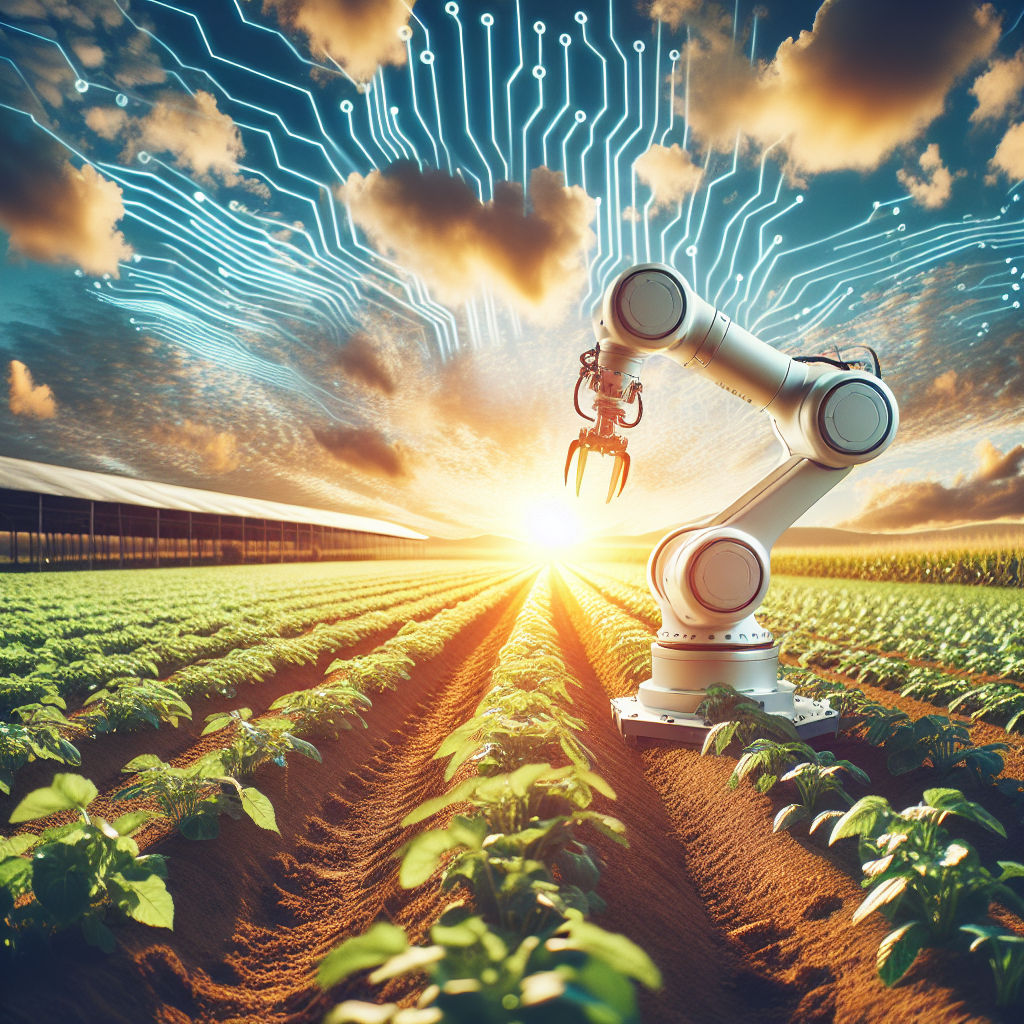
Generative AI, also known as generative adversarial networks (GANs), is a powerful technology that has the potential to revolutionize various industries, including agriculture. By using AI algorithms to generate new data and insights, farmers and agricultural experts can optimize their processes, increase productivity, and improve overall efficiency.
In agriculture, generative AI can be used in a variety of ways to enhance crop production, livestock management, and overall sustainability. From predicting crop yields to optimizing irrigation systems, generative AI has the potential to provide valuable insights that can help farmers make informed decisions and improve their operations.
One of the key benefits of generative AI in agriculture is its ability to analyze large amounts of data quickly and accurately. By feeding data into AI algorithms, farmers can gain valuable insights into various aspects of their operations, such as soil quality, weather patterns, and pest infestations. This information can then be used to make informed decisions about planting, harvesting, and overall farm management.
Generative AI can also be used to optimize resource allocation on farms. By analyzing data on crop yields, soil quality, and weather patterns, AI algorithms can help farmers determine the most efficient way to allocate resources such as water, fertilizer, and pesticides. This can result in cost savings and improved sustainability, as resources are used more effectively and wastage is minimized.
Another key application of generative AI in agriculture is in the development of new crop varieties. By analyzing genetic data and breeding patterns, AI algorithms can help breeders identify traits that are desirable for specific growing conditions, such as drought resistance or pest tolerance. This can lead to the development of new crop varieties that are better suited to changing environmental conditions and can help ensure food security in the future.
In addition to crop production, generative AI can also be used in livestock management. By analyzing data on animal health, feeding patterns, and breeding cycles, AI algorithms can help farmers optimize their livestock operations and improve overall productivity. For example, AI can be used to predict disease outbreaks, optimize feeding schedules, and improve breeding success rates.
Overall, generative AI has the potential to revolutionize the way agriculture is practiced, by providing valuable insights and optimizing processes in ways that were previously not possible. By harnessing the power of AI algorithms, farmers can improve their operations, increase productivity, and ensure sustainability for future generations.
FAQs:
Q: How does generative AI work in agriculture?
A: Generative AI works by using algorithms to analyze large amounts of data and generate new insights. In agriculture, this can involve analyzing data on soil quality, weather patterns, crop yields, and livestock health to provide valuable information that can help farmers make informed decisions and optimize their operations.
Q: What are some examples of generative AI applications in agriculture?
A: Some examples of generative AI applications in agriculture include predicting crop yields, optimizing resource allocation, developing new crop varieties, and improving livestock management. By using AI algorithms to analyze data and generate insights, farmers can optimize their processes and improve overall productivity.
Q: How can generative AI help improve sustainability in agriculture?
A: Generative AI can help improve sustainability in agriculture by optimizing resource allocation, reducing wastage, and developing new crop varieties that are better suited to changing environmental conditions. By providing valuable insights and predictions, AI algorithms can help farmers make more sustainable decisions and ensure the long-term viability of their operations.
Q: What are some challenges associated with implementing generative AI in agriculture?
A: Some challenges associated with implementing generative AI in agriculture include data privacy concerns, lack of access to high-quality data, and the need for specialized expertise to develop and deploy AI algorithms. However, as technology continues to advance and data becomes more readily available, these challenges are gradually being overcome.
Q: What are some potential future developments in generative AI for agriculture?
A: Some potential future developments in generative AI for agriculture include the use of drones and sensors to collect real-time data, the integration of AI algorithms with precision farming technologies, and the development of AI-powered robots for tasks such as planting and harvesting. As technology continues to evolve, the possibilities for generative AI in agriculture are endless.