
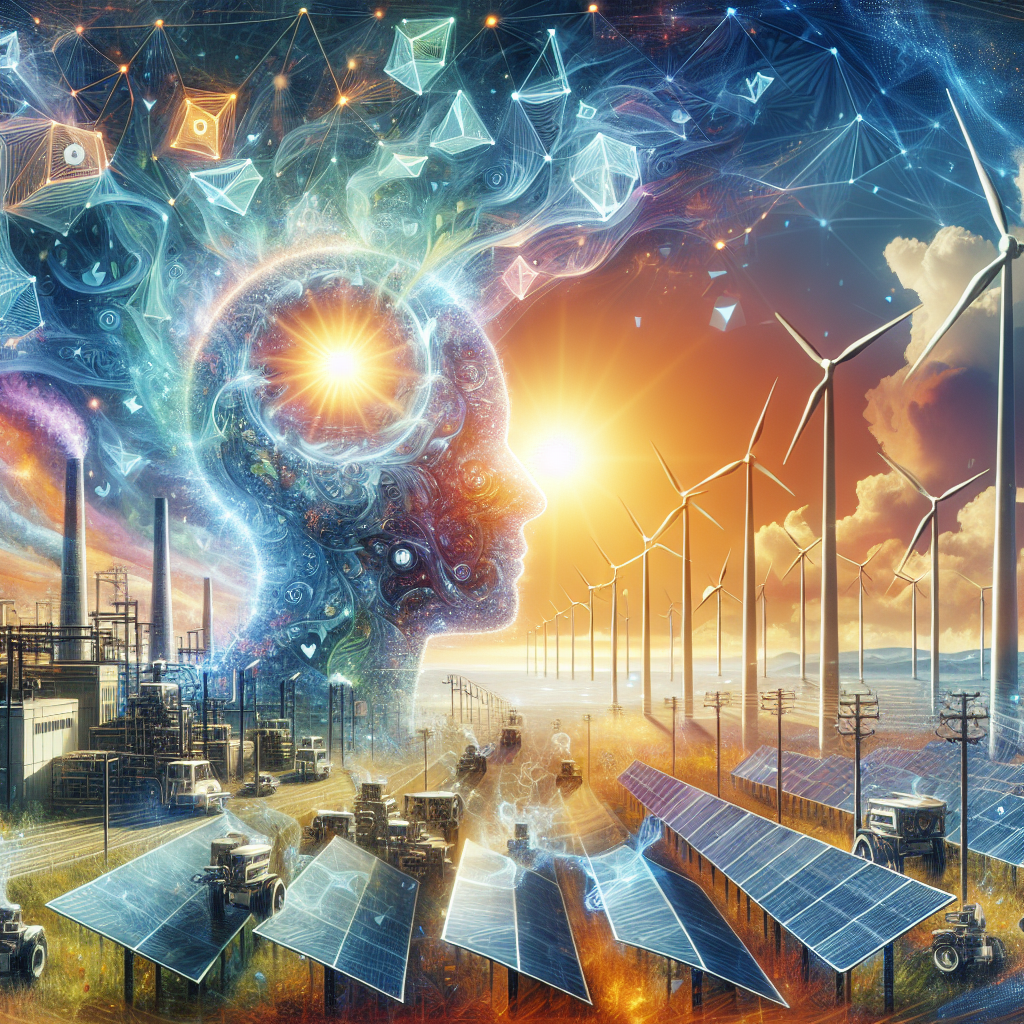
With the increasing concern over climate change and the need to transition to more sustainable energy sources, renewable energy has become a key focus for governments, businesses, and individuals around the world. One technology that has the potential to significantly advance renewable energy is artificial intelligence (AI). AI has the ability to optimize the efficiency of renewable energy systems, improve forecasting and grid management, and accelerate the development of new technologies. In this article, we will explore the potential of AI in advancing renewable energy and how it can help us transition to a more sustainable future.
Optimizing the Efficiency of Renewable Energy Systems
One of the key ways AI can advance renewable energy is by optimizing the efficiency of renewable energy systems. AI algorithms can analyze vast amounts of data in real-time to optimize the performance of renewable energy systems such as solar panels, wind turbines, and energy storage systems. By continuously monitoring and adjusting the operation of these systems, AI can maximize energy production, reduce downtime, and extend the lifespan of equipment.
For example, AI can be used to predict solar and wind conditions to optimize the operation of solar panels and wind turbines. By analyzing weather patterns, historical data, and real-time sensor data, AI algorithms can adjust the angle of solar panels or the pitch of wind turbine blades to maximize energy production. This not only increases the efficiency of renewable energy systems but also reduces the need for backup power sources and improves grid stability.
Improving Forecasting and Grid Management
Another area where AI can advance renewable energy is in forecasting and grid management. Renewable energy sources such as solar and wind are variable and intermittent, which can pose challenges for grid operators in managing supply and demand. AI can help address these challenges by improving the accuracy of energy forecasting, optimizing grid operations, and enabling better integration of renewable energy sources into the grid.
AI algorithms can analyze historical data, weather patterns, and real-time sensor data to predict energy production from renewable sources with greater accuracy. This allows grid operators to better anticipate fluctuations in energy supply and demand and make more informed decisions about grid management, such as scheduling maintenance, dispatching energy storage systems, and adjusting power flows.
In addition, AI can optimize grid operations by dynamically adjusting the flow of electricity, managing energy storage systems, and coordinating the integration of renewable energy sources into the grid. By using AI to optimize grid operations, grid operators can reduce costs, improve reliability, and increase the efficiency of renewable energy integration.
Accelerating the Development of New Technologies
AI also has the potential to accelerate the development of new technologies in the renewable energy sector. AI algorithms can analyze vast amounts of data to identify patterns, optimize designs, and predict performance, enabling researchers and engineers to develop more efficient and cost-effective renewable energy technologies.
For example, AI can be used to optimize the design of solar panels, wind turbines, and energy storage systems to maximize energy production and minimize costs. By analyzing data from simulations, experiments, and field tests, AI algorithms can identify the most promising designs and parameters for renewable energy technologies, accelerating the development process and reducing the time and cost of bringing new technologies to market.
In addition, AI can help identify new materials, processes, and technologies that have the potential to revolutionize the renewable energy sector. By analyzing data from research papers, patents, and experiments, AI algorithms can identify promising areas for innovation and guide researchers and engineers in developing new technologies that can further advance renewable energy.
FAQs
Q: How is AI being used in renewable energy today?
A: AI is being used in renewable energy today in a variety of ways, including optimizing the efficiency of renewable energy systems, improving forecasting and grid management, and accelerating the development of new technologies. AI algorithms are being used to analyze vast amounts of data to optimize the performance of solar panels, wind turbines, and energy storage systems, improve the accuracy of energy forecasting, optimize grid operations, and identify new materials and technologies for the renewable energy sector.
Q: What are the benefits of using AI in renewable energy?
A: The benefits of using AI in renewable energy include optimizing the efficiency of renewable energy systems, improving forecasting and grid management, and accelerating the development of new technologies. By using AI to optimize the performance of renewable energy systems, improve energy forecasting, and develop new technologies, we can increase the efficiency of renewable energy, reduce costs, improve reliability, and accelerate the transition to a more sustainable energy future.
Q: What are the challenges of using AI in renewable energy?
A: Some of the challenges of using AI in renewable energy include the complexity of renewable energy systems, the need for vast amounts of data, and the potential for bias in AI algorithms. Renewable energy systems are complex and dynamic, which can make it challenging to develop AI algorithms that can optimize their performance effectively. In addition, AI algorithms require vast amounts of data to train and operate effectively, which can be a challenge in the renewable energy sector. Finally, there is a risk of bias in AI algorithms, which can lead to inaccurate predictions or decisions if not properly addressed.
Q: How can policymakers and industry leaders support the use of AI in renewable energy?
A: Policymakers and industry leaders can support the use of AI in renewable energy by investing in research and development, promoting collaboration between researchers and industry, and developing policies and regulations that encourage innovation and adoption of AI technologies. By providing funding for research and development, promoting collaboration between researchers and industry, and creating a supportive regulatory environment, policymakers and industry leaders can help accelerate the adoption of AI in renewable energy and drive the transition to a more sustainable energy future.
In conclusion, AI has the potential to significantly advance renewable energy by optimizing the efficiency of renewable energy systems, improving forecasting and grid management, and accelerating the development of new technologies. By leveraging the power of AI, we can increase the efficiency of renewable energy, reduce costs, improve reliability, and accelerate the transition to a more sustainable energy future. Policymakers, industry leaders, and researchers must continue to support the use of AI in renewable energy to unlock its full potential and help us build a more sustainable world.