
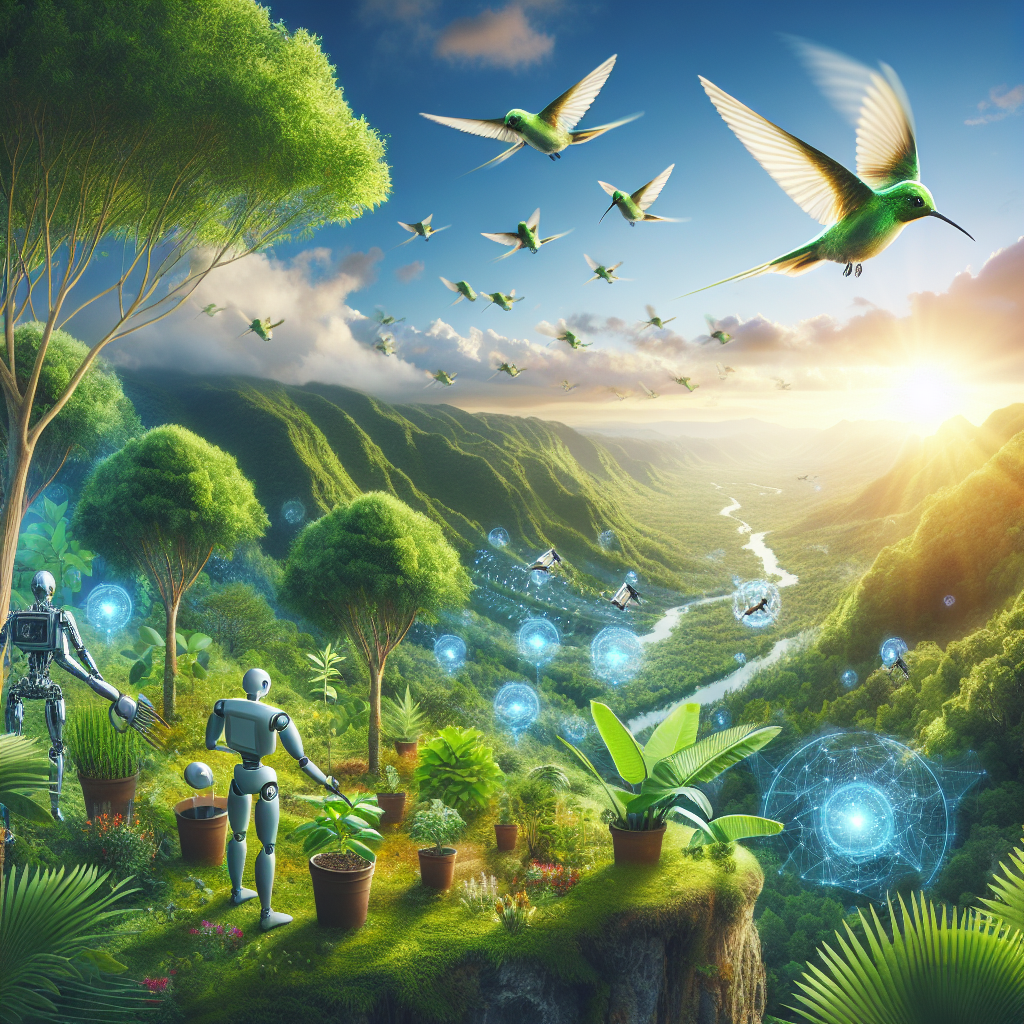
In recent years, artificial intelligence (AI) has emerged as a powerful tool in various industries, including environmental conservation. With its ability to process vast amounts of data and identify patterns, AI has the potential to revolutionize the way we approach conservation efforts and address pressing environmental issues. From monitoring wildlife populations to predicting deforestation trends, AI platforms are being increasingly used to help protect our planet and preserve biodiversity.
One of the key ways in which AI is being utilized in environmental conservation is through the monitoring of wildlife populations. Traditional methods of monitoring wildlife, such as camera traps and satellite imagery, can be time-consuming and labor-intensive. AI platforms, on the other hand, can analyze large amounts of data quickly and accurately, allowing researchers to track changes in population sizes and movements more effectively. By using AI to monitor wildlife populations, conservationists can better understand the impact of human activities on ecosystems and develop more targeted conservation strategies.
In addition to monitoring wildlife populations, AI platforms are also being used to combat illegal poaching and trafficking of endangered species. By analyzing data from sources such as satellite imagery and social media, AI algorithms can help identify illegal activities and track the movement of poachers. This information can then be used to target enforcement efforts and disrupt illegal wildlife trade networks. In countries with limited resources for conservation, AI platforms offer a cost-effective and efficient way to protect endangered species and combat wildlife crime.
AI is also being used to predict and mitigate the impact of climate change on ecosystems. By analyzing historical climate data and modeling future scenarios, AI platforms can help identify areas that are most vulnerable to climate change and develop strategies to adapt and mitigate its effects. For example, AI algorithms can be used to predict the spread of invasive species in response to changing climate conditions, allowing conservationists to prioritize areas for intervention. By harnessing the power of AI, we can better understand the complex interactions between climate change and biodiversity loss and work towards more sustainable and resilient ecosystems.
One of the most promising applications of AI in environmental conservation is in the field of precision agriculture. By using AI algorithms to analyze data from sensors, drones, and satellite imagery, farmers can optimize their use of resources such as water, fertilizer, and pesticides. This not only increases crop yields and reduces costs but also minimizes the environmental impact of agriculture. By using AI to improve agricultural practices, we can help reduce deforestation, soil erosion, and water pollution, and promote more sustainable land use.
While AI platforms hold great potential for environmental conservation, there are also challenges and limitations to consider. One of the main challenges is the lack of data available for training AI algorithms. In many cases, data on wildlife populations, climate change, and other environmental variables are limited or of poor quality, making it difficult for AI platforms to generate accurate predictions. Additionally, there are ethical considerations to take into account, such as ensuring that AI is used in a transparent and accountable manner and that the rights of local communities and indigenous peoples are respected.
Despite these challenges, the potential of AI platforms in environmental conservation is vast. By harnessing the power of AI to analyze data, predict trends, and optimize resource use, we can better understand and protect our planet’s ecosystems. From monitoring wildlife populations to combating illegal poaching and trafficking, AI platforms offer innovative solutions to some of the most pressing environmental issues we face today. As we continue to develop and refine AI technologies, we have the opportunity to create a more sustainable future for generations to come.
FAQs:
Q: How can AI platforms help monitor wildlife populations?
A: AI platforms can analyze large amounts of data from sources such as camera traps and satellite imagery to track changes in population sizes and movements more effectively.
Q: How is AI being used to combat illegal poaching and trafficking?
A: AI algorithms can analyze data from sources such as satellite imagery and social media to identify illegal activities and track the movement of poachers, helping to disrupt wildlife crime networks.
Q: What is precision agriculture and how can AI help improve it?
A: Precision agriculture involves using data from sensors, drones, and satellite imagery to optimize resource use in farming. AI algorithms can analyze this data to help farmers increase crop yields, reduce costs, and minimize environmental impact.
Q: What are some of the challenges of using AI in environmental conservation?
A: Challenges include the lack of quality data available for training AI algorithms, ethical considerations around transparency and accountability, and ensuring the rights of local communities and indigenous peoples are respected.