
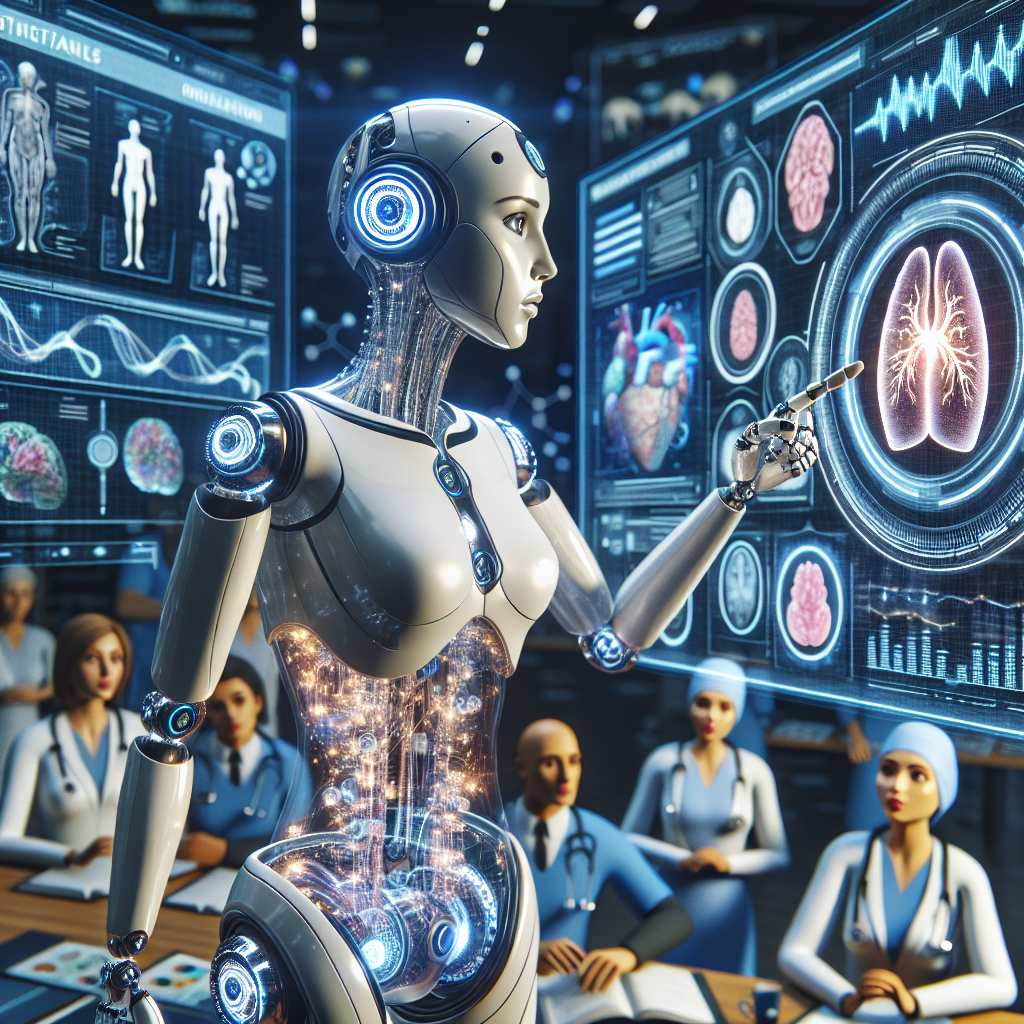
Artificial intelligence (AI) has the potential to revolutionize many industries, and health education is no exception. AI platforms can help educators deliver more personalized and interactive learning experiences to students, making it easier for them to grasp complex concepts and apply them in real-world scenarios. In this article, we will explore the various ways in which AI platforms can be used in health education and the benefits they can bring to both educators and students.
One of the key advantages of AI platforms in health education is their ability to provide personalized learning experiences. By analyzing students’ performance and learning styles, AI algorithms can tailor educational content to meet each student’s individual needs. For example, if a student is struggling with a particular concept, the AI platform can provide additional resources or exercises to help them understand it better. This personalized approach can help students learn at their own pace and in a way that is best suited to their learning preferences.
Another benefit of AI platforms in health education is their ability to provide real-time feedback to students. Traditional educational methods often rely on periodic assessments to gauge students’ understanding of the material. With AI platforms, educators can track students’ progress continuously and provide instant feedback on their performance. This immediate feedback can help students identify areas where they need to improve and take corrective actions to enhance their learning.
AI platforms can also enhance the engagement of students in health education. By incorporating interactive elements such as simulations, virtual reality, and gamification, AI platforms can make learning more engaging and enjoyable for students. These interactive features can help students retain information better and apply it in practical situations. For example, students can use virtual reality simulations to practice surgical procedures or interact with virtual patients to develop their clinical skills.
Furthermore, AI platforms can help educators create more comprehensive and up-to-date educational content. With the vast amount of information available in the field of health sciences, it can be challenging for educators to stay abreast of the latest developments and incorporate them into their teaching. AI platforms can help automate the process of curating and updating educational content, ensuring that students have access to the most relevant and accurate information. This can help educators save time and effort in preparing teaching materials and focus on delivering high-quality education to their students.
In addition to these benefits, AI platforms can also help improve the assessment and evaluation processes in health education. By using AI algorithms to analyze students’ performance data, educators can gain insights into students’ strengths and weaknesses and identify areas where additional support is needed. This can help educators tailor their teaching strategies to address students’ specific learning needs and improve overall learning outcomes.
Despite the numerous advantages of AI platforms in health education, there are some challenges and considerations that educators need to be aware of. One of the key challenges is the potential bias in AI algorithms. AI algorithms are trained on data sets that may contain biases, which can lead to unfair or inaccurate outcomes, especially in sensitive areas such as healthcare. Educators need to be vigilant in monitoring and addressing bias in AI algorithms to ensure that they provide equitable and unbiased learning experiences for all students.
Another challenge is the need for educators to acquire the necessary skills and expertise to effectively integrate AI platforms into their teaching practices. Educators may need training and support to understand how to use AI tools effectively and integrate them into their curriculum. It is essential for educators to stay updated on the latest developments in AI technology and how it can be applied in health education to maximize its benefits.
In conclusion, AI platforms have the potential to transform health education by providing personalized, interactive, and engaging learning experiences to students. By leveraging the power of AI algorithms, educators can create more effective teaching strategies, enhance student engagement, and improve learning outcomes. However, educators need to be mindful of the challenges and considerations associated with AI platforms and take proactive steps to address them. With the right approach and support, AI platforms can help educators unlock the full potential of health education and empower students to succeed in their academic and professional pursuits.
FAQs:
Q: How can AI platforms improve student engagement in health education?
A: AI platforms can enhance student engagement by incorporating interactive elements such as simulations, virtual reality, and gamification into the learning experience. These interactive features make learning more engaging and enjoyable for students, helping them retain information better and apply it in practical situations.
Q: What are some of the challenges associated with using AI platforms in health education?
A: One of the key challenges is the potential bias in AI algorithms, which can lead to unfair or inaccurate outcomes, especially in sensitive areas such as healthcare. Educators need to be vigilant in monitoring and addressing bias in AI algorithms to ensure equitable and unbiased learning experiences for all students.
Q: How can educators acquire the necessary skills to effectively integrate AI platforms into their teaching practices?
A: Educators may need training and support to understand how to use AI tools effectively and integrate them into their curriculum. It is essential for educators to stay updated on the latest developments in AI technology and how it can be applied in health education to maximize its benefits.