
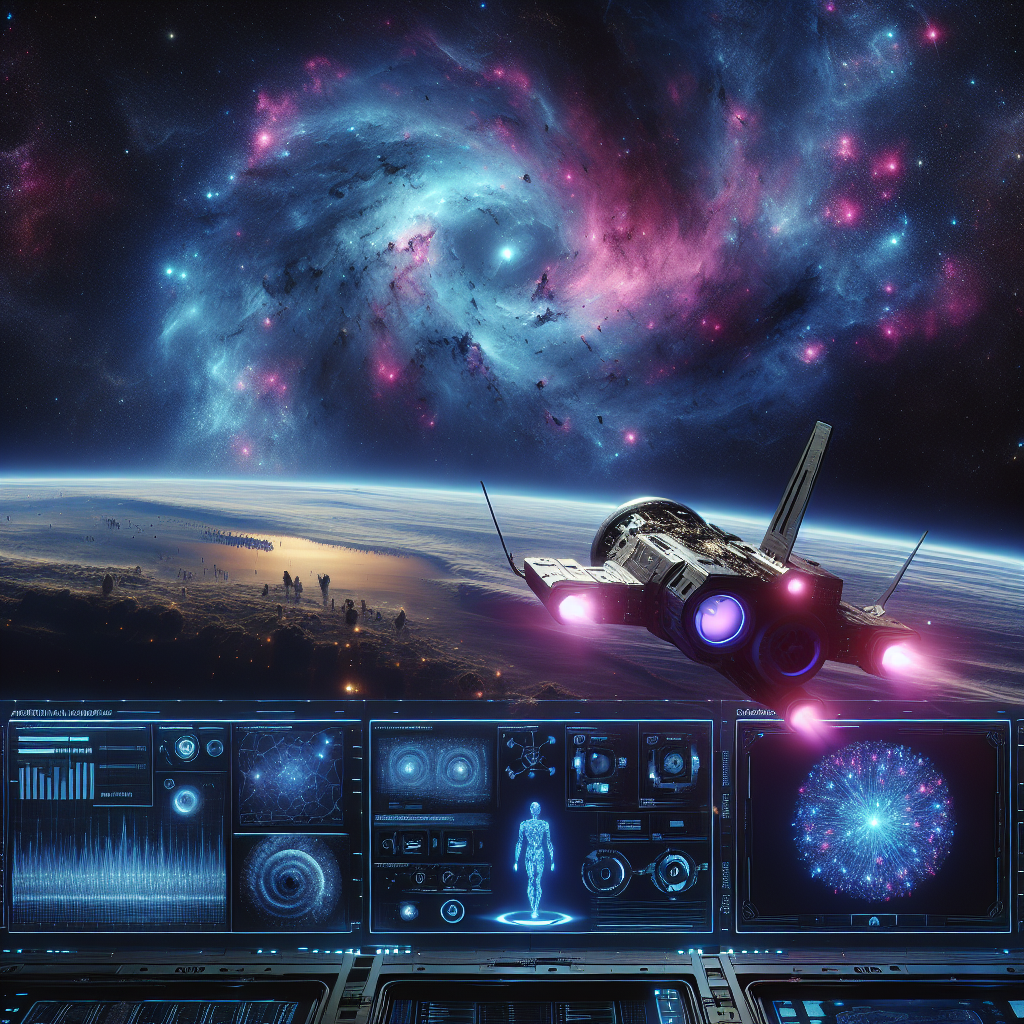
Exploring the Use of AI Software in Space Exploration
Space exploration has always been a fascinating field of study, with countless mysteries waiting to be unraveled beyond our planet. Over the years, technological advancements have played a crucial role in helping us better understand the universe and expand our knowledge of the cosmos. One such advancement that has revolutionized the way we explore space is the use of artificial intelligence (AI) software.
AI software, also known as machine learning algorithms, has the ability to analyze vast amounts of data and make predictions based on patterns it identifies. This makes it an invaluable tool for space exploration, where large amounts of data are collected from telescopes, satellites, and spacecraft. By using AI software, scientists and researchers are able to sift through this data more efficiently and uncover hidden insights that may have otherwise gone unnoticed.
One of the key ways in which AI software is being used in space exploration is in the analysis of images and data collected from space missions. For example, NASA’s Mars rovers, Curiosity and Perseverance, are equipped with AI software that helps them navigate the Martian terrain and make decisions autonomously. This allows the rovers to explore more efficiently and effectively, without needing constant input from Earth.
AI software is also being used to analyze data collected from telescopes and satellites, such as the Hubble Space Telescope and the James Webb Space Telescope. By using AI algorithms to analyze this data, researchers are able to identify new celestial objects, track asteroids, and even predict the behavior of galaxies millions of light-years away.
In addition to analyzing data, AI software is also being used to control spacecraft and ensure their safety during missions. For example, SpaceX’s Dragon spacecraft is equipped with AI software that allows it to dock with the International Space Station autonomously, without the need for human intervention. This not only makes space missions safer but also more efficient, as it reduces the risk of human error.
Furthermore, AI software is being used to assist astronauts during space missions, by providing them with real-time data and analysis to help them make informed decisions. For example, the European Space Agency’s Astronaut Support AI is a virtual assistant that provides astronauts with information on their tasks, schedules, and even their health. This allows astronauts to focus on their mission objectives, without having to worry about managing day-to-day tasks.
Overall, the use of AI software in space exploration has revolutionized the way we explore the cosmos, allowing us to uncover new insights and push the boundaries of our knowledge. As technology continues to advance, we can expect AI software to play an even greater role in future space missions, enabling us to delve deeper into the mysteries of the universe.
FAQs:
Q: How does AI software help in space exploration?
A: AI software helps in space exploration by analyzing vast amounts of data collected from telescopes, satellites, and spacecraft, making predictions based on patterns it identifies, controlling spacecraft autonomously, assisting astronauts during missions, and much more.
Q: What are some examples of AI software used in space exploration?
A: Some examples of AI software used in space exploration include NASA’s Mars rovers, SpaceX’s Dragon spacecraft, the European Space Agency’s Astronaut Support AI, and AI algorithms used to analyze data from telescopes and satellites.
Q: How does AI software benefit space missions?
A: AI software benefits space missions by making them more efficient, reducing the risk of human error, uncovering hidden insights in data, assisting astronauts during missions, and enabling spacecraft to operate autonomously.
Q: What is the future of AI software in space exploration?
A: The future of AI software in space exploration is promising, with advancements in technology expected to further enhance its capabilities. We can expect AI software to play an even greater role in future space missions, enabling us to explore the universe in ways we never thought possible.