
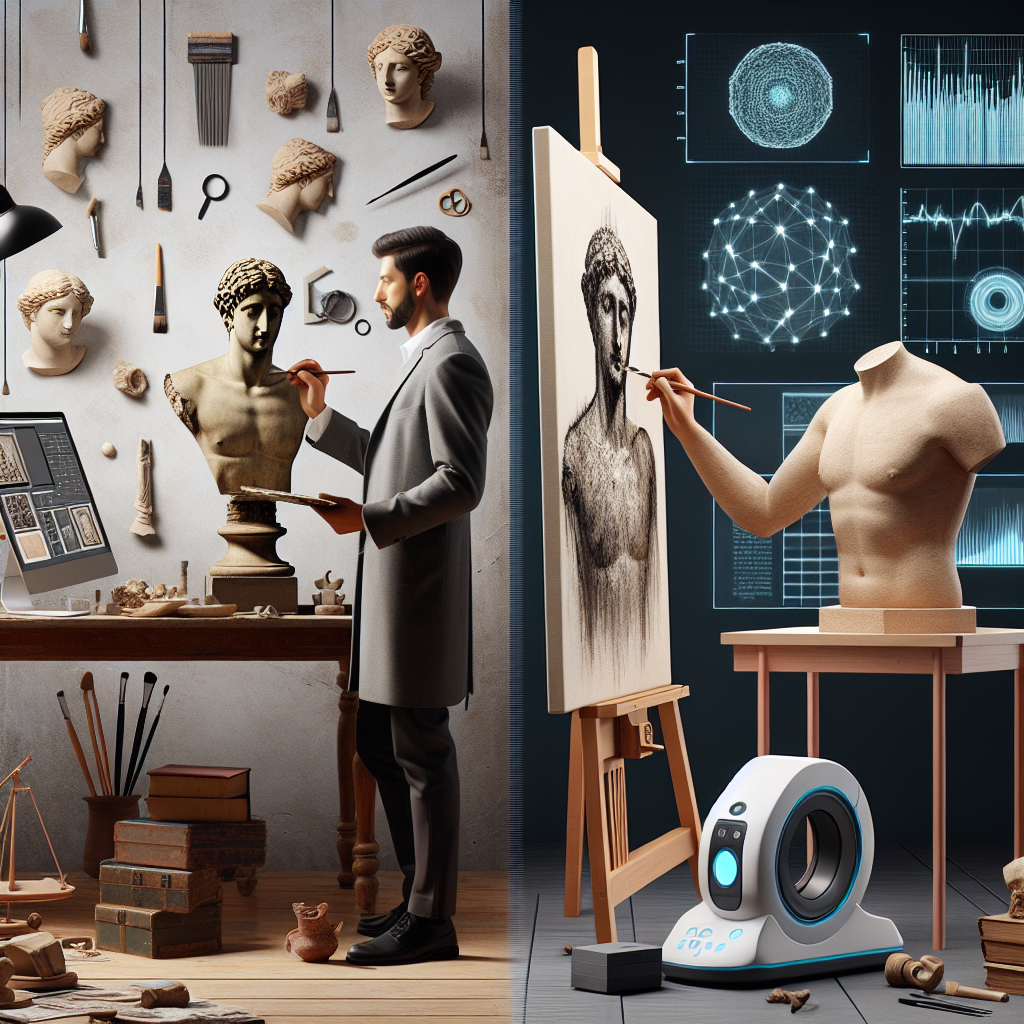
Art conservation is a crucial aspect of preserving and maintaining the integrity of artworks for future generations. Over the years, advancements in technology have played a significant role in enhancing the conservation process, with the adoption of artificial intelligence (AI) tools being one of the most groundbreaking developments in recent times. AI tools have revolutionized the way art conservation is approached, offering new possibilities for analyzing, restoring, and preserving artworks in ways that were previously unimaginable.
The use of AI in art conservation is still a relatively new field, but the potential it holds for the future of preserving cultural heritage is immense. From analyzing the chemical composition of pigments to detecting tiny cracks in paintings, AI tools are proving to be invaluable in the conservation of artworks of all kinds. In this article, we will explore the various ways in which AI is being used in art conservation, as well as the benefits and challenges that come with its adoption.
One of the most significant applications of AI in art conservation is in the analysis of artworks to determine their authenticity and provenance. AI tools can be used to analyze the brush strokes, color palette, and other characteristics of a painting to determine whether it is a genuine work of art or a forgery. By comparing these characteristics to a database of known artworks, AI algorithms can help conservators and art historians authenticate pieces more accurately and efficiently than ever before.
Another area where AI is making a big impact in art conservation is in the restoration of damaged artworks. AI tools can be used to analyze high-resolution images of artworks to detect imperfections such as cracks, tears, or discoloration. This information can then be used to create a digital model of the artwork, allowing conservators to test different restoration techniques virtually before applying them to the actual piece. This not only saves time and resources but also ensures that the restoration process is carried out with the utmost precision and care.
AI tools are also being used to monitor the condition of artworks over time. By analyzing data collected from sensors placed on or near the artwork, AI algorithms can detect changes in temperature, humidity, and other environmental factors that can affect the integrity of the piece. This real-time monitoring allows conservators to take proactive measures to prevent damage before it occurs, ultimately prolonging the lifespan of the artwork.
While the use of AI in art conservation offers many benefits, there are also challenges that come with its adoption. One of the main concerns is the potential for bias in AI algorithms, which can lead to inaccurate or misleading results. To address this issue, it is essential for conservators to work closely with data scientists and AI experts to ensure that the algorithms used in art conservation are as unbiased and reliable as possible.
Another challenge is the cost of implementing AI tools in art conservation. Developing and maintaining AI algorithms can be expensive, and not all conservation institutions have the resources to invest in this technology. However, as the field of AI continues to evolve, the cost of these tools is likely to decrease, making them more accessible to a wider range of organizations.
Despite these challenges, the use of AI in art conservation is undeniably transforming the way artworks are preserved and protected. By harnessing the power of AI tools, conservators are able to analyze, restore, and monitor artworks with a level of precision and efficiency that was previously unattainable. As technology continues to advance, the possibilities for using AI in art conservation are endless, offering new ways to safeguard our cultural heritage for future generations to enjoy.
FAQs:
1. How accurate are AI tools in analyzing artworks?
AI tools have shown to be highly accurate in analyzing artworks, with the ability to detect imperfections and analyze characteristics with a level of precision that surpasses human capabilities.
2. Are AI tools replacing human conservators?
AI tools are not replacing human conservators but rather enhancing their abilities and providing new tools for analyzing, restoring, and monitoring artworks.
3. How can organizations afford to implement AI tools in art conservation?
While the initial cost of implementing AI tools in art conservation can be high, the long-term benefits in terms of time and resource savings make it a worthwhile investment for many organizations.
4. Are there ethical considerations to be aware of when using AI in art conservation?
Ethical considerations, such as bias in AI algorithms and data privacy concerns, should be taken into account when using AI in art conservation. It is essential to work with experts to ensure that the technology is used responsibly and ethically.
5. What is the future of AI in art conservation?
The future of AI in art conservation is bright, with continued advancements in technology leading to new possibilities for analyzing, restoring, and preserving artworks in innovative ways. As technology continues to evolve, the field of art conservation is sure to benefit from the continued integration of AI tools.