
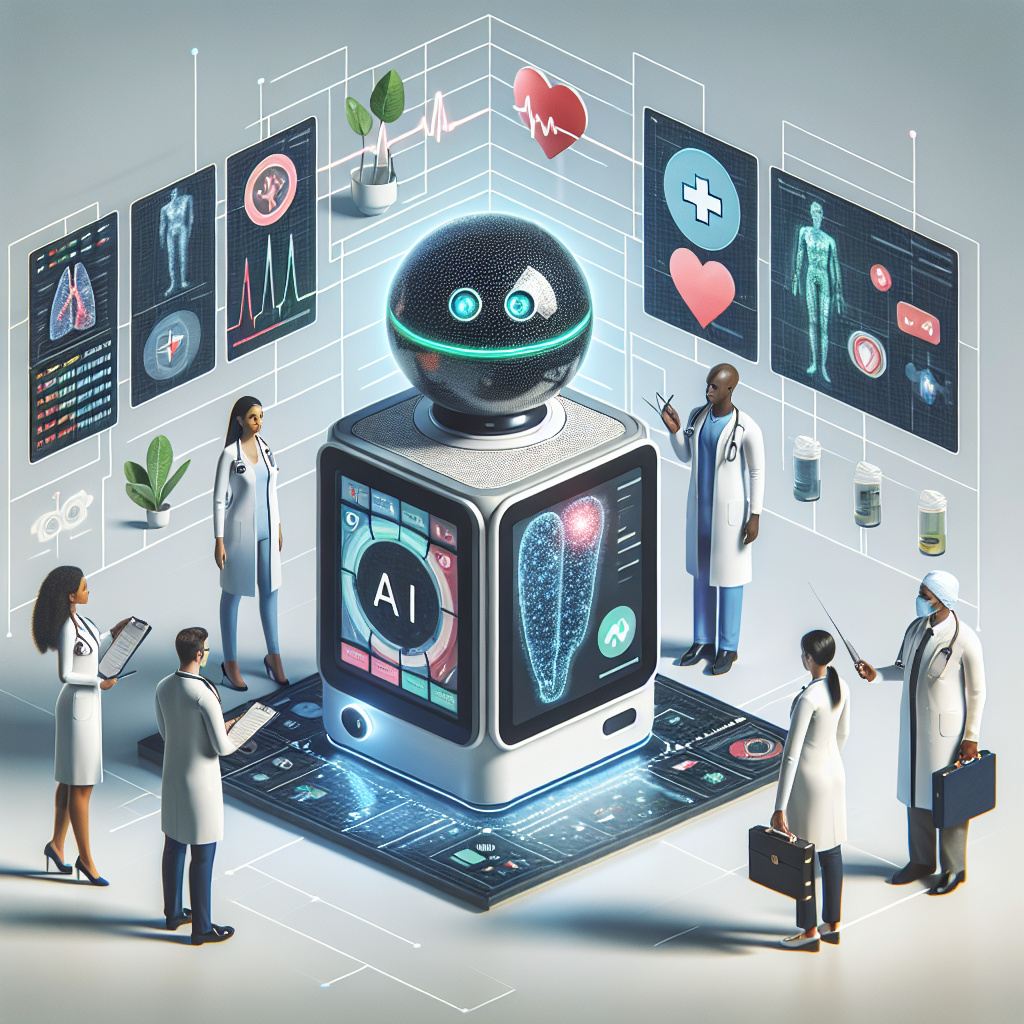
Generative AI: A Key Player in Healthcare Innovation
In recent years, artificial intelligence (AI) has been making significant strides in the healthcare industry. One of the most promising applications of AI in healthcare is generative AI, which has the potential to revolutionize the way medical professionals diagnose and treat diseases. Generative AI is a type of AI that is able to create new data based on patterns in existing data, making it an invaluable tool for healthcare innovation.
Generative AI in Healthcare
Generative AI has a wide range of applications in healthcare, from drug discovery to personalized medicine. One of the most exciting uses of generative AI in healthcare is in medical imaging. Generative AI algorithms can analyze medical images, such as X-rays and MRIs, to identify patterns and anomalies that may be missed by human radiologists. This can lead to earlier and more accurate diagnosis of diseases such as cancer, saving lives and reducing healthcare costs.
Another important application of generative AI in healthcare is in drug discovery. By analyzing large datasets of molecular structures and biological data, generative AI algorithms can identify potential new drugs and predict their effectiveness. This can significantly speed up the drug discovery process and lead to the development of more effective treatments for a wide range of diseases.
Generative AI is also being used in personalized medicine, where treatments are tailored to individual patients based on their genetic makeup and other factors. By analyzing large datasets of patient data, generative AI algorithms can identify the most effective treatments for each patient, leading to better outcomes and reduced side effects.
Challenges and Opportunities
While generative AI has the potential to revolutionize healthcare, there are also significant challenges that need to be addressed. One of the biggest challenges is ensuring the accuracy and reliability of generative AI algorithms. Since generative AI creates new data based on patterns in existing data, there is a risk that the algorithms may generate incorrect or biased results. This can have serious consequences in healthcare, where decisions are made based on the results of AI algorithms.
Another challenge is the ethical and regulatory implications of using generative AI in healthcare. There are concerns about privacy and data security, as well as the potential for AI algorithms to be used in ways that harm patients or discriminate against certain groups. It is important for healthcare organizations and policymakers to establish guidelines and regulations to ensure that generative AI is used ethically and responsibly.
Despite these challenges, there are also many opportunities for generative AI to improve healthcare. By harnessing the power of AI algorithms to analyze large datasets and identify patterns, medical professionals can make more accurate diagnoses, develop more effective treatments, and improve patient outcomes. Generative AI has the potential to revolutionize healthcare and usher in a new era of precision medicine.
FAQs
Q: What is generative AI?
A: Generative AI is a type of artificial intelligence that is able to create new data based on patterns in existing data. It has a wide range of applications in healthcare, from medical imaging to drug discovery.
Q: How is generative AI being used in healthcare?
A: Generative AI is being used in healthcare to analyze medical images, identify patterns and anomalies, speed up drug discovery, and personalize treatments for individual patients.
Q: What are the challenges of using generative AI in healthcare?
A: The challenges of using generative AI in healthcare include ensuring the accuracy and reliability of AI algorithms, addressing ethical and regulatory concerns, and safeguarding patient privacy and data security.
Q: What are the opportunities of using generative AI in healthcare?
A: The opportunities of using generative AI in healthcare include making more accurate diagnoses, developing more effective treatments, and improving patient outcomes through personalized medicine.
In conclusion, generative AI is a key player in healthcare innovation, with the potential to revolutionize the way medical professionals diagnose and treat diseases. By harnessing the power of AI algorithms to analyze large datasets and identify patterns, generative AI has the potential to improve patient outcomes and usher in a new era of precision medicine. However, there are also challenges that need to be addressed, including ensuring the accuracy and reliability of AI algorithms and addressing ethical and regulatory concerns. By working together, healthcare organizations, policymakers, and AI developers can harness the power of generative AI to improve healthcare for patients around the world.