
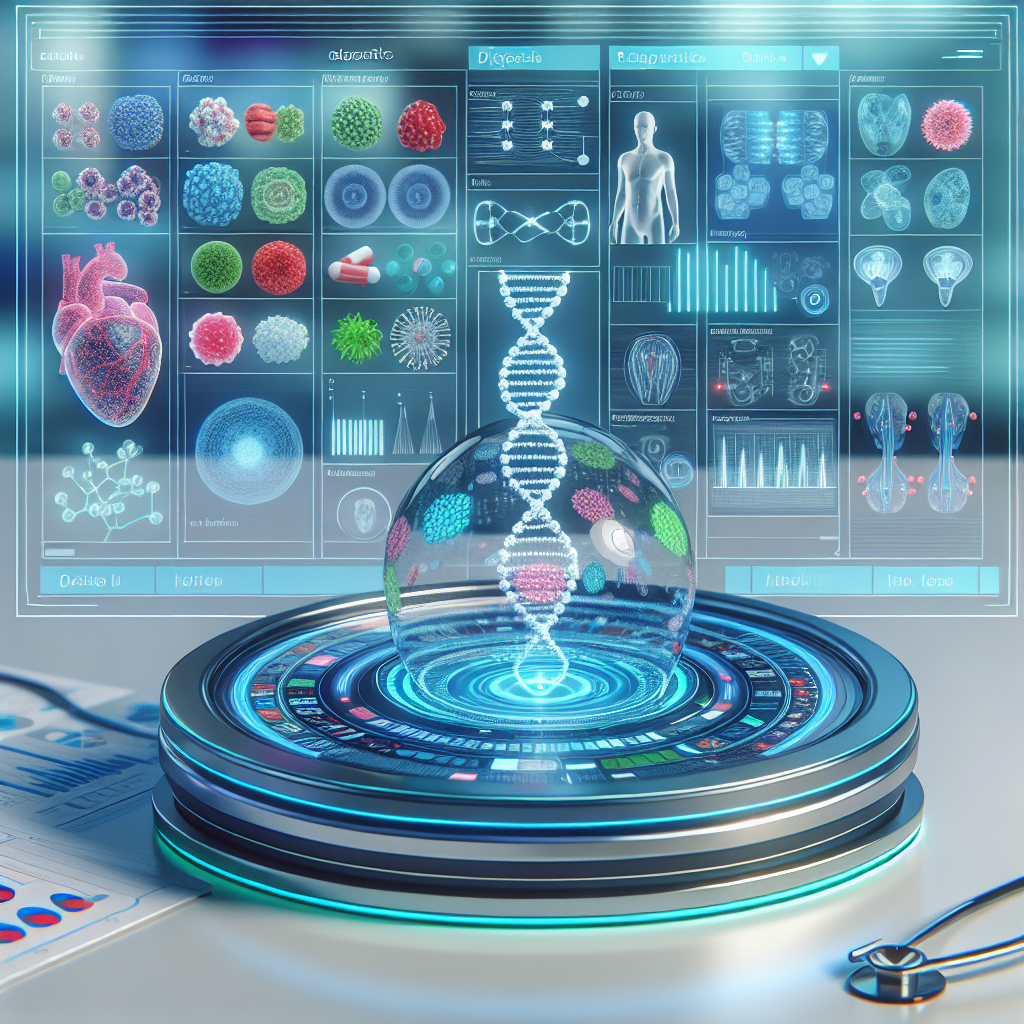
Generative AI: A Tool for Disease Diagnosis
In recent years, artificial intelligence (AI) has made significant advancements in the field of healthcare, particularly in the area of disease diagnosis. One of the most promising applications of AI in healthcare is generative AI, which has the ability to generate new data based on patterns learned from existing data. This technology has the potential to revolutionize the way diseases are diagnosed and treated, providing physicians with more accurate and timely information to make informed decisions.
Generative AI works by using a type of neural network called a generative adversarial network (GAN). GANs consist of two networks – a generator and a discriminator – that work together to generate new data that is indistinguishable from real data. The generator creates new data based on patterns it has learned from existing data, while the discriminator evaluates the generated data to determine if it is real or fake. Through this process of feedback and iteration, the generator learns to produce increasingly realistic data.
In the context of disease diagnosis, generative AI can be used to analyze medical images, such as X-rays, MRIs, and CT scans, to identify patterns and abnormalities that may indicate the presence of a disease. By training a GAN on a large dataset of medical images, the AI system can learn to generate new images that accurately represent different types of diseases, allowing physicians to make more accurate diagnoses.
One of the key advantages of generative AI in disease diagnosis is its ability to generate synthetic data that can augment limited or incomplete datasets. In many cases, medical datasets are small or imbalanced, making it difficult for AI systems to accurately learn patterns and make accurate predictions. Generative AI can help overcome this limitation by generating new data that can be used to supplement existing datasets, improving the performance and reliability of disease diagnosis models.
Another benefit of generative AI in disease diagnosis is its ability to provide explanations for its predictions. Unlike traditional machine learning models that operate as “black boxes,” generative AI models can generate new data that visualizes the patterns and features used to make a diagnosis. This transparency can help physicians understand and trust the AI system’s recommendations, leading to better collaboration and decision-making in the diagnosis and treatment of diseases.
Generative AI can also be used to improve the efficiency and speed of disease diagnosis. By automating the process of analyzing medical images and identifying abnormalities, AI systems can help reduce the time and resources required for diagnosing diseases. This can lead to faster diagnoses, earlier interventions, and improved patient outcomes.
In addition to disease diagnosis, generative AI has the potential to be used in a wide range of healthcare applications, including drug discovery, personalized medicine, and treatment planning. By leveraging the power of AI to analyze and generate new data, healthcare providers can improve the accuracy, efficiency, and effectiveness of their services, ultimately leading to better patient care and outcomes.
FAQs
Q: How accurate is generative AI in disease diagnosis?
A: The accuracy of generative AI in disease diagnosis depends on the quality and size of the training data, as well as the complexity of the disease being diagnosed. In general, generative AI has shown promising results in accurately identifying patterns and abnormalities in medical images, leading to more accurate diagnoses.
Q: Can generative AI be used to diagnose all types of diseases?
A: Generative AI is particularly well-suited for diseases that can be detected through medical imaging, such as cancer, cardiovascular disease, and neurological disorders. However, the application of generative AI in diagnosing other types of diseases, such as infectious diseases or genetic disorders, is still an area of active research.
Q: How does generative AI compare to traditional diagnostic methods?
A: Generative AI offers several advantages over traditional diagnostic methods, including the ability to analyze large amounts of data quickly and accurately, provide explanations for its predictions, and augment limited or incomplete datasets. While traditional diagnostic methods rely on human expertise and experience, generative AI can leverage the power of machine learning to make more informed and reliable diagnoses.
Q: Is generative AI widely used in healthcare?
A: Generative AI is still a relatively new technology in healthcare, but its adoption is growing rapidly as more research studies and clinical trials demonstrate its potential to improve disease diagnosis and treatment. Many healthcare providers and research institutions are actively exploring the use of generative AI in various healthcare applications, including disease diagnosis, drug discovery, and treatment planning.