
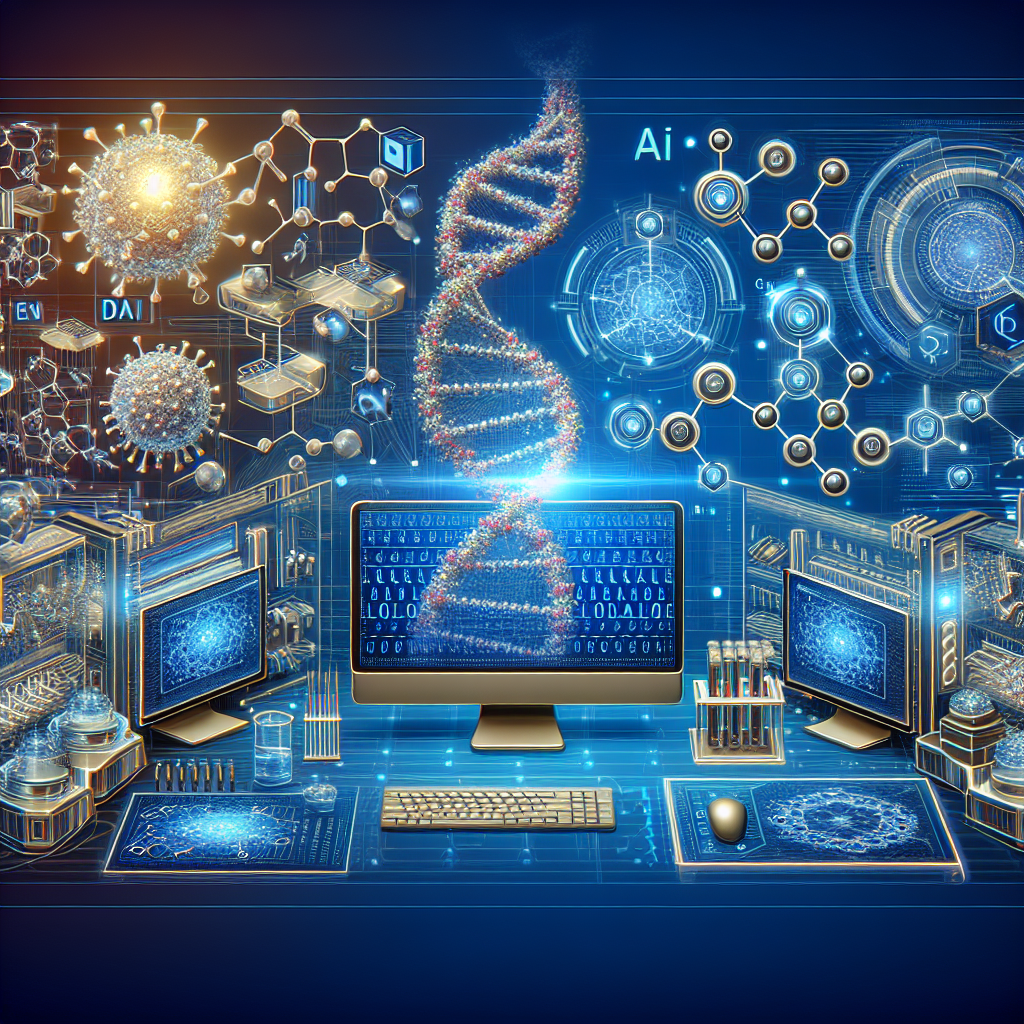
Generative AI: A Tool for Drug Development
In recent years, the field of artificial intelligence (AI) has made tremendous strides in various industries, including healthcare. One area where AI has shown great potential is in drug development. Generative AI, in particular, has emerged as a powerful tool in the discovery of new drugs and treatments for various diseases.
Generative AI refers to a type of AI technology that is capable of creating new data or content based on patterns and information it has learned from existing data. In the context of drug development, generative AI can be used to generate new molecules, predict their properties, and identify potential drug candidates for further testing.
One of the key advantages of using generative AI in drug development is its ability to quickly explore vast chemical space and generate novel molecules that may have therapeutic potential. Traditional methods of drug discovery are often time-consuming and costly, as researchers have to manually synthesize and test thousands of molecules to identify potential drug candidates. Generative AI, on the other hand, can rapidly generate and screen millions of virtual molecules, significantly speeding up the drug discovery process.
Generative AI can also help researchers overcome some of the limitations of traditional drug discovery methods. For example, generative AI can be used to design molecules with specific properties or target certain biological pathways, which may not be readily achievable through traditional trial-and-error methods.
In addition, generative AI can help researchers identify potential side effects or toxicity of new drug candidates early in the development process, reducing the risk of adverse reactions in clinical trials.
One of the key applications of generative AI in drug development is in the design of new small molecule drugs. Small molecules are organic compounds that can interact with specific biological targets to produce a therapeutic effect. By using generative AI to design new small molecules, researchers can potentially discover novel drugs for a wide range of diseases, including cancer, infectious diseases, and neurological disorders.
Generative AI can also be used to design new biologics, such as antibodies and peptides, which are increasingly being used as therapeutics for a variety of diseases. By generating new biologics with specific binding properties and biological activities, researchers can develop more effective and targeted treatments for patients.
Overall, generative AI has the potential to revolutionize the drug development process by accelerating the discovery of new therapies, reducing the cost of drug development, and improving the success rate of clinical trials. As the technology continues to advance, we can expect to see more innovative drugs and treatments emerging from the integration of generative AI in drug discovery.
FAQs
Q: How does generative AI generate new molecules?
A: Generative AI uses machine learning algorithms to analyze large datasets of chemical structures and properties. By learning patterns and relationships in the data, generative AI can generate new molecules that are structurally similar to known compounds but with potentially novel properties.
Q: How accurate is generative AI in predicting the properties of new molecules?
A: The accuracy of generative AI in predicting the properties of new molecules depends on the quality of the data used to train the AI model. In general, generative AI can provide valuable insights into the properties of new molecules, but experimental validation is still necessary to confirm their efficacy and safety.
Q: What are some challenges in using generative AI for drug development?
A: One of the key challenges in using generative AI for drug development is the lack of high-quality training data. Generating accurate and reliable data for training AI models can be time-consuming and costly. Additionally, the interpretation of AI-generated results can be complex and require expertise in chemistry and pharmacology.
Q: How can researchers ensure the safety and efficacy of AI-generated drug candidates?
A: Researchers can validate the safety and efficacy of AI-generated drug candidates through in vitro and in vivo experiments. By testing the biological activity, toxicity, and pharmacokinetics of new molecules, researchers can determine their potential as drug candidates for further development.
Q: What are some future applications of generative AI in drug development?
A: In the future, generative AI may be used to design personalized medicines tailored to individual patients’ genetic profiles and disease characteristics. By leveraging AI algorithms to analyze patient data and generate personalized treatment options, researchers can develop more targeted and effective therapies for a wide range of diseases.