
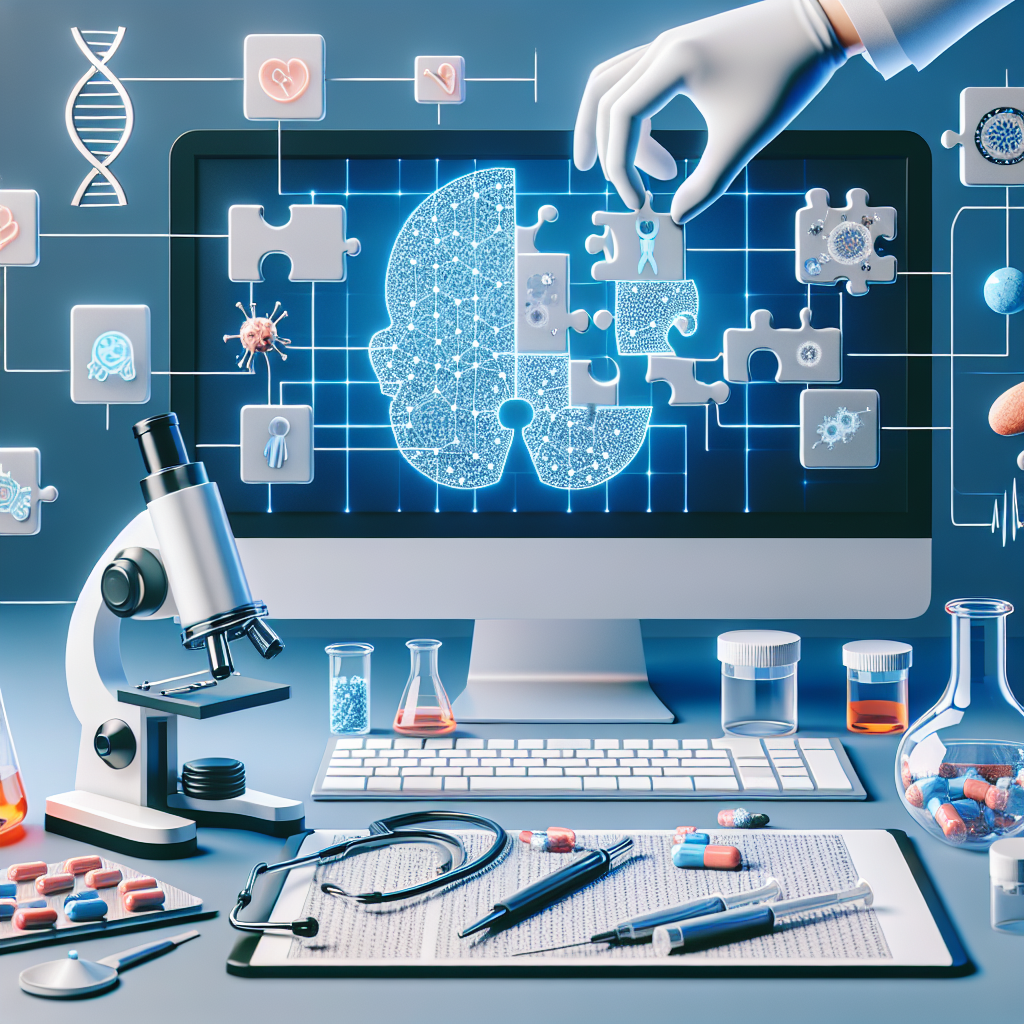
Generative AI: A Tool for Precision Medicine
Advancements in artificial intelligence (AI) have revolutionized various industries, including healthcare. In the field of medicine, AI has the potential to transform the way diseases are diagnosed, treated, and managed. One of the most promising applications of AI in healthcare is generative AI, a technology that has the capability to generate new data, images, or text based on patterns learned from existing data.
Generative AI is particularly well-suited for precision medicine, an approach to healthcare that takes into account individual variability in genes, environment, and lifestyle for each person. By using generative AI, healthcare providers can create personalized treatment plans that are tailored to the specific needs of each patient. This article will explore the role of generative AI in precision medicine, its benefits, challenges, and future prospects.
The Role of Generative AI in Precision Medicine
Generative AI algorithms work by learning patterns and relationships in large datasets and using this information to generate new data that is similar to the original dataset. In healthcare, generative AI can be used to create synthetic patient data that can be used to train machine learning models. This synthetic data can help improve the accuracy and reliability of these models, leading to better diagnostic and treatment outcomes.
In precision medicine, generative AI can be used to create personalized treatment plans for patients based on their unique genetic makeup, lifestyle factors, and medical history. By analyzing large amounts of data, including genetic information, medical images, and electronic health records, generative AI can identify patterns and relationships that are not immediately apparent to human clinicians.
For example, generative AI can be used to predict how a particular patient will respond to a certain medication based on their genetic profile. By analyzing data from thousands of patients with similar genetic profiles, generative AI can provide insights into the most effective treatment options for that patient. This personalized approach to medicine can lead to more effective treatments, fewer side effects, and better patient outcomes.
Benefits of Generative AI in Precision Medicine
There are several benefits of using generative AI in precision medicine. Some of the key advantages include:
1. Personalized Treatment Plans: Generative AI can help healthcare providers create personalized treatment plans for each patient based on their unique characteristics. This personalized approach can lead to better outcomes and improved patient satisfaction.
2. Improved Diagnosis: Generative AI can help healthcare providers diagnose diseases more accurately and quickly by analyzing large amounts of data and identifying patterns that may be missed by human clinicians. This can lead to earlier detection of diseases and better treatment outcomes.
3. Drug Discovery: Generative AI can be used to discover new drugs and treatment options by analyzing large datasets of genetic information, medical images, and other healthcare data. This can accelerate the drug discovery process and lead to the development of more effective treatments.
4. Reduced Healthcare Costs: By creating personalized treatment plans and improving diagnostic accuracy, generative AI can help reduce healthcare costs by avoiding unnecessary tests and treatments. This can lead to more efficient use of healthcare resources and better outcomes for patients.
Challenges of Generative AI in Precision Medicine
While generative AI has the potential to revolutionize precision medicine, there are several challenges that need to be addressed before it can be widely adopted. Some of the key challenges include:
1. Data Quality: Generative AI algorithms rely on large amounts of high-quality data to generate accurate results. In healthcare, data quality can be a major challenge due to issues such as incomplete or inaccurate data, data privacy concerns, and data silos. Improving data quality and ensuring data privacy are critical to the success of generative AI in precision medicine.
2. Interpretability: Generative AI algorithms are often considered “black box” models, meaning that they provide results without explaining how they arrived at those results. In healthcare, interpretability is crucial for ensuring that clinicians understand and trust the recommendations provided by AI systems. Developing explainable AI models is essential for the adoption of generative AI in precision medicine.
3. Regulatory Approval: The use of generative AI in healthcare is subject to regulatory approval by government agencies such as the Food and Drug Administration (FDA). Ensuring that generative AI systems meet regulatory standards for safety, efficacy, and privacy is essential for their widespread adoption in precision medicine.
Future Prospects of Generative AI in Precision Medicine
Despite the challenges, the future prospects of generative AI in precision medicine are promising. As technology continues to advance and more data becomes available, generative AI has the potential to transform the way diseases are diagnosed, treated, and managed. Some of the key trends to watch in the coming years include:
1. Integration with Electronic Health Records: Generative AI algorithms can be integrated with electronic health records to provide real-time insights and recommendations to clinicians. By analyzing patient data in real-time, generative AI can help healthcare providers make more informed decisions and improve patient outcomes.
2. Collaboration with Healthcare Providers: Generative AI developers are increasingly collaborating with healthcare providers to ensure that their algorithms meet the needs of clinicians and patients. By working closely with healthcare professionals, generative AI developers can create solutions that are tailored to the specific requirements of the healthcare industry.
3. Ethical Considerations: As generative AI becomes more widespread in healthcare, ethical considerations around data privacy, bias, and transparency will become increasingly important. Addressing these ethical concerns and ensuring that generative AI is used responsibly will be critical for its long-term success in precision medicine.
FAQs
Q: How is generative AI different from other types of AI?
A: Generative AI is a type of AI that can generate new data, images, or text based on patterns learned from existing data. This is different from other types of AI, such as machine learning and deep learning, which are focused on tasks such as classification, regression, and clustering.
Q: How can generative AI be used in precision medicine?
A: Generative AI can be used in precision medicine to create personalized treatment plans for patients based on their unique genetic makeup, lifestyle factors, and medical history. By analyzing large amounts of data, including genetic information, medical images, and electronic health records, generative AI can identify patterns and relationships that can help healthcare providers make more informed decisions.
Q: What are some of the challenges of using generative AI in precision medicine?
A: Some of the key challenges of using generative AI in precision medicine include data quality, interpretability, and regulatory approval. Improving data quality, developing explainable AI models, and meeting regulatory standards are essential for the successful adoption of generative AI in precision medicine.
Q: What are the future prospects of generative AI in precision medicine?
A: The future prospects of generative AI in precision medicine are promising, with trends such as integration with electronic health records, collaboration with healthcare providers, and ethical considerations shaping the development and adoption of generative AI in healthcare.
In conclusion, generative AI has the potential to revolutionize precision medicine by creating personalized treatment plans, improving diagnostic accuracy, and accelerating drug discovery. While there are challenges that need to be addressed, the future prospects of generative AI in precision medicine are promising, with trends such as integration with electronic health records, collaboration with healthcare providers, and ethical considerations shaping the development and adoption of generative AI in healthcare. By leveraging the power of generative AI, healthcare providers can improve patient outcomes, reduce healthcare costs, and transform the way diseases are diagnosed and treated.