
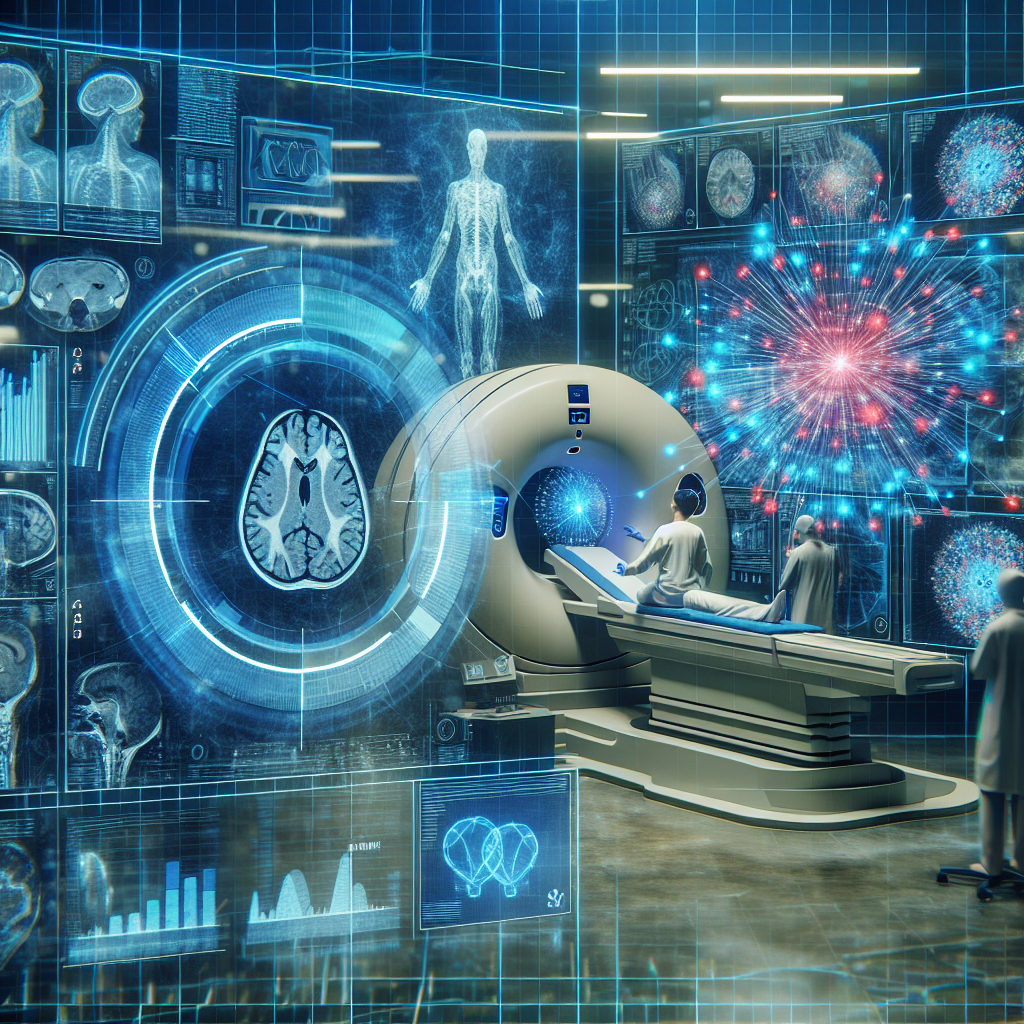
Generative AI: Revolutionizing Medical Imaging
In recent years, generative artificial intelligence (AI) has emerged as a powerful tool in the field of medical imaging. This technology has the potential to revolutionize the way medical professionals diagnose and treat diseases, offering new insights and improving patient outcomes. From generating high-quality images to predicting disease progression, generative AI is changing the game in medical imaging.
What is Generative AI?
Generative AI is a subset of artificial intelligence that focuses on creating new data rather than just analyzing existing data. This technology uses deep learning algorithms to generate new images, text, or sound based on patterns it has learned from a dataset. Generative AI has applications in a wide range of fields, from art and design to healthcare and finance.
In the context of medical imaging, generative AI can be used to create synthetic images that mimic real patient data. This can be particularly useful in situations where there is a limited amount of training data available, or when it is not feasible to collect new data. By generating synthetic images, researchers and medical professionals can train algorithms more effectively and improve the accuracy of their models.
How Generative AI is Revolutionizing Medical Imaging
Generative AI is making waves in the field of medical imaging, offering new opportunities for diagnosis, treatment, and research. Here are some ways in which this technology is revolutionizing medical imaging:
1. Image Generation: One of the most exciting applications of generative AI in medical imaging is the generation of high-quality images. Generative models can be trained to create synthetic images of organs, tissues, or structures that are difficult to capture with traditional imaging techniques. These synthetic images can help researchers better understand the underlying biology of diseases and develop new diagnostic tools.
2. Disease Prediction: Generative AI can also be used to predict disease progression and outcomes based on medical imaging data. By analyzing patterns in medical images, algorithms can identify early signs of disease and predict how a patient’s condition is likely to evolve over time. This information can help clinicians make more informed decisions about treatment and follow-up care.
3. Data Augmentation: Another key benefit of generative AI in medical imaging is data augmentation. By generating synthetic images, researchers can increase the size and diversity of their training datasets, which can improve the performance of machine learning algorithms. This is particularly important in situations where there is a limited amount of labeled data available.
4. Personalized Medicine: Generative AI has the potential to revolutionize personalized medicine by generating patient-specific models based on medical imaging data. These models can help clinicians tailor treatment plans to individual patients, taking into account their unique anatomy, physiology, and disease characteristics. By personalizing care in this way, healthcare providers can improve patient outcomes and reduce the risk of adverse events.
5. Drug Discovery: In addition to its applications in diagnosis and treatment, generative AI is also being used in drug discovery. By generating synthetic images of molecular structures, researchers can identify new drug candidates and predict how they will interact with biological targets. This can accelerate the drug development process and lead to the discovery of novel therapies for a wide range of diseases.
FAQs
Q: How accurate are generative AI models in medical imaging?
A: The accuracy of generative AI models in medical imaging can vary depending on the quality of the training data and the complexity of the task. In general, these models have shown promising results in generating high-quality images and predicting disease progression. However, further research is needed to validate their performance in clinical settings.
Q: What are the ethical implications of using generative AI in medical imaging?
A: The use of generative AI in medical imaging raises important ethical considerations, such as patient privacy, data security, and algorithm bias. It is essential for researchers and healthcare providers to address these issues and ensure that the use of AI technology is transparent, fair, and responsible.
Q: How can healthcare providers incorporate generative AI into their practice?
A: Healthcare providers can incorporate generative AI into their practice by collaborating with researchers and technology partners, investing in training and infrastructure, and staying informed about the latest developments in the field. By embracing AI technology, healthcare providers can improve patient care, enhance diagnostic accuracy, and advance medical research.
In conclusion, generative AI is revolutionizing medical imaging by offering new opportunities for diagnosis, treatment, and research. From generating high-quality images to predicting disease progression, this technology has the potential to transform the way medical professionals approach healthcare. By harnessing the power of generative AI, we can unlock new insights into disease biology, personalize treatment plans, and improve patient outcomes.