
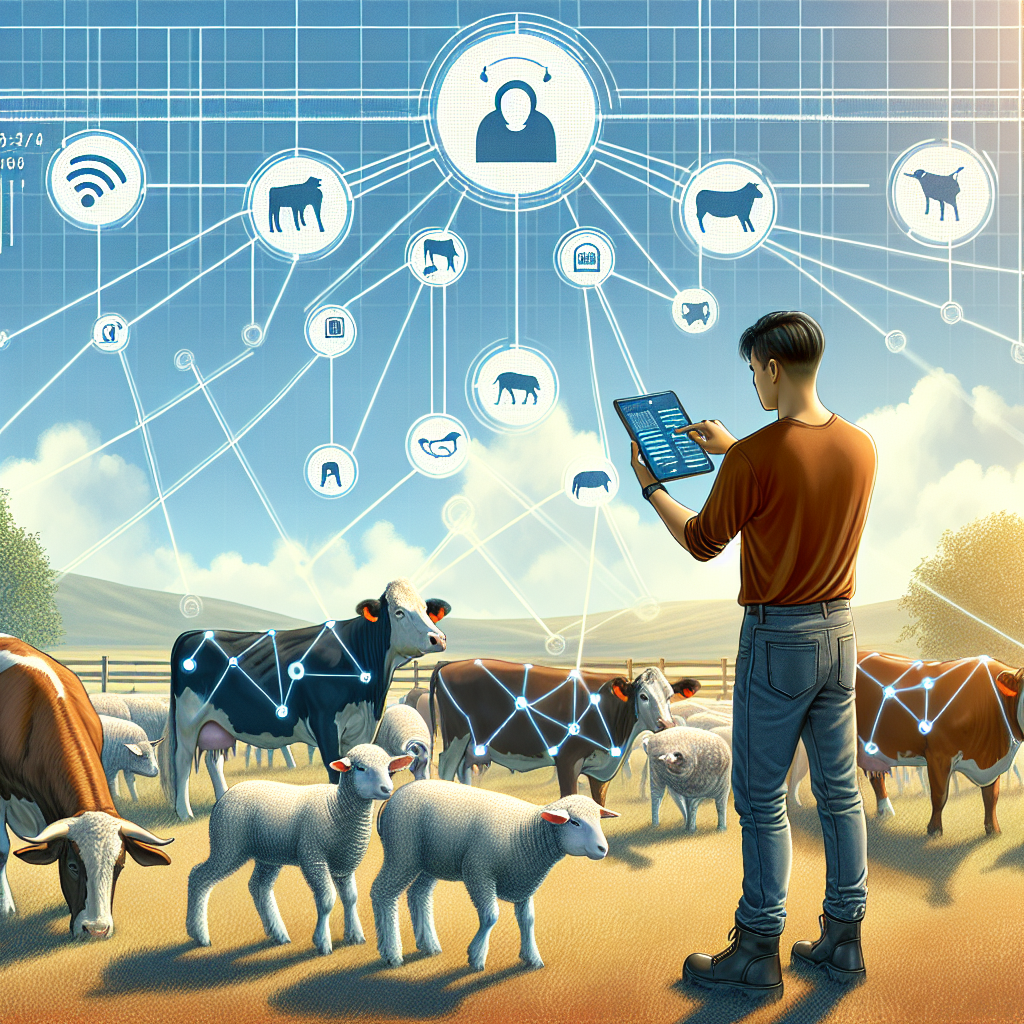
Livestock health monitoring is a critical aspect of modern agriculture, as the health and well-being of animals directly impact the productivity and profitability of livestock operations. Traditionally, livestock health monitoring has been a labor-intensive and time-consuming process, requiring farmers to manually observe and track the health status of individual animals. However, with the advent of artificial intelligence (AI) technology, there is a growing opportunity to harness the power of AI to enhance livestock health monitoring in ways that were previously unimaginable.
Harnessing AI for livestock health monitoring involves using advanced algorithms and machine learning techniques to analyze data collected from various sources, such as sensors, cameras, and wearable devices, to detect patterns and anomalies that may indicate potential health issues in animals. By leveraging AI technology, farmers can gain real-time insights into the health status of their livestock, allowing them to take proactive measures to prevent and address health issues before they escalate.
One of the key benefits of using AI for livestock health monitoring is the ability to continuously monitor a large number of animals simultaneously, which would be virtually impossible for humans to do on their own. AI-powered systems can analyze vast amounts of data in real-time, alerting farmers to potential health issues such as changes in behavior, abnormal vital signs, or signs of distress. This proactive approach to health monitoring can help farmers identify and treat health issues early, reducing the risk of disease outbreaks and improving overall animal welfare.
In addition to real-time monitoring, AI technology can also be used to predict future health outcomes based on historical data and trends. By analyzing past health records and environmental factors, AI algorithms can help farmers anticipate potential health risks and develop targeted intervention strategies to prevent health issues from occurring. This predictive capability can significantly improve the efficiency and effectiveness of livestock health management, allowing farmers to make informed decisions that optimize animal health and productivity.
AI technology can also enable remote monitoring of livestock health, allowing farmers to monitor their animals from a distance and respond promptly to any health issues that may arise. By deploying sensors and cameras in barns and pastures, farmers can collect data on key health indicators such as body temperature, heart rate, and activity levels, which can be analyzed by AI algorithms to detect anomalies and alert farmers to potential health issues. This remote monitoring capability can be particularly valuable for large-scale livestock operations, where manual monitoring of individual animals may not be feasible.
Another key advantage of using AI for livestock health monitoring is the ability to integrate data from multiple sources to gain a comprehensive view of animal health. By combining data from sensors, cameras, veterinary records, and other sources, AI-powered systems can provide farmers with a holistic understanding of the health status of their livestock, enabling them to make well-informed decisions about health management and treatment. This integrated approach to livestock health monitoring can help farmers identify underlying health trends and patterns that may not be apparent from individual data sources alone, leading to more effective and targeted interventions.
Despite the numerous benefits of harnessing AI for livestock health monitoring, there are also challenges and considerations that farmers need to be aware of. One of the key challenges is the need for reliable and accurate data collection, as the quality of data inputted into AI algorithms directly impacts the accuracy and reliability of health monitoring results. Farmers must ensure that sensors and devices used for data collection are properly calibrated and maintained to ensure the accuracy of health monitoring data.
Another challenge is the potential for data privacy and security risks associated with AI-powered livestock health monitoring systems. Farmers must take appropriate measures to protect the privacy and security of sensitive health data collected from their animals, such as encrypting data transmissions and implementing access controls to prevent unauthorized access. Additionally, farmers should be aware of the ethical implications of using AI for livestock health monitoring, such as ensuring the welfare of animals and avoiding potential harm or distress caused by invasive monitoring techniques.
Despite these challenges, the potential benefits of harnessing AI for livestock health monitoring far outweigh the risks, as AI technology has the potential to revolutionize the way farmers manage the health of their livestock. By leveraging the power of AI to monitor and analyze health data in real-time, farmers can gain valuable insights into the health status of their animals, enabling them to make proactive decisions that optimize animal welfare and productivity.
In conclusion, harnessing AI for enhancing livestock health monitoring offers a range of benefits for farmers, including real-time monitoring, predictive analytics, remote monitoring, and integrated data analysis. By leveraging AI technology, farmers can gain a comprehensive understanding of the health status of their livestock, enabling them to make informed decisions that improve animal welfare and productivity. While there are challenges and considerations to be aware of, the potential of AI to transform livestock health monitoring is immense, offering new opportunities to optimize animal health management in the modern agriculture industry.
FAQs:
Q: How does AI technology improve livestock health monitoring?
A: AI technology improves livestock health monitoring by enabling real-time monitoring of multiple animals simultaneously, predicting future health outcomes, enabling remote monitoring, and integrating data from multiple sources to gain a comprehensive view of animal health.
Q: What are the key benefits of using AI for livestock health monitoring?
A: The key benefits of using AI for livestock health monitoring include proactive detection of health issues, real-time monitoring, predictive analytics for future health outcomes, remote monitoring capabilities, and integrated data analysis for comprehensive health insights.
Q: What are the challenges of harnessing AI for livestock health monitoring?
A: Challenges of harnessing AI for livestock health monitoring include the need for reliable data collection, data privacy and security risks, and ethical considerations related to animal welfare and invasive monitoring techniques.