
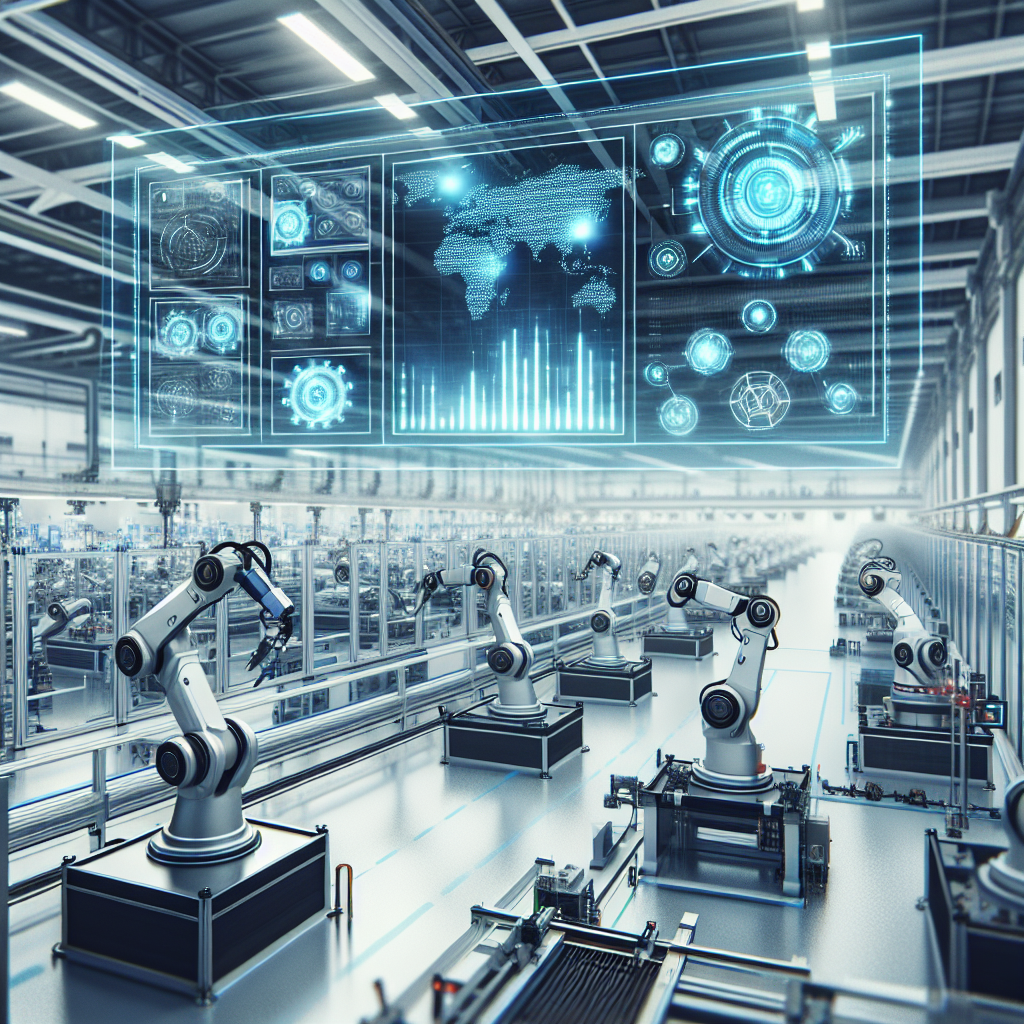
Artificial Intelligence (AI) automation is revolutionizing the manufacturing industry in ways that were once thought impossible. With advancements in technology, AI has now become a powerful tool for streamlining processes, increasing efficiency, and reducing costs. From predictive maintenance to quality control, AI is transforming the way products are made and delivered to consumers.
One of the key benefits of AI automation in manufacturing is its ability to predict maintenance needs before they occur. By analyzing data from sensors and other sources, AI can detect patterns and anomalies that indicate when a machine is likely to fail. This allows manufacturers to schedule maintenance proactively, reducing downtime and increasing productivity. In addition, AI can optimize maintenance schedules based on real-time data, ensuring that machines are always operating at peak efficiency.
Another area where AI automation is making a significant impact is in quality control. Traditionally, quality control processes have been time-consuming and labor-intensive, requiring human workers to inspect products for defects. With AI, manufacturers can now use machine learning algorithms to identify potential defects in real-time, allowing for immediate corrective action. This not only improves the overall quality of products but also reduces waste and rework, leading to cost savings for manufacturers.
AI automation is also changing the way products are designed and manufactured. By using AI-powered design software, manufacturers can create more complex and innovative products, while also reducing time-to-market. AI can analyze consumer feedback and market trends to suggest design improvements, leading to products that better meet customer needs. In addition, AI can optimize production processes, reducing waste and increasing efficiency.
One of the most exciting developments in AI automation is the rise of collaborative robots, or cobots. These robots are designed to work alongside human workers, performing repetitive or dangerous tasks while allowing humans to focus on more complex activities. Cobots can be easily programmed and reprogrammed, making them versatile tools for manufacturers looking to increase flexibility and agility on the production line.
Overall, AI automation is transforming the manufacturing industry by improving efficiency, reducing costs, and increasing quality. As technology continues to advance, manufacturers will have even more opportunities to leverage AI to drive innovation and growth.
FAQs:
1. How is AI automation different from traditional automation?
Traditional automation typically involves the use of fixed, pre-programmed machines to perform specific tasks. AI automation, on the other hand, uses artificial intelligence algorithms to analyze data, learn from it, and make decisions in real-time. This allows for greater flexibility and adaptability in manufacturing processes.
2. Is AI automation replacing human workers in manufacturing?
While AI automation is changing the way manufacturing processes are carried out, it is not necessarily replacing human workers. Instead, AI is augmenting human capabilities, allowing workers to focus on more complex tasks while AI handles repetitive or dangerous tasks. In fact, many manufacturers are finding that AI automation can actually create new job opportunities by increasing productivity and efficiency.
3. How can manufacturers implement AI automation in their operations?
Manufacturers can start by identifying areas of their operations that could benefit from AI automation, such as predictive maintenance, quality control, or production optimization. They can then invest in AI technologies and tools, such as machine learning algorithms or collaborative robots, to streamline their processes. It is also important for manufacturers to train their employees on how to work with AI systems and integrate them into their daily operations.
4. What are the potential challenges of implementing AI automation in manufacturing?
One of the main challenges of implementing AI automation in manufacturing is the initial investment required to purchase and implement AI technologies. Manufacturers also need to ensure that their employees are properly trained to work with AI systems and understand how to integrate them into existing processes. Additionally, there may be concerns about data security and privacy when using AI technologies, so it is important for manufacturers to have robust cybersecurity measures in place.
5. What are the future trends in AI automation for manufacturing?
The future of AI automation in manufacturing is likely to involve even more advanced technologies, such as autonomous robots and drones, that can perform tasks with minimal human intervention. Manufacturers may also start to use AI for more complex decision-making processes, such as supply chain optimization or product design. Overall, the possibilities for AI automation in manufacturing are endless, and the industry is set to undergo a significant transformation in the coming years.