
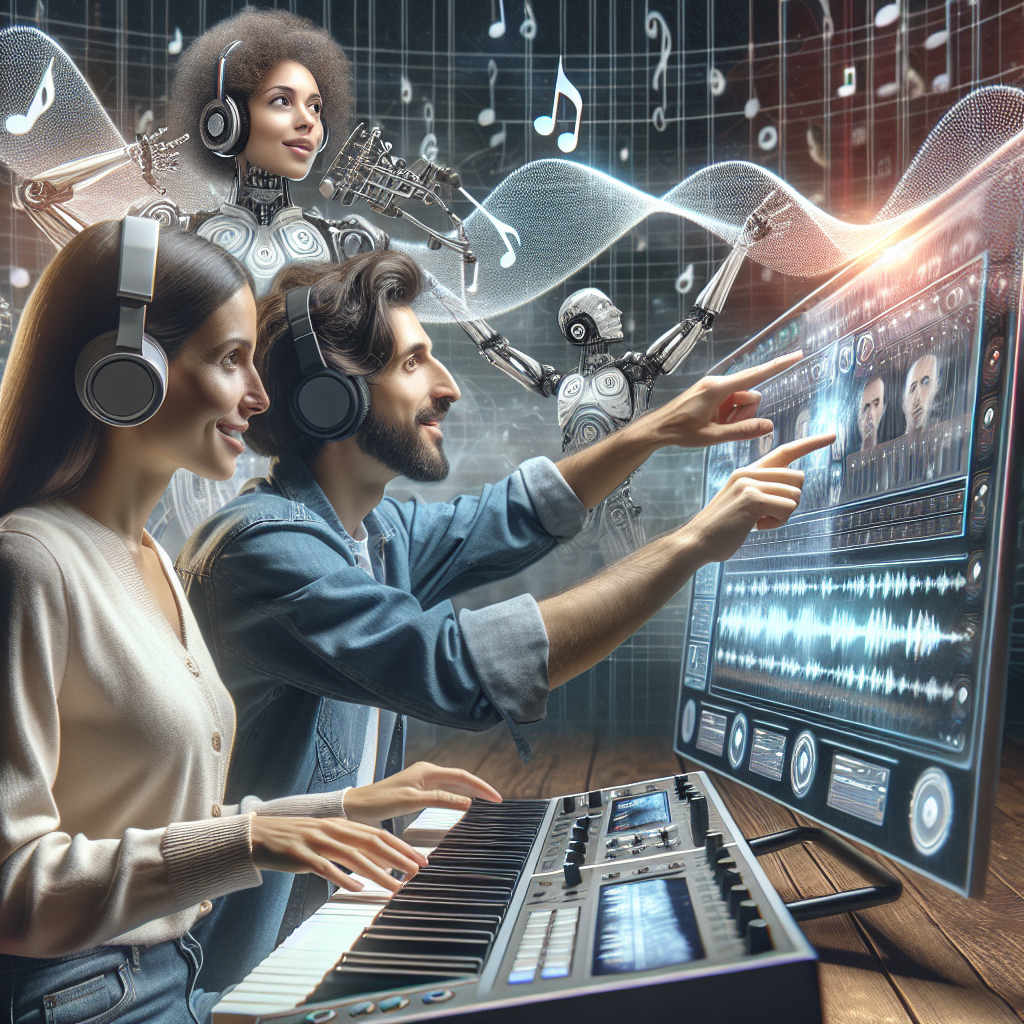
Music has always been a form of expression for humans, allowing us to convey emotions, thoughts, and experiences through sound. Throughout history, artists and musicians have pushed the boundaries of musical expression, exploring new sounds, techniques, and genres. In recent years, artificial intelligence (AI) has emerged as a powerful tool for redefining the concept of musical expression, opening up new possibilities for creativity and innovation in the world of music.
AI technology has made significant advancements in recent years, allowing machines to analyze, understand, and create music in ways that were previously unimaginable. From composing original pieces to generating new sounds and even performing in live concerts, AI is revolutionizing the way we think about music and how it can be created and experienced.
One of the most exciting developments in AI music technology is the ability to generate original compositions. Using algorithms and machine learning techniques, AI systems can analyze vast amounts of musical data and identify patterns, trends, and structures that can be used to create new pieces of music. These AI composers can produce music in a wide range of styles and genres, from classical symphonies to pop songs to experimental electronic music.
One of the key advantages of AI composers is their ability to work quickly and efficiently, generating new compositions in a fraction of the time it would take a human musician. This speed and efficiency allow artists to experiment with new ideas and styles, pushing the boundaries of musical expression and creativity.
In addition to composing music, AI technology is also being used to create new sounds and textures that can be incorporated into musical compositions. By analyzing and manipulating audio data, AI systems can generate new sounds that can be used to enhance and expand the sonic palette of musicians and producers. These AI-generated sounds can be used in a variety of ways, from creating unique synthesizer patches to adding layers of texture and atmosphere to a recording.
Another way that AI is redefining musical expression is through its use in live performance. AI systems can be programmed to analyze and respond to live audio signals, allowing them to interact with human musicians in real-time. This opens up new possibilities for improvisation and collaboration, as AI systems can generate music that responds to the input of human performers, creating a dynamic and interactive musical experience.
While AI technology has the potential to revolutionize the world of music, it also raises important questions and challenges. Many musicians and artists worry about the impact of AI on creativity and originality, fearing that machines could replace human musicians and homogenize the musical landscape. Others are concerned about issues of copyright and ownership, as AI-generated music blurs the lines between human and machine creativity.
Despite these concerns, AI technology offers exciting possibilities for expanding the boundaries of musical expression and creativity. By harnessing the power of machine learning and algorithms, musicians and artists can explore new sounds, styles, and ideas that were previously inaccessible. AI composers and performers can collaborate with human musicians to create innovative and groundbreaking music that pushes the boundaries of what is possible.
In conclusion, AI is redefining the concept of musical expression in exciting and innovative ways. From generating original compositions to creating new sounds and textures to performing live with human musicians, AI technology is revolutionizing the world of music and opening up new possibilities for creativity and collaboration. While there are challenges and concerns associated with AI in music, the potential for innovation and exploration is vast, promising a future where human and machine creativity can coexist and inspire each other.
FAQs:
Q: Can AI truly replace human musicians?
A: While AI technology has made significant advancements in music composition and performance, it is unlikely that machines will completely replace human musicians. AI can certainly assist and collaborate with human musicians, but the emotional depth and creativity of human expression are difficult to replicate with machines.
Q: How can AI technology benefit musicians and artists?
A: AI technology can benefit musicians and artists in a variety of ways, including helping them to explore new sounds and styles, generate new ideas and compositions, and collaborate with other musicians in innovative ways. AI can also assist with tasks such as music production, audio analysis, and live performance.
Q: What are some examples of AI-generated music?
A: There are many examples of AI-generated music available online, ranging from classical compositions to pop songs to experimental electronic music. Some notable examples include the AI-generated album “I Am AI” by Taryn Southern and the AI-generated piano composition “Daddy’s Car” by Sony CSL Paris.
Q: Are there any ethical concerns surrounding AI in music?
A: There are ethical concerns surrounding AI in music, including issues of copyright and ownership, the impact on creativity and originality, and questions about the role of machines in the creative process. It is important for musicians and artists to consider these issues and engage in discussions about the ethical implications of AI technology in music.