
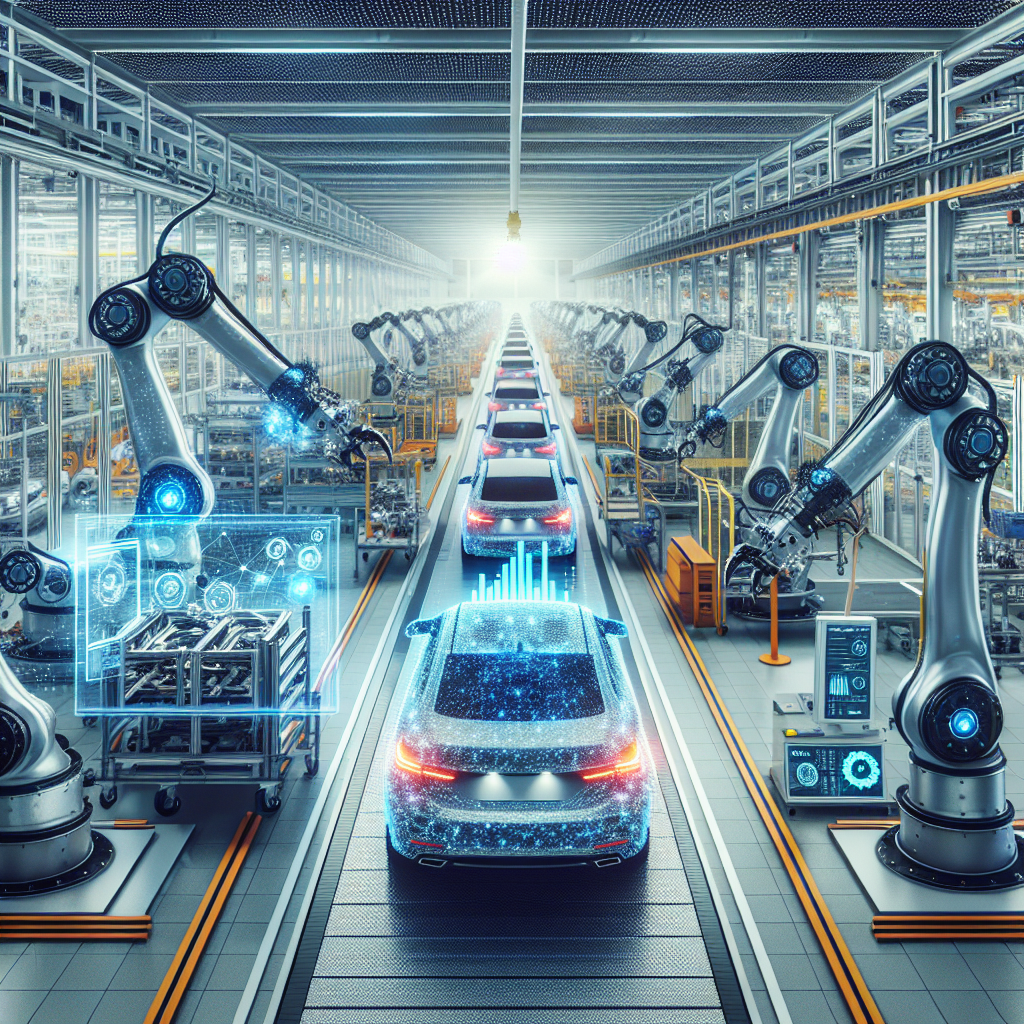
AI (Artificial Intelligence) is revolutionizing many industries, and the automotive manufacturing industry is no exception. With the advancements in AI technology, car manufacturers are able to streamline their production processes, increase efficiency, and improve the quality of their vehicles. From designing to testing, AI is being used in various aspects of automotive manufacturing to drive innovation and improve overall performance.
One of the key areas where AI is making a significant impact in the automotive manufacturing industry is in the design process. Traditionally, car designers would have to manually create and test different designs to find the most optimal one. With AI, designers can now use algorithms to generate and analyze thousands of design variations in a fraction of the time it would take a human. This not only speeds up the design process but also allows for more innovative and efficient designs to be created.
AI is also being used in the manufacturing process itself to improve efficiency and quality control. For example, AI-powered robots can be used to assemble cars on the production line, reducing the need for human labor and increasing the speed and accuracy of the assembly process. AI can also be used to monitor and analyze the production line in real-time, identifying any potential issues or defects before they become a problem.
Another area where AI is revolutionizing the automotive manufacturing industry is in predictive maintenance. By using AI algorithms to analyze data from sensors and other sources, car manufacturers can predict when a component is likely to fail and schedule maintenance before it becomes a problem. This not only reduces downtime and maintenance costs but also improves the overall reliability of the vehicle.
AI is also being used in the testing and quality control processes of automotive manufacturing. AI algorithms can analyze data from sensors and cameras to detect any defects or inconsistencies in the production line, ensuring that only high-quality vehicles are produced. AI can also be used to simulate various driving conditions and scenarios to test the performance and safety of the vehicle before it goes into production.
Overall, AI is revolutionizing the automotive manufacturing industry by increasing efficiency, improving quality, and driving innovation in design and production processes. As AI technology continues to advance, we can expect to see even more advancements in the automotive industry that will further improve the performance and reliability of vehicles.
FAQs:
Q: How is AI being used in the design process of automotive manufacturing?
A: AI is being used in the design process of automotive manufacturing to generate and analyze thousands of design variations in a fraction of the time it would take a human. This allows for more innovative and efficient designs to be created.
Q: How is AI improving the manufacturing process in the automotive industry?
A: AI is improving the manufacturing process in the automotive industry by using AI-powered robots to assemble cars on the production line, monitoring and analyzing the production line in real-time, and predicting maintenance schedules to reduce downtime and maintenance costs.
Q: How is AI being used in testing and quality control in automotive manufacturing?
A: AI is being used in testing and quality control in automotive manufacturing by analyzing data from sensors and cameras to detect defects or inconsistencies in the production line, and simulating various driving conditions and scenarios to test the performance and safety of the vehicle before production.
Q: What are the benefits of using AI in the automotive manufacturing industry?
A: The benefits of using AI in the automotive manufacturing industry include increased efficiency, improved quality control, reduced downtime and maintenance costs, and driving innovation in design and production processes.