
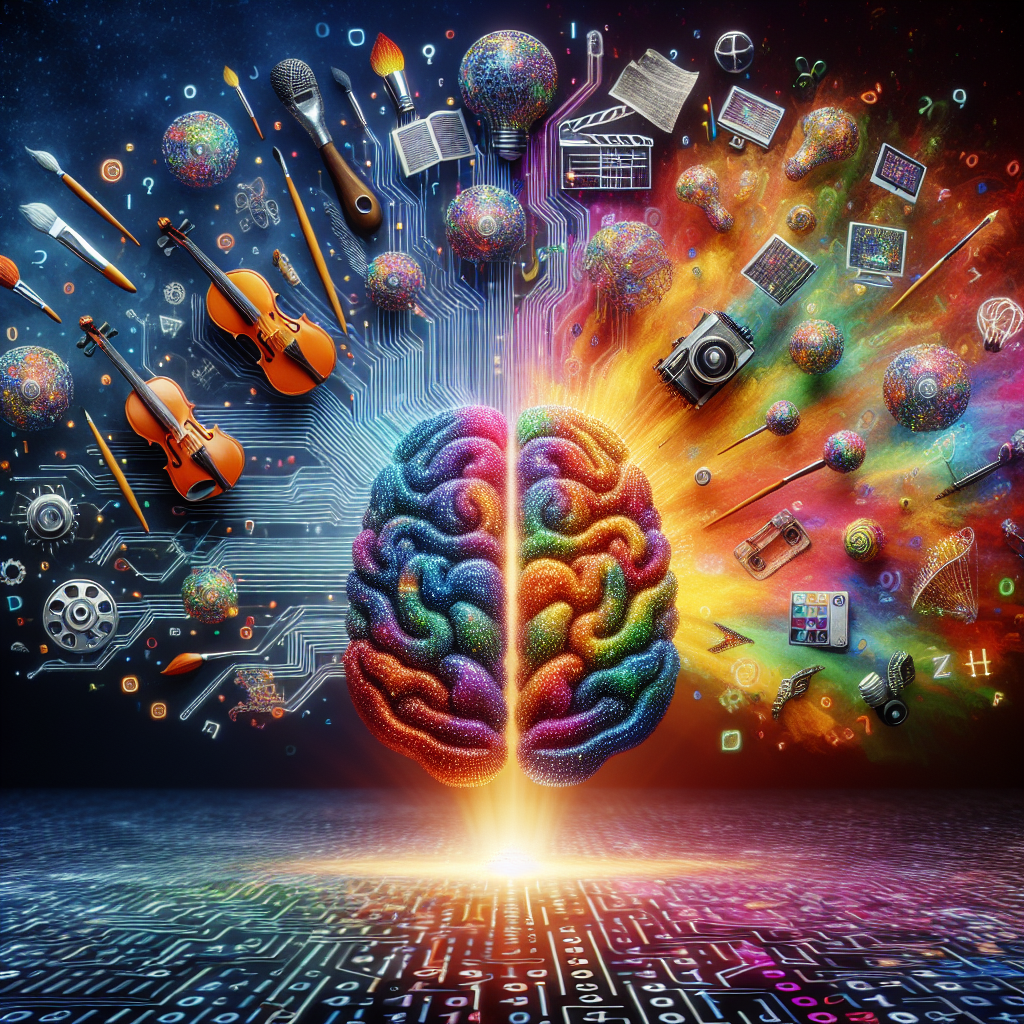
Artificial intelligence (AI) has become a powerful tool that is transforming various industries, including the creative sector. From advertising and marketing to music and film production, AI is revolutionizing the way creatives work and helping them to enhance their processes, workflows, and outcomes. In this article, we will explore how AI is reshaping the creative industries and driving innovation in unprecedented ways.
1. AI in Advertising and Marketing:
AI is helping marketers and advertisers to optimize their campaigns and reach their target audiences more effectively. By analyzing data from various sources, AI can identify trends, patterns, and insights that can be used to create more personalized and engaging content. For example, AI-powered tools can analyze customer behavior to predict their preferences and recommend products or services that are most likely to resonate with them. AI can also be used to automate the process of creating and delivering ads, making it faster and more efficient for marketers to reach their audience.
2. AI in Music Production:
AI is also making waves in the music industry, where it is being used to compose, produce, and distribute music. AI algorithms can analyze large datasets of music to identify patterns and styles, which can then be used to generate new compositions. AI can also be used to enhance the sound quality of music recordings and help musicians to improve their performance. In addition, AI-powered platforms like Spotify and Apple Music are using recommendation algorithms to suggest new music to users based on their listening habits.
3. AI in Film and Video Production:
AI is transforming the film and video production process by automating tasks such as scriptwriting, editing, and special effects. AI-powered tools can analyze scripts to identify potential plot holes or inconsistencies, making it easier for filmmakers to refine their ideas. AI can also be used to create realistic visual effects and animations, reducing the time and cost of production. For example, AI can generate virtual characters that are indistinguishable from real actors, opening up new possibilities for storytelling and creativity.
4. AI in Design and Creativity:
In the field of design, AI is helping creatives to generate new ideas and concepts quickly and efficiently. AI-powered tools can analyze design trends and patterns to suggest new concepts or styles that designers can use as inspiration. AI can also be used to automate repetitive tasks, such as resizing images or formatting layouts, allowing designers to focus on more creative aspects of their work. In addition, AI is being used to create personalized user experiences, such as recommending products or services based on a user’s preferences and behaviors.
5. AI in Writing and Content Creation:
AI is also being used to assist writers and content creators in generating high-quality content. AI-powered tools can analyze large amounts of data to identify relevant information and insights that can be used to create compelling stories or articles. AI can also help writers to improve their writing style and grammar, making it easier for them to produce engaging and error-free content. In addition, AI is being used to automate the process of content creation, making it faster and more efficient for writers to produce articles, blog posts, or social media updates.
FAQs:
1. How is AI impacting the creative industries?
AI is transforming the creative industries by automating repetitive tasks, generating new ideas, and enhancing the quality of creative work. AI is helping creatives to optimize their processes, workflows, and outcomes, enabling them to work faster and more efficiently. AI is also enabling creatives to reach their target audiences more effectively by analyzing data and identifying trends and patterns that can be used to create personalized and engaging content.
2. What are some examples of AI-powered tools in the creative industries?
Examples of AI-powered tools in the creative industries include Adobe Sensei, a platform that uses AI to enhance the capabilities of Adobe’s creative software, such as Photoshop and Illustrator. Other examples include IBM Watson, a cognitive computing platform that can analyze data and generate insights, and OpenAI, a research organization that is developing AI algorithms for creative applications, such as music composition and storytelling.
3. What are the benefits of using AI in the creative industries?
Some of the benefits of using AI in the creative industries include increased productivity, improved quality of work, and enhanced creativity. AI can help creatives to automate repetitive tasks, freeing up time for more creative activities. AI can also assist creatives in generating new ideas and concepts, enabling them to explore new possibilities and push the boundaries of their creativity. AI can also help creatives to reach their target audiences more effectively by analyzing data and identifying trends and patterns that can be used to create personalized and engaging content.
In conclusion, AI is transforming the creative industries by automating tasks, generating new ideas, and enhancing the quality of creative work. From advertising and marketing to music and film production, AI is revolutionizing the way creatives work and helping them to optimize their processes, workflows, and outcomes. As AI continues to evolve and improve, we can expect to see even greater innovation and creativity in the creative industries in the years to come.