
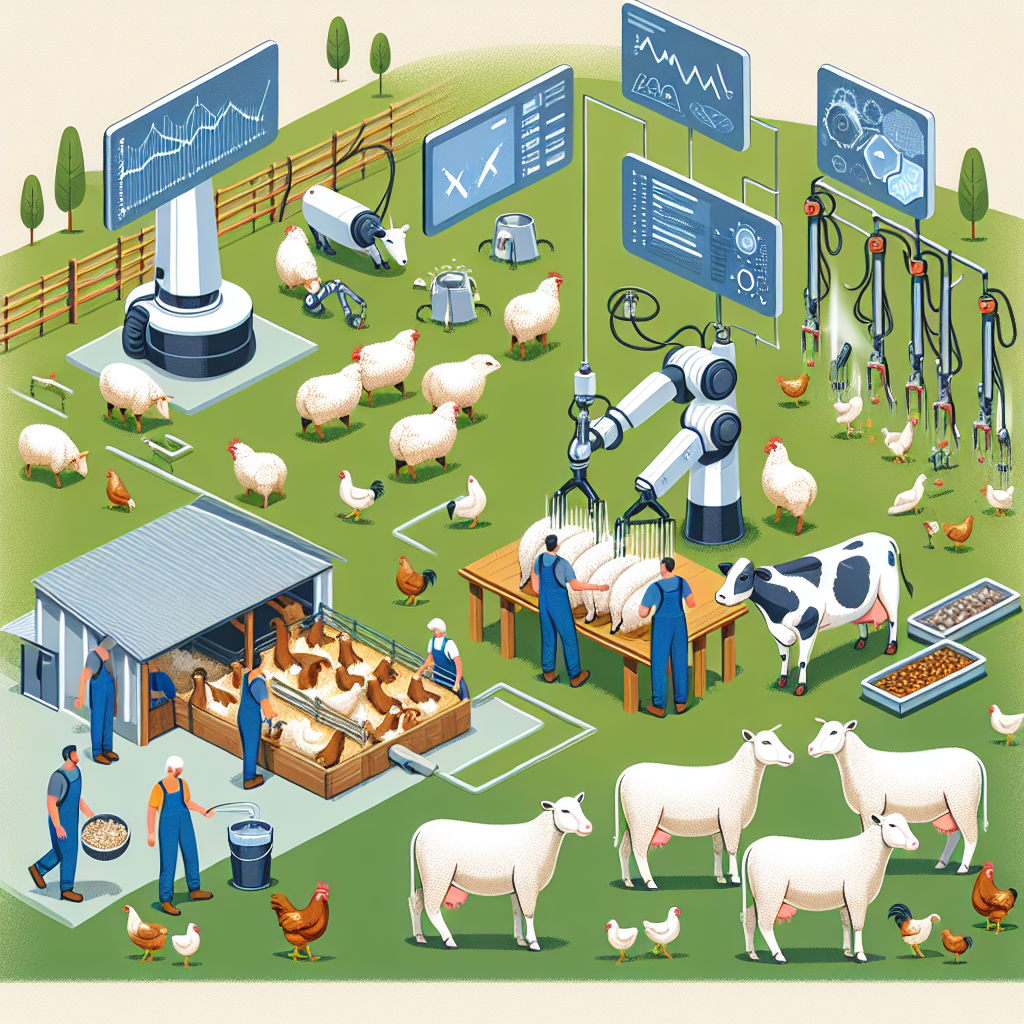
In recent years, artificial intelligence (AI) has been increasingly used in various industries to streamline processes, increase efficiency, and improve overall outcomes. One of the sectors that has seen significant advancements in AI technology is livestock management. AI is transforming the way farmers manage their livestock, improving productivity, animal welfare, and profitability.
AI technology is being used in a variety of ways in livestock management, from monitoring animal health to optimizing feeding schedules. By leveraging AI, farmers are able to make more informed decisions and better care for their animals. In this article, we will explore how AI is transforming livestock management and the benefits it brings to the industry.
1. Monitoring Animal Health:
One of the key ways AI is transforming livestock management is through the monitoring of animal health. By using AI-powered sensors, farmers can track various health indicators of their animals in real-time. This allows them to detect any signs of illness or distress early on, leading to prompt intervention and treatment.
For example, AI-powered cameras can monitor the behavior of animals in a herd and detect any abnormal patterns that may indicate a health issue. Additionally, wearable sensors can track vital signs such as temperature, heart rate, and activity levels, providing valuable data to farmers about the health status of their animals.
2. Predictive Analytics:
AI is also being used to analyze data collected from various sources, such as sensors, weather reports, and historical data, to predict trends and make informed decisions. Predictive analytics can help farmers anticipate potential issues, such as disease outbreaks or feed shortages, and take proactive measures to mitigate risks.
By using AI algorithms, farmers can optimize feeding schedules, breeding programs, and other management practices to improve overall efficiency and productivity. This enables farmers to make data-driven decisions that lead to better outcomes for their livestock.
3. Automated Monitoring and Control:
AI technology enables automated monitoring and control of livestock facilities, reducing the need for manual intervention and improving operational efficiency. For example, AI-powered systems can regulate temperature, humidity, and ventilation in barns or coops to create optimal conditions for animals.
Additionally, AI can automate feeding systems, track inventory levels, and manage waste disposal, streamlining daily tasks and reducing labor costs. By automating routine tasks, farmers can focus on more strategic aspects of livestock management, such as breeding programs and marketing strategies.
4. Precision Livestock Farming:
Precision livestock farming is a concept that leverages AI and other technologies to monitor individual animals and customize management practices based on their specific needs. By collecting and analyzing data on each animal’s health, behavior, and performance, farmers can tailor care and feeding strategies to maximize productivity and welfare.
For example, AI-powered systems can identify high-performing animals and adjust their feed rations accordingly to support growth and development. Likewise, AI can detect early signs of disease or injury in individual animals and provide targeted treatment to improve their well-being.
Benefits of AI in Livestock Management:
The integration of AI technology in livestock management offers numerous benefits to farmers, animals, and the industry as a whole. Some of the key advantages of AI in livestock management include:
1. Improved Animal Welfare:
By monitoring animal health and behavior in real-time, AI technology helps farmers detect and address welfare issues promptly. This leads to better care and treatment of animals, enhancing their overall well-being and quality of life.
2. Increased Productivity:
AI enables farmers to optimize management practices, such as feeding schedules and breeding programs, to maximize productivity and efficiency. By using data-driven insights, farmers can make informed decisions that lead to higher yields and profitability.
3. Cost Savings:
AI automation and predictive analytics help farmers reduce labor costs, minimize waste, and optimize resource utilization. By streamlining operations and improving efficiency, farmers can save time and money, increasing their bottom line.
4. Sustainable Farming Practices:
AI technology promotes sustainable farming practices by optimizing resource use, reducing environmental impact, and improving animal welfare. By adopting AI-powered solutions, farmers can minimize waste, conserve resources, and operate in a more environmentally friendly manner.
FAQs:
Q: How does AI technology improve animal health in livestock management?
A: AI technology enables real-time monitoring of animal health through sensors and cameras, allowing farmers to detect signs of illness or distress early on. By analyzing data on vital signs and behavior patterns, farmers can intervene promptly and provide appropriate treatment to improve animal health.
Q: What are some examples of AI applications in livestock management?
A: Some examples of AI applications in livestock management include automated monitoring and control systems, predictive analytics for decision-making, precision livestock farming for individualized care, and AI-powered sensors for health monitoring.
Q: How can farmers benefit from using AI technology in livestock management?
A: Farmers can benefit from using AI technology in livestock management by improving animal welfare, increasing productivity, reducing costs, and adopting sustainable farming practices. AI enables farmers to make data-driven decisions, automate routine tasks, and optimize management practices for better outcomes.
Q: Is AI technology accessible to small-scale farmers?
A: While AI technology may be more commonly used by large-scale operations, there are also affordable and user-friendly AI solutions available for small-scale farmers. These solutions can help farmers improve efficiency, productivity, and profitability, regardless of the size of their operation.
In conclusion, AI technology is transforming livestock management by revolutionizing how farmers care for their animals, make decisions, and run their operations. By leveraging AI-powered solutions, farmers can improve animal welfare, increase productivity, reduce costs, and adopt sustainable farming practices. As AI continues to evolve and become more accessible, its impact on the livestock industry is expected to grow, leading to a more efficient, sustainable, and profitable future for farmers and their animals.