
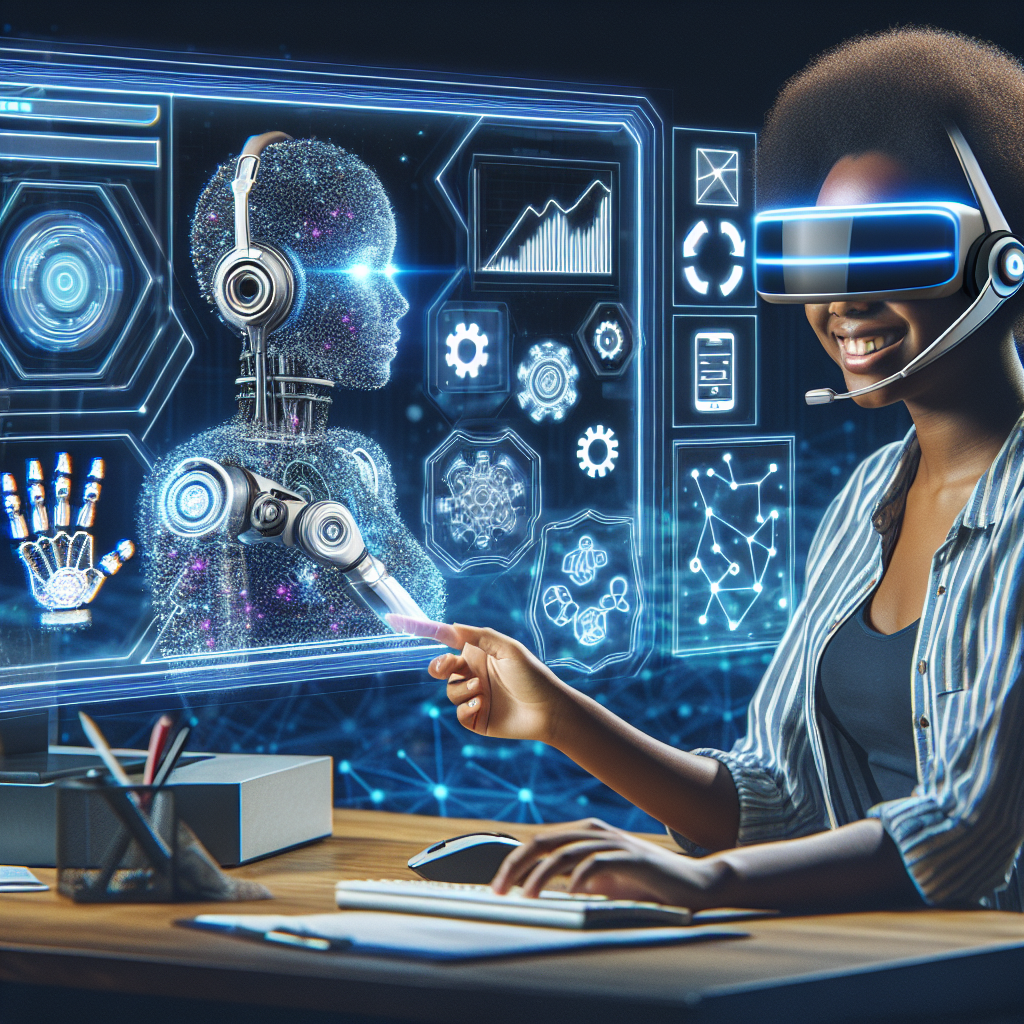
Artificial Intelligence (AI) has been rapidly transforming various industries over the past few years, and one of the sectors that has seen significant changes is customer service. AI technologies have revolutionized the way businesses interact with their customers, providing faster, more efficient, and personalized services. In this article, we will explore how AI is transforming the customer service industry and the impact it has on businesses and customers alike.
AI-powered chatbots
One of the most significant advancements in customer service is the implementation of AI-powered chatbots. Chatbots are virtual assistants that are programmed to interact with customers through messaging platforms, websites, or mobile apps. These chatbots use natural language processing (NLP) and machine learning algorithms to understand customer inquiries and provide relevant responses.
Chatbots have revolutionized customer service by providing 24/7 support, instant responses, and personalized interactions. They can handle a wide range of customer queries, from basic information requests to complex problem-solving. Chatbots are also cost-effective for businesses, as they can handle a large volume of inquiries simultaneously without the need for human intervention.
Personalized customer experiences
AI technologies enable businesses to provide personalized customer experiences by analyzing customer data and behavior. By leveraging machine learning algorithms, businesses can segment customers based on their preferences, purchase history, and interactions with the brand. This allows businesses to tailor their marketing campaigns, product recommendations, and customer service interactions to meet individual customer needs.
Personalization is key to building customer loyalty and increasing customer satisfaction. AI technologies help businesses deliver relevant content, offers, and solutions to customers, leading to improved customer retention and higher sales conversions. By understanding customer preferences and anticipating their needs, businesses can build stronger relationships with their customers and drive business growth.
Predictive analytics
AI technologies enable businesses to leverage predictive analytics to anticipate customer needs and behavior. By analyzing historical data and patterns, businesses can forecast customer trends, identify potential issues, and proactively address customer concerns. Predictive analytics help businesses optimize their operations, improve customer service processes, and enhance the overall customer experience.
For example, predictive analytics can help businesses identify customers who are at risk of churning and take proactive measures to retain them. By analyzing customer feedback, social media interactions, and purchase history, businesses can predict customer behavior and implement targeted retention strategies. This proactive approach to customer service can help businesses reduce churn rates, increase customer satisfaction, and drive revenue growth.
Virtual assistants
Virtual assistants are another AI technology that is transforming the customer service industry. Virtual assistants are AI-powered tools that can perform a wide range of tasks, such as scheduling appointments, answering inquiries, and providing product recommendations. Virtual assistants use natural language processing and machine learning algorithms to understand customer queries and provide relevant responses.
Virtual assistants improve customer service by providing instant support, personalized recommendations, and seamless interactions. They can assist customers in real-time, across multiple channels, and deliver consistent service experiences. Virtual assistants can also handle routine tasks, such as updating customer information or processing orders, freeing up human agents to focus on more complex issues.
FAQs:
Q: How does AI improve customer service?
A: AI improves customer service by providing faster response times, personalized interactions, and proactive support. AI technologies such as chatbots, predictive analytics, and virtual assistants enable businesses to deliver efficient and effective customer service experiences.
Q: Are chatbots replacing human agents in customer service?
A: Chatbots are not replacing human agents in customer service but are complementing their roles. Chatbots handle routine inquiries and tasks, allowing human agents to focus on more complex issues and provide personalized support to customers.
Q: How can businesses leverage AI for customer service?
A: Businesses can leverage AI for customer service by implementing chatbots, predictive analytics, virtual assistants, and other AI technologies. By analyzing customer data, predicting customer behavior, and providing personalized interactions, businesses can enhance the overall customer experience and drive business growth.
In conclusion, AI technologies are revolutionizing the customer service industry by providing faster, more efficient, and personalized services. Businesses that embrace AI-powered solutions can improve customer satisfaction, drive revenue growth, and build stronger relationships with their customers. As AI continues to evolve, the customer service industry will undoubtedly see further transformation, leading to more innovative and effective customer service experiences.